
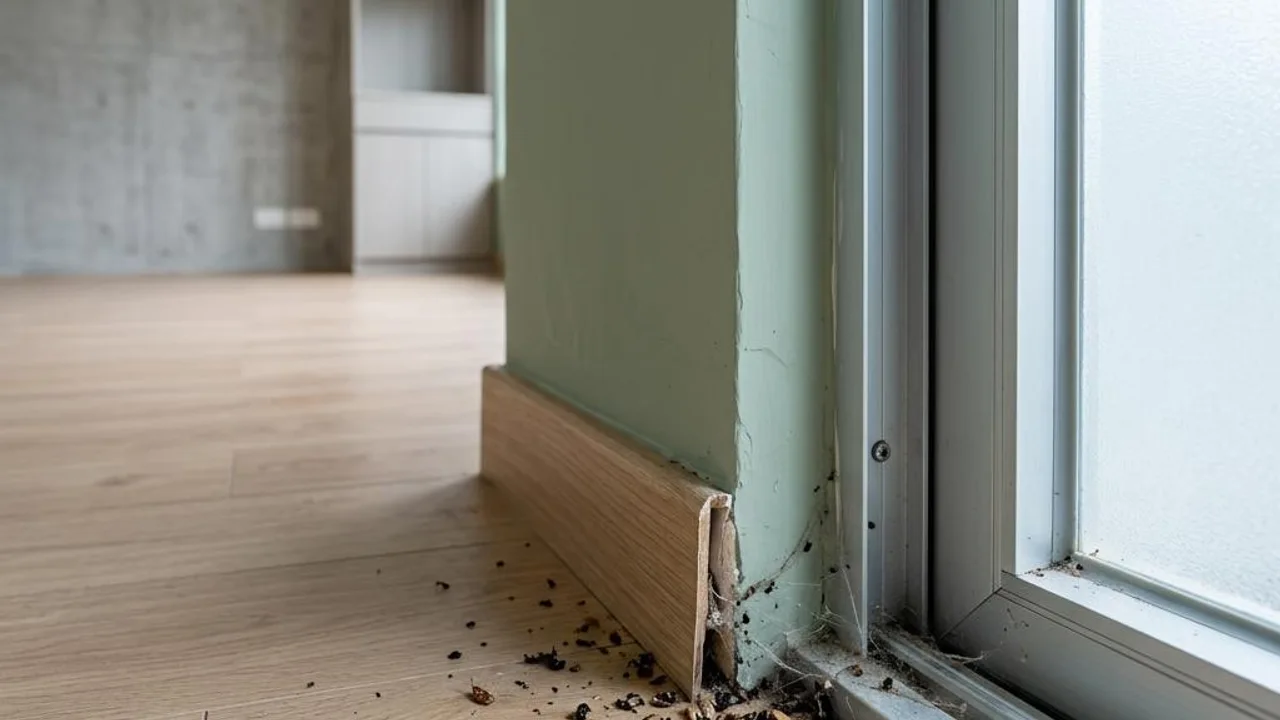
Potential causes for discovering insect carcasses during property inspection.
Discovering large numbers of insect carcasses indoors during a property inspection usually reflects that the unit has been left vacant for a long time or that the surrounding environmental hygiene is poorly managed. If a property is left vacant for a long time, the accumulation of dust and lack of air circulation will attract insects to inhabit it; if the unit is located near hills, forests, large refuse collection points, or stagnant water areas, the risk of insect intrusion will also increase.
Furthermore, inadequate sealing in the building design is also an important factor. During a property inspection, if it is checked that the window frame gaps are too large, exhaust vents are not equipped with effective insect screens, or drains lack appropriate anti-odour and anti-insect devices, insects can easily enter the indoor space via these channels. This is not just a hygiene issue; it reflects sealing defects in the building's details.
- Long-term vacancy leads to deterioration of environmental hygiene.
- Proximity to ecological zones or refuse dumping grounds.
- Inadequate sealing of windows or wall gaps.
- Exhaust passages not configured with insect screens.
- Drainage system lacks anti-insect traps.
Assessment of the impact of insects on the living environment.
Finding a large number of insect carcasses indoors can have multiple implications. From a hygiene perspective, their decomposition may produce unpleasant odours. While odours and bacterial growth cannot be used as direct metrics for health hazards, they are a clear hygiene indicator suggesting that the indoor environment is not ideal, necessitating thorough professional cleaning and improvement.
Owners should be aware that finding a large number of insect carcasses may imply the presence of live infestations. If the carcasses are widely distributed, this should be treated as a warning sign for environmental hygiene rather than just a surface cleaning issue. It is recommended to monitor for frequent pest activity and consult professional pest control services if necessary to eliminate potential hazards.
- Unpleasant odours caused by decomposing carcasses.
- Allergic reactions triggered by insect secretions.
- Potential threat of hidden pests to wooden structures.
- Indicates a lack of regular cleaning management in the property.
- Further investigation into indoor hygiene conditions is required.
Indoor hygiene environment and cleaning suggestions.
To thoroughly resolve the insect problem, the first step is to remove all carcasses and carry out a deep clean. If the situation is severe, it is recommended to engage a licensed professional pest control service to use targeted methods to eliminate pests hidden in walls or corners at their source, rather than just cleaning the surfaces.
The cleaning process should include disinfecting hidden corners to ensure no insect secretions remain. Owners should closely monitor hygiene changes in the unit after cleaning and ensure that all vents and drainage points are in optimal working condition to prevent external factors from reintroducing pests.
- Perform professional indoor deep cleaning and disinfection.
- Hire a professional pest control company to check the source.
- Clear out dead corners and dust accumulation.
- Monitor for any recurrence of hygiene issues after cleaning.
- Ensure the cleaning process is safe and non-toxic.
Measures for improving indoor physical barriers.
Regarding physical barriers, owners should check the joints inside and outside the unit, such as installing door bottom seals and improving insect-proof and rodent-proof screens on kitchen and toilet exhaust vents. Maintaining good ventilation and controlling humidity below 70% can effectively inhibit mould growth, reduce attractants for pests, and maintain a dry and hygienic indoor environment.
Inspect the joints between window frames and walls; if excessive structural gaps are found, a qualified professional can be engaged to inspect and repair them. These minor structural sealing tasks provide decisive protection against long-term pest infiltration from outdoors.
- Install anti-insect screens on all exhaust vents.
- Repair structural gaps at the edges of doors and windows.
- Install door bottom seals.
- Control indoor humidity below 70%.
- Strengthen sealing of skirting boards and wall corners.
Long-term environmental maintenance after property inspection.
Once current insect problems are eliminated, long-term maintenance becomes especially important. Regularly check the integrity of the home structure, especially in hidden spaces such as wall corners, skirting boards, and cable trunking, to ensure no pest breeding points are missed. Keeping refuse sealed and avoiding food residue is the most fundamental and effective strategy to prevent recurrence.
If a large number of insect carcasses are found during a property inspection, it is recommended to retain photographic records and request the developer to carry out a thorough treatment before handover. For older buildings, if the problem originates from external walls or public drainage pipes, contact the management office to report the issue and request coordination for pest prevention in common areas; do not just handle the interior while ignoring the overall environmental problem.
- Regularly check skirting boards and wall corner cracks.
- Properly dispose of household waste and ensure it is sealed.
- Strengthen hygiene in kitchen and storage areas.
- Regularly inspect structural integrity to prevent infiltration.
- Contact the management office to coordinate external wall or common area prevention.
FAQs
Does finding a large number of insect carcasses during a property inspection mean the unit has a major structural defect?
Insect carcasses are usually related to hygiene management and sealing issues, such as gaps in window frames or inadequate protection on vents; they do not directly equate to major structural defects in the unit. It is recommended to check window frame joints and drainage points first; if structural cracks are found, consult a professional for an assessment.
Does finding insect carcasses indoors imply an air quality problem?
Carcasses themselves will not directly cause air quality indicators to exceed limits, but they do indicate room for improvement in environmental hygiene. Moderate ventilation and controlling humidity below 70% can improve the indoor environment and reduce attractants.
As an owner, who should be the priority contact when discovering a pest problem?
If it is a new property handover, you should take photos as evidence and contact the developer for follow-up; if it is an older building or involves common areas, it is recommended to contact the property management office to arrange for public facility prevention, while also seeking a professional pest control company for an in-depth inspection.


