
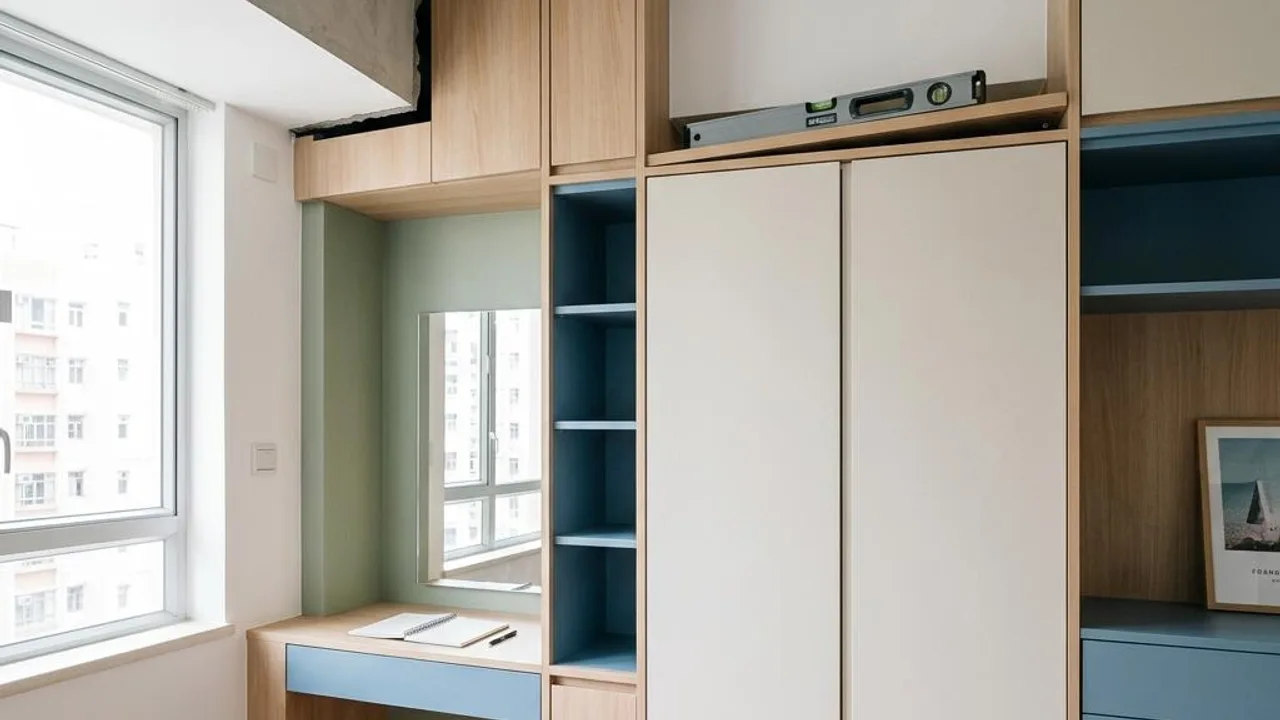
Identify furniture structure and installation defects.
During a property inspection, the quality of furniture installation directly affects daily living experience and safety. Owners should focus on checking whether cabinet bodies are stable, observing for any obvious wobbling or uneven installation. For built-in furniture, carefully check the connections to the walls; excessively large gaps may reflect insufficient wall flatness or imperfect installation craftsmanship.
In addition to structural fixing, moving parts are also a key focus for acceptance. Check the smoothness of all door cabinets and ensure drawer runners are working properly. The stability of shelf supports must not be overlooked; ensure all brackets are installed in place and can effectively bear the expected weight to avoid safety risks from future detachment due to improper installation.
- Test if cabinet bodies are stable and check for any wobbling.
- Check the opening smoothness of movable door cabinets and drawers.
- Observe whether the gaps between built-in furniture and the wall are uniform.
- Verify the stability of shelf support accessories.
Observe furniture layout and space configuration.
Beyond focusing on the installation quality of individual furniture pieces, the overall spatial layout should also be included in the inspection. Owners should observe whether furniture placement affects the opening of doors and windows, ensuring living space remains unobstructed. Overly crowded or unreasonable placement not only compresses the sense of living space but may also cause collisions in daily life.
At the same time, evaluate the coordination between furniture style and room layout, and measure whether main walkways maintain a reasonable width. If furniture is found to be seriously blocking access routes, it should be recorded and its placement reassessed; this helps to optimise the flow and functionality of the indoor space.
- Confirm that furniture placement does not obstruct windows or door openings.
- Check if furniture obscures power sockets or important switches.
- Observe if walkway space has become overly cramped due to furniture arrangement.
- Confirm whether furniture design fits the spatial proportions.
Steps for recording identified installation issues.
If furniture defects are found during a property inspection, owners should adopt an objective and systematic method for handling them. The first step is to record all issues in detail, using a camera to photograph defect details from multiple angles, and completing the property inspection list with both photos and written descriptions. These objective records are key evidence for future negotiations with the renovation party.
In the handling process, owners should remain calm and avoid attempting to dismantle complex built-in equipment or fixed devices without professional tools or skills. Over-repairing or self-operation easily leads to damaged parts or safety hazards; issues should be clearly recorded and the relevant construction party requested to provide professional adjustments.
- Take detailed photos of defect particulars as evidence.
- List each issue one by one on the written property inspection list.
- Avoid forcibly dismantling complex furniture components yourself.
- Request the responsible construction party to conduct inspection and repairs.
Communication points and handling strategies.
Handling furniture defects should involve selecting strategies based on the nature of the issue. If it is merely a loose screw or a micro-adjustment of a cabinet door, you can usually ask the construction party to correct it on the spot. However, if it involves structural skewness or installation errors in built-in pieces, you must request a professional tradesman to handle it to ensure repair quality meets safety standards.
When communicating with contractors or renovation parties, owners should present the recorded list and photos, clearly expressing reasonable requirements for quality. If installation deviations exceed general expectations, you should request that the construction party evaluate adjustment plans or replace parts to ensure the furniture can be safely and durably used.
- Distinguish between construction workmanship issues and normal wear and tear.
- Request professional tradesmen to follow up on structural deviations.
- Implement specific repair details through communication.
- Ensure re-testing of installation quality after repairs.
Seek assistance from professionals.
When furniture defects involve concealed works or connections to walls, owners may find it difficult to judge the core of the problem by visual inspection alone. It is recommended to consider consulting a property inspector or renovation professional with relevant experience to conduct on-site observation and assessment to distinguish between construction craftsmanship defects and spatial layout limitations. Property inspection services do not guarantee structural safety or the condition of concealed works; they only provide records of observations made within the visible scope on-site. Relevant professional fields such as electricity, gas, or structural safety should be separately tested and handled by qualified registered professionals.
Professional assistance not only helps owners compile a more persuasive repair list but also provides neutral, professional advice during negotiations with the construction party, ensuring that the owner's interests during the property inspection process are not infringed upon.
- Invite professionals to assist in conducting a comprehensive acceptance check.
- Have a specialist determine the specific causes of installation defects.
- Obtain an objective and neutral acceptance report.
- Entrust professionals to carry out technical coordination with the renovation party.
FAQs
During a property inspection, if cabinet doors are found not to close smoothly, how should one determine if repairs are needed?
If cabinet doors show significant friction, cannot fully close, or slide open automatically, these are all installation defects. Owners should record this situation and request that the construction party improve it by adjusting hinges or horizontal benchmarks to ensure smooth daily use.
If there is a gap between a built-in cabinet and the wall, does this mean there is a structural safety issue?
Gaps are usually related to the flatness of the wall or the craftsmanship of the finish. Owners should photograph and record the size of the gap and observe whether it causes the cabinet to wobble. If the structure is stable and does not wobble, you can ask a professional to help with patching or installing finishing trim.
I am not sure if certain furniture defects are serious; should I demand an immediate replacement?
Replacing furniture is a major step and you should first record the details of the defect. If the defect is merely cosmetic, you can first attempt repairs. If the defect affects the structural load-bearing capacity or long-term safety of the furniture, then you should request that the relevant party evaluate whether it meets warranty standards before making a decision.


