
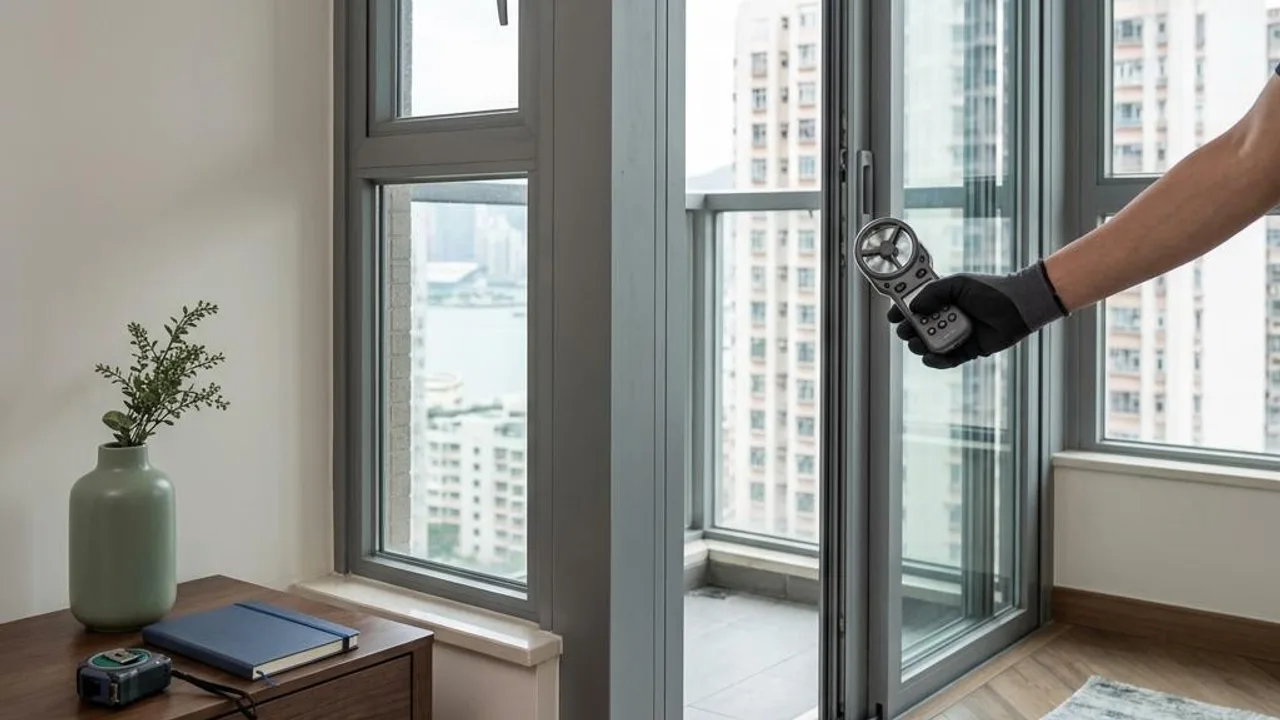
The importance of sealing performance
Window and door sealing is a core indicator of the home environment, directly affecting living comfort and energy efficiency. Good sealing effectiveness can effectively insulate against outdoor noise, dust, and humid air, preventing air conditioning loss and thus reducing long-term electricity expenses.
During the property inspection process, checking sealing performance is not just about confirming smooth operation, but also identifying potential structural gaps. Professional testing allows homeowners to discover construction deviations or aging consumables in time, ensuring the future living environment maintains a stable temperature.
- Energy conservation and carbon reduction by lowering air conditioning load
- Insulating against street noise disturbance
- Preventing rainwater seepage and dust entry
- Maintaining stable indoor humidity
Window appearance detail inspection
When performing an appearance inspection, focus on observing the finishing craftsmanship where the window frame meets the wall. Check for cracks, gaps, or aging of sealant; any tiny gaps could be a hidden danger for future water seepage.
At the same time, ensure that sealing strips remain elastic and intact. If signs of breakage, curling, or hardening are found, they should be listed in the defect rectification list immediately to avoid the window losing its intended protective function due to failed sealing materials.
- Check window frame joint sealing craftsmanship
- Confirm the elasticity and integrity of sealing strips
- Observe the fit between window sash and window frame
- Watch for whether drainage holes are blocked
Airtightness observation suggestions
The airtight performance of a window after closing depends on the fit between the locking points and the sealing strips. After locking the window, homeowners can gently touch the surrounding frame to feel if there is any airflow entering, which reflects whether the window frame has obvious deformation or installation deviation.
Since the average household lacks precision airtight testing equipment, it is recommended to observe through careful sensory inspection. If the window exhibits obvious abnormal noise or vibration in strong winds, it is often a signal of unstable structural installation or loosened accessories, requiring professional technicians for adjustment.
- Pay attention to the feeling of gaps after the window is locked
- Observe windproof and soundproofing performance after closing the window
- Confirm the tightness between window lock and lock seat
- Check whether window frame accessories are secure
Watertightness inspection requirements
Watertightness is a key indicator for property inspection, especially for windows facing external walls. If conditions permit, under professional guidance, a limited water spray test can be performed to observe whether there are signs of water seepage at the window sill and sealed joints.
Note that the inspections mentioned here are of an observational nature. If serious leakage is found, this does not mean it can be repaired by yourself; it must be subject to structural inspection by professional contractors to avoid damaging the window's original waterproof coating or components due to improper handling.
- Check the condition of the waterproof layer around the window frame
- Check inside the window sill for any standing water.
- Observe the walls for any water stains or mould.
- Assess the sealing integrity of the exterior wall joints.
Door sealing and structural inspection
When inspecting main doors and room doors, focus on testing how tightly they close. There should be an appropriate gap between the bottom of the door and the floor; it should neither be too large, causing draughts, nor cause excessive friction that hinders opening.
The functionality of hinges and locks directly affects the structural stability of the door. Loose hinges can cause the door panel to sag, leading to a failure in the door frame seal. Regularly checking the alignment of the latch and strike plate ensures the door remains well-sealed after long-term use.
- Ensure the gap at the bottom of the door is uniform.
- Check if the hinges are loose or sagging.
- Test the closing state of the latch and strike plate.
- Check the performance of the door frame weatherstripping.
Professional property inspection and follow-up
Sealing issues often involve precise construction; if significant deviations are found, it is recommended to seek an assessment from a professional property inspector from OPO Inspection. Professionals can test various data points according to standards to determine if they meet the safety and functional requirements of the Buildings Department or the industry.
For all recorded sealing defects, it is recommended to take photos for documentation and provide the list to the responsible unit so that qualified maintenance personnel can be arranged to perform the appropriate technical repairs. Do not alter the original window structure without authorisation.
- Assess the potential volume of repair work.
- Coordinate with professional contractors for defect rectification.
- Record all identified sealing defects.
FAQs
How can you tell if the window weatherstripping has failed?
Observe whether the weatherstrip has become cracked, hardened, curled, or lost its elasticity. If the weatherstrip cannot sit snugly against the window sash and frame, or if there is obvious resistance or unusual noise when opening and closing the window, these are all signs of reduced sealing performance.
If a gap is found between the window frame and the wall, how should it be handled?
Do not attempt to cover it with caulking yourself; a professional contractor should check whether the gap affects structural safety or waterproofing, and a qualified technician should perform a professional sealing repair based on the actual situation.
Does finding standing water on the window sill during a property inspection mean the window is definitely leaking?
Standing water on the window sill may be caused by condensation or inadequate sealing. Owners should observe whether there are signs of seepage at the window frame joints. If you suspect it is related to sealing, a professional should conduct an on-site inspection to identify the source of the leak.


