
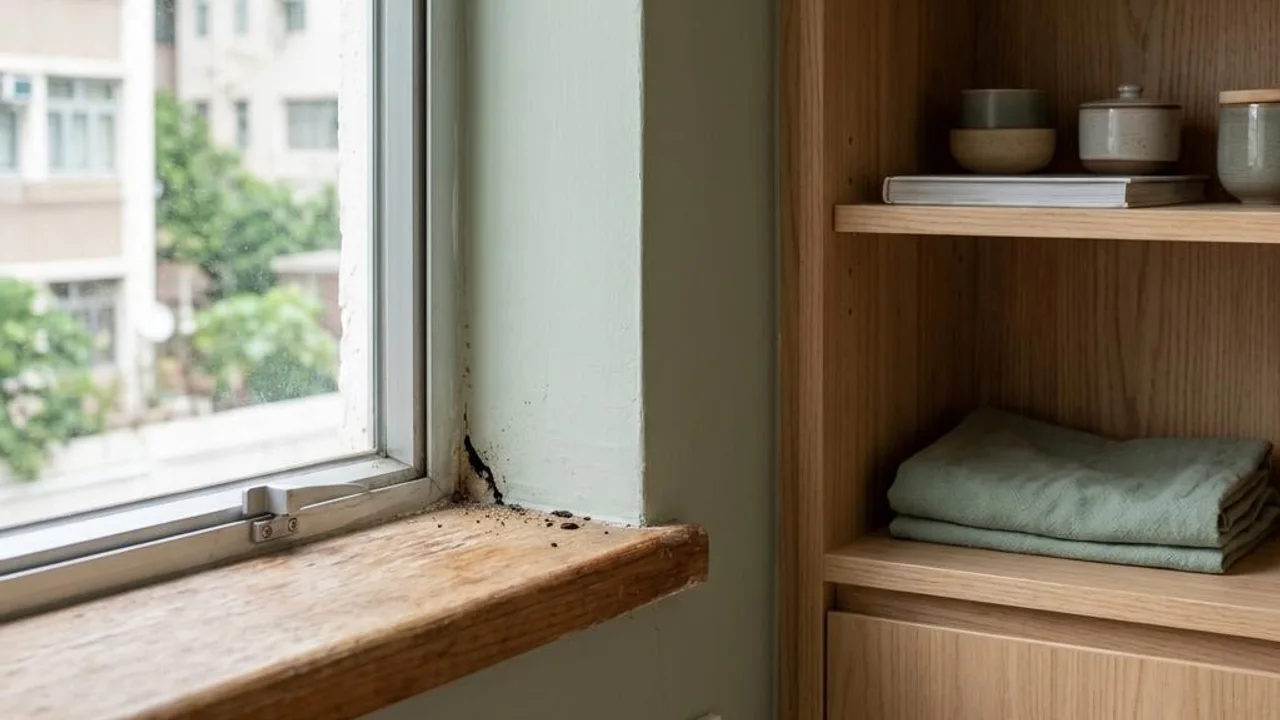
Common hidden locations for household pests
During residential property acceptance, many homeowners easily focus on wall flatness or water leakage issues, thereby ignoring signs of pests hidden in the dark. These pests usually prefer hidden, warm places with ample food sources, such as inside kitchen cabinets, under bathroom washbasins, floor gaps, and areas surrounding various pipe wall penetrations; these are all high-risk breeding grounds.
The most direct way to identify the presence of pests is to observe traces left by their activities. For example, cockroaches often leave excrement similar to coffee grounds in cabinet corners, or leave white capsule-shaped egg shells in the depths of drawers; termites often leave excavated tunnel holes or fine wood shavings on wooden door frames or skirting boards; mice may leave black rice-grain-shaped droppings in wall corners. These clues are often more important than seeing live specimens directly; homeowners must carefully check various wood joint seams and dark corners during property inspection.
- Cockroaches: Watch for excrement and white capsule-shaped egg shells in cabinet corners and around pipes
- Termites: Check wooden door frames, skirting boards, and cabinet bodies for abnormal hollows or wood shavings
- Mice: Search for black rice-grain-shaped droppings and scratching noises in wall corners or inside walls
- Biting insects: Watch for tiny stains on mattresses, carpets, or sofa fabrics
The boundary between observation and professional inspection
Homeowner observations during the property inspection stage are only a preliminary screening. When any traces of suspected pest activity or abnormal odours are found, record the location, characteristics, and extent of the impact in detail, and integrate this information into the inspection list. It must be emphasised that homeowner observations are intended to provide prompts and can never replace a deep and systematic environmental survey and targeted treatment plan by a professional pest control expert.
Professionals will assess the scale of impact pests have on the building structure during their investigation, especially for wood-destroying pests like termites. If the situation is serious, it must be handled by a team with professional qualifications. Before receiving professional advice, homeowners should avoid spraying unverified chemical agents at will to prevent the treatment from failing to eradicate the problem, and conversely, affecting indoor air quality and the health and safety of family members.
- Detailed record of pest types observed and their locations
- Check the stability of wooden flooring and cabinet furniture
- Distinguish between cleanable stains and suspected damage caused by pest infestation
Targeted household pest control strategies
Once signs of pests are found, improving the level of environmental hygiene is the top priority. For minor hygiene issues, homeowners can interrupt the food chain through thorough cleaning processes, such as clearing food scraps, thoroughly sealing dry food and snack packaging, cleaning trash cans, and repairing minor leaks in faucets to eliminate stagnant water. Keeping the environment dry and clean is a basic, effective, and long-term maintenance measure to inhibit pest breeding and maintain a healthy indoor environment.
If pest infestation has penetrated the building substrate or wood structure, cleaning alone is often ineffective. At this point, you must commission a registered pest control contractor to use compliant equipment and agents for comprehensive eradication. For high-incidence pest areas, regular inspections are still needed after pest control, and the ventilation system must be kept running to maintain a dry environment; this can significantly reduce the probability of pests reappearing.
- Clear food scraps and seal up dry food and snacks
- Repair faucet leaks to reduce stagnant water
- Commission a registered pest control contractor for serious cases
- Regularly clean ventilation systems to maintain indoor dryness
Why pest control is a focus of property inspection
Pests not only cause damage to decorative surfaces, but more importantly, they pose a threat to resident health. Disease vectors such as cockroaches and mice may carry various infectious pathogens. Identifying these signs early during the property inspection stage can win time for homeowners to resolve the issue before moving in, avoiding the extra trouble and financial loss of needing to temporarily evacuate or carry out complex construction after moving in.
Furthermore, structural pests such as termites pose a potential threat to the house structure that is usually hidden but huge. A professional property inspection process should include risk assessment for wooden fittings and load-bearing wooden structures. For new properties, ensuring there are no signs of pest invasion is a necessary process to confirm property delivery quality and protect asset value; homeowners should not ignore these hazards due to momentary negligence.
- Prevent disease vector transmission to safeguard family member health
- Reduce renovation losses caused by structural pests
- Ensure environmental quality meets standards before moving in
- Identify pest hazards left behind during the renovation process
Household pest prevention and maintenance guide
In daily life, regular inspections and maintenance are key to preventing pest recurrence. It is recommended that homeowners check the bottom of kitchen cabinets and storage areas once a quarter, clear accumulated clutter, and confirm if there are any traces of pests. Keep the inside of cabinets dry to avoid wooden panels getting damp and softening, as damp wood is more likely to become a target for pest nesting.
For newly built or newly renovated units, special attention should be paid to the quality of building materials to ensure that wood has been appropriately treated before installation, and that all gaps connecting walls and floors are sealed. Good ventilation design not only improves living comfort but also effectively prevents mould growth and pest lingering; it is an indispensable part of creating a healthy home environment.
- Check hidden corners in the kitchen and storage areas every quarter
- Maintain indoor ventilation to reduce humidity and mould growth
- Seal seams between walls and floors to reduce hidden passages
- Select treated anti-pest wooden building materials
FAQs
If small holes are found in wooden cabinets during property inspection, does this mean termites have already invaded?
Holes in wooden cabinets may indeed be signs of termites or other wood-boring pests, but they could also be natural holes in the wood or nail holes left during renovation. Homeowners should observe whether there are fine wood shavings around the holes; if signs of cavitation appear on the wood surface or there is a feeling of looseness, record the location and seek a professional for structural assessment.
If cockroach excrement is found, can homeowners buy insecticides to deal with it themselves?
It is not recommended that homeowners excessively use chemical agents of unknown efficacy themselves. Randomly spraying agents by yourself may only serve as a temporary repellent, and if the ingredients are handled improperly, it may affect indoor air quality. It is advised to record the location first and seek a registered pest control contractor for professional inspection and targeted treatment.
What steps should be taken if suspected mouse droppings are found during property inspection?
Finding mouse droppings indicates that there may be mouse activity paths in that area. Homeowners should immediately check the gaps in nearby walls and floors, and write the discovery into the property inspection report in detail. At the same time, home hygiene management should be strengthened, all food sealed, and a professional pest control team contacted to conduct an environmental survey, rather than just clearing the droppings without addressing the root cause of the problem.


