
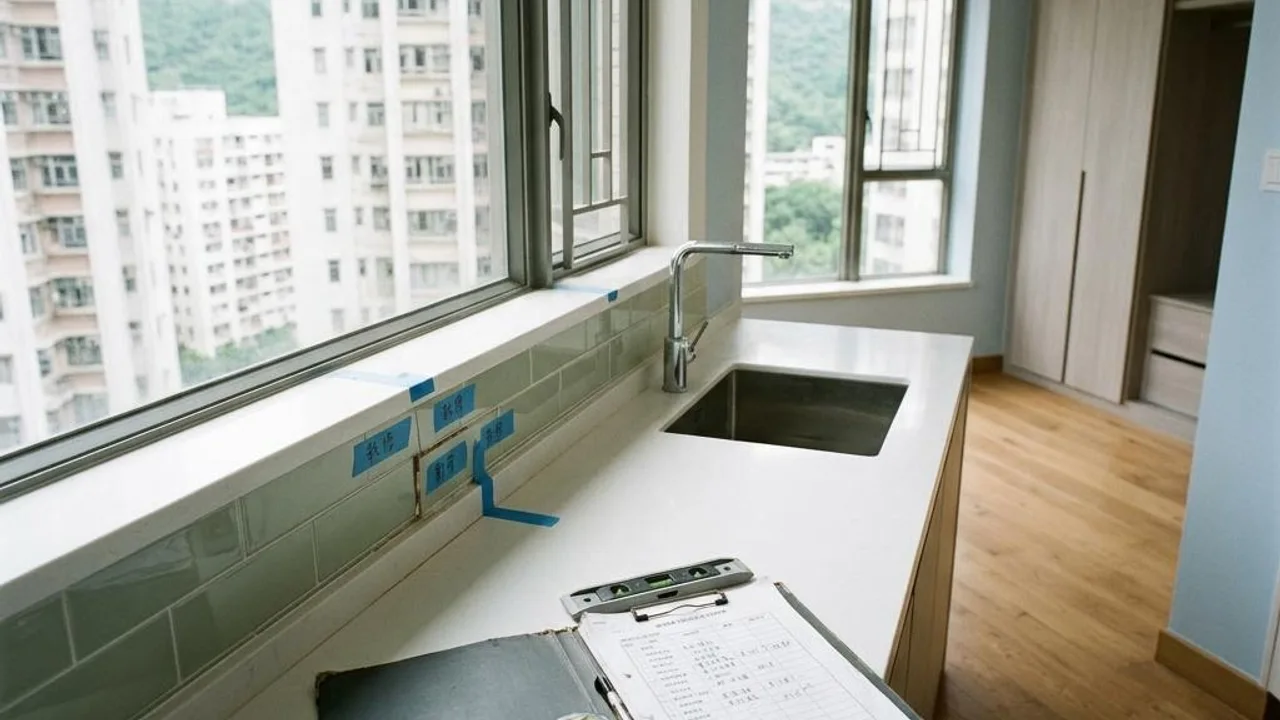
The necessity and preparation for property inspection
Property inspection before moving into a new home is a crucial step in protecting an owner's rights. Through meticulous inspection, you can ensure the unit's condition matches the specifications in the sales contract, avoiding increased repair costs later. This work is not only about living comfort, but also relates to the prevention of future domestic safety hazards.
Before conducting the inspection, owners should study the handover standards in the sales contract and prepare a torch and marking stickers. Perform a visual inspection of walls, floors, and ceilings to ensure there are no obvious structural flaws or renovation defects, providing a firmer basis for subsequent negotiations.
- Carefully read the handover standards and the list of included appliances specified in the contract
- Prepare a torch to observe the condition of walls in corners and dark areas
- Use marking stickers to record the locations of identified issues
- Record the complete state of the unit before repairs for comparison
Key points for wall and floor inspection
The focus of wall and floor inspection lies in the integrity and flatness of the finishes. Owners should watch for abnormal cracks or colour variations on walls, and check if floor tiles or flooring are laid evenly. If hollow areas are found, record their location and extent immediately.
If signs of water seepage appear on walls, record the observed location and any colour changes. Although it is generally difficult for owners to determine the source of seepage, you can record the observed damp marks and request the developer to send relevant professional personnel to carry out an in-depth inspection and assessment.
- Check walls for visible cracks or abnormal bumps
- Observe whether the floor is laid flat and without any feeling of looseness
- Record the location of any damp marks or mould patches found on walls
- Confirm whether there are abnormal signs of seepage on the ceiling
Door and window functionality and sealing tests
The smoothness of door and window operation and their sealing performance directly affect the sound and water insulation of the living environment. During the property inspection, try opening and closing them multiple times to check if the door locks are aligned, and if cabinet doors and window frames are installed level. Do not overlook the rubber seals on the window frame edges; check for any ageing or improper installation.
Owners can observe window frames for traces of water seepage, especially before or after the rainy season. If persistent water accumulation or leakage is found at the window edges, request a professional to inspect the sealing material and performance of the window frame edges to ensure they meet basic waterproofing requirements.
- Test door and window operation multiple times to ensure moving parts are smooth
- Check that door and window locks are operating normally and that the latches are precise
- Note whether the sealing strips around the door and window frames are perfectly fitted
- Observe the opening stability of cabinet doors and drawers
Functional verification of electrical and plumbing facilities
The safety and functionality of electrical and plumbing systems are crucial. Check that all sockets are working properly and ensure all electrical switches are installed level. Regarding the drainage system, observe the water drainage speed in the kitchen and bathroom; if obvious blockage or slow drainage occurs, request relevant professional personnel to check for pipe blockages.
When inspecting electrical installations, do not disassemble any covers or touch live parts yourself. If you have any doubts about the electrical installation, request the developer to arrange a qualified person to inspect it on-site and ask them to provide relevant test verification to ensure the facilities fully comply with safety regulation requirements.
- Check whether the positions of electrical switches and sockets meet your personal planning
- Check whether all lighting and electrical circuits/switches are operating stably
- Test drainage points to see if there is any obstruction to water flow
- Check that there is no water seepage or dripping at the tap connections.
Developer defect rectification mechanism
When non-compliant conditions are discovered in the unit, the owner should compile a detailed written list, itemising all issues to be submitted to the developer for their records. Before formally arranging defect rectification, it is advised to cross-check the list to ensure no critical matters have been omitted.
The purpose of defect rectification is to restore the unit's original functionality and appearance. Once the developer has completed the repairs, the owner must attend in person for a reinspection. Check the craftsmanship of the repaired areas to ensure they are level and re-test the functionality of the device to confirm that the results meet contractual requirements.
- Submit a written list of issues to the developer for their records.
- Take photographic records of all defective areas prior to defect rectification.
- Re-test the functionality and appearance of the relevant areas after defect rectification.
- Confirm whether the craftsmanship post-repair is level and coordinates with the surrounding area.
Professional property inspection assistance deployment
If an owner lacks experience in building structures or the property inspection process, commissioning a professional team to conduct the inspection is a common choice. Professional teams typically possess specific instruments that help identify potential defects more objectively and provide a detailed property inspection report for the owner to communicate with the developer.
When hiring a third-party inspector, verify their service scope and processes in advance. The owner should ensure the building inspector has sufficient time to conduct tests during the unit inspection and, once the report is completed, consult them regarding specific rectification suggestions to enable more effective follow-up with the developer.
- Confirm whether the professional team's services include a comprehensive inspection.
- Follow up on the entire inspection process during the scheduled appointment slot.
- Communicate with the developer regarding defect rectification details based on the contents of the report.
- Clarify the nature of the issues mentioned in the report and their impact on the home.
FAQs
During property inspection, I discovered slight unevenness in the wall colour; must I request defect rectification?
Owners should consider the scope and extent of the colour unevenness. If it is a minor defect that does not affect the overall aesthetic or wall structure, you may decide for yourself whether to include it in the defect rectification list; if the colour difference is significant and affects the decoration result, it is recommended to include it in the list for the developer to address.
If the developer states that water leakage in some window frames is common, how should I respond?
The owner should not accept such ambiguous explanations; they should insist that the developer send relevant personnel to conduct an inspection to confirm whether the sealing materials and installation meet standards, and record the specific signs of leakage observed as a basis for negotiation.
After defect rectification is completed, I found that the original problem was not thoroughly resolved. What should I do?
The owner should immediately refuse to sign the defect rectification completion report, clearly point out the areas that do not meet standards, and request that the developer re-arrange for defect rectification, while also recommending that the ongoing status of the issue be recorded until the repair results comply with the contract specifications.


