
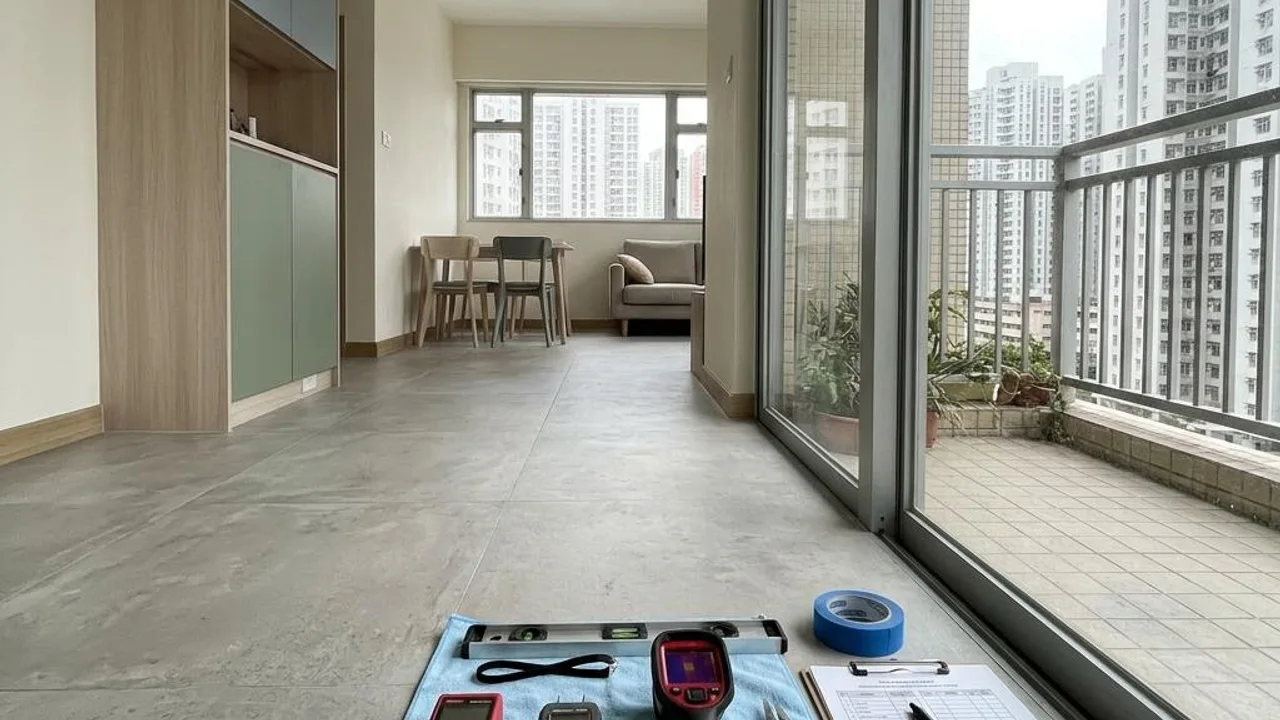
Correct understanding and use of property inspection tools
Property inspection is not just a visual check; it is technical work that combines professional equipment with experience. Common household inspection tools on the market, such as moisture meters, voltage testers, and spirit levels, can assist owners in making a preliminary judgment of a unit's condition. However, these tools must be used in conjunction with correct professional knowledge and on-site operational experience to be truly effective. If the test results deviate significantly from expectations, consider commissioning a professional property inspection team for follow-up.
When purchasing or using property inspection tools, owners must be clear about their own limitations. Professional inspectors do not just rely on equipment but also on long-term accumulated experience to identify potential problems with walls, floors, and electrical installations. If relying only on basic equipment for inspection, it is difficult to cover the details of all concealed structural parts; therefore, tools can only serve as inspection aids and cannot fully replace the judgment of professionals.
- Moisture meter: Detecting surface moisture of walls to judge potential water seepage risk
- Voltage tester: Checking the power supply status of basic sockets
- Spirit level: Observing whether the floor or walls have any tilt visible to the naked eye
- Laser distance meter: Confirming whether the actual square footage of the unit matches the contract description
- Light meter: Assessing the environmental lighting levels in various indoor areas
Monitoring wall and structural moisture
A moisture meter is one of the most important tools in the property inspection process, primarily used to detect water content around walls, floors, or window frames. Excessive wall moisture can be a sign of potential water seepage; if not handled in time, it may lead to mold growth on walls, peeling plaster, or corrosion of metal components over the long term, which in turn affects the hygiene of the home environment.
When using a moisture meter, multiple measurements should be taken in high-risk areas such as kitchens, bathrooms, and exterior wall window sills. If abnormal values are found in local areas, record them in detail and take photos for future communication with the developer or contractor. Please note that moisture meter readings only provide environmental hints and are not the sole standard for determining the source of seepage.
- Focus on inspecting joints between walls and floors in bathrooms and kitchens
- Observe whether there are abnormal moisture values at window sill locations
- Record areas with values higher than average to facilitate subsequent tracking
- Observe in conjunction whether there is paint discoloration or mold spots on walls
Preliminary inspection of home electrical facilities
A voltage tester can quickly confirm whether every electrical socket in the unit has a current supply. During a property inspection, this is the basis for ensuring the electrical system of a new home is operating smoothly. However, for the installation or modification of fixed electrical appliances (such as electric water heaters or lighting), you must hire a registered electrical contractor to perform electrical work that complies with regulations.
Users should usually pay close attention to the condition of electrical appliance wires and plugs. If any charring, deformation, or strange odors are discovered, stop using them and inspect them immediately. Remember that high-power appliances (such as air conditioners and dehumidifiers) should occupy fixed sockets exclusively; avoid sharing extension leads to prevent overload risks. Professional electrical safety inspections must be performed by qualified engineering personnel.
- Confirm whether all sockets have a current output
- Check that the labels for each switch in the distribution board are clear and accurate
- Avoid using high-power appliances concentrated on the same circuit
- If charring or strange odors are found, contact professional personnel immediately
- Strictly prohibit operating electrical devices in damp or near-water locations
Observation of wall flatness and structure
In property inspection, a spirit level is used to assist in checking whether walls, floors, and door frames remain flat and straight. The flatness of a structure not only affects the aesthetics of the renovation but also reflects the level of craftsmanship. If the floor or walls appear significantly tilted or uneven, it is recommended to record this in detail and report it to the developer to confirm whether it meets building acceptance standards.
When observing structural issues, owners should pay attention to any obvious cracks or floor tile hollows. Professional inspectors use professional techniques, rather than relying on a spirit level alone, to judge structural stability. If any abnormal cracks involving load-bearing structures are found, consult a professional for advice immediately; do not attempt any structural alterations yourself.
- Check if floor tiles have obvious hollow sounds or looseness
- Observe if the skirting boards are tightly fitted to the floor.
- Inspect the structure for cracks through visual examination and tool-assisted observation.
- Check if door frames are misaligned, causing difficulty in opening or closing.
- Record the location and extent of all uneven areas.
Frequently Asked Questions about property inspection
During property inspection, owners are often confused about the professional scope and procedures. By correctly answering these common questions, owners can stay calm during the handover process and focus their inspections on key items.
Below are three common property inspection queries, which we hope will provide practical advice to owners preparing for handover, ensuring a smooth property purchase process.
FAQs
Can owners rely solely on tools they purchased themselves for property inspection?
Owners can purchase tools for preliminary checks, but these tools serve as aids only and cannot replace the comprehensive judgment of professionals regarding complex building defects. We suggest owners treat detection results as observation records; if systemic issues are found, professional advice should be sought.
If a wall moisture meter shows high readings during property inspection, does that definitely mean there is a water leak?
Not necessarily. High wall moisture can be caused by various factors, such as new plastering that has not yet dried thoroughly, high ambient humidity, or condensation. The moisture meter reading is for reference only; if persistent abnormalities are found, a registered building surveyor should be engaged for a detailed inspection.
If a voltage tester shows that a socket has no power, what should be done?
If you find a socket with no power, please first confirm whether the relevant main switch in the consumer unit is turned on. If the switch is confirmed to be correct but there is still no power output, stop using that area and contact a qualified electrical contractor for professional inspection and repair.


