
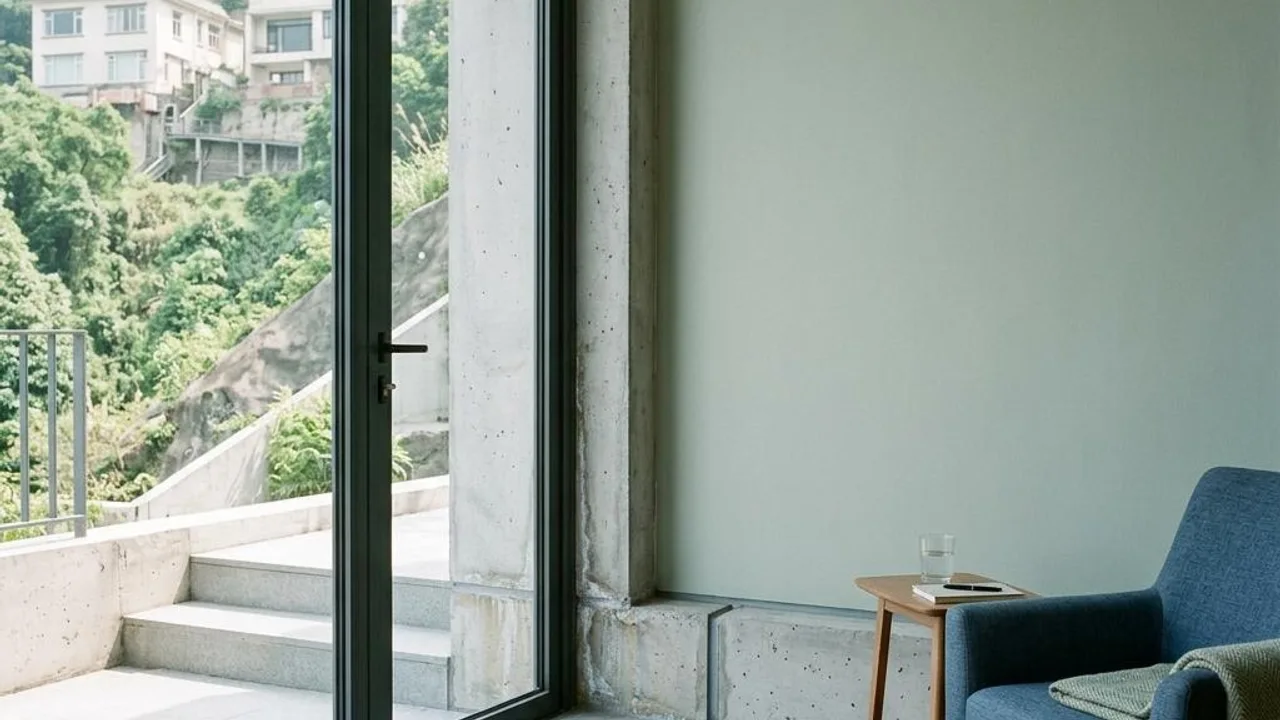
The fundamental significance and objective value of independent house property inspection
Property inspection is an indispensable part of independent house transactions, especially for properties located on hillside terrain, where the building structure has a high level of interaction with the surrounding environment. A professional property inspection does not just verify facility functions; it performs targeted safety checks based on the specific geographical environment of such properties to ensure structural integrity and long-term residential safety.
Through professional inspection, buyers can more clearly grasp potential maintenance burdens, including drainage pipes, retaining wall repairs, and foundation stability. This not only protects the investment value but, more importantly, allows owners to understand potential future risks, enabling them to plan maintenance budgets in advance or secure reasonable safeguards during price negotiations.
- Detailed assessment of the property's overall structural stability.
- Recording potential maintenance needs and the condition of related equipment.
- Providing objective inspection data for home purchase decision-making.
- Identifying environmental factors that affect residential safety.
Special environmental risks and observation points for hillside properties
The most critical risk for hillside independent houses is soil stability. Surface vegetation and soil saturation levels affect the hillside structure. Owners should observe whether there are obvious cracks in the surface or signs of tilting or water seepage in retaining walls. These minor physical changes are often early warning signs of potential slope instability and must be assessed by a qualified person.
The drainage system is the soul of a hillside house. If drainage channels are blocked, accumulated water can lead to surface softening, which in severe cases may threaten the safety of the house foundation. Inspection focus should be on whether roof drainage pipes and hillside drainage pits are clear, and ensuring surrounding slope maintenance meets requirements to prevent stagnant water from seeping directly into the soil near the foundation.
- Check the surface of the retaining wall for cracks or abnormal water accumulation.
- Observe whether there are significant signs of settlement or movement in the hillside terrain.
- Confirm whether the drainage system is free from blockages.
- Watch for soil erosion or unusual tilting of vegetation after rain.
Professional inspection scope and structural safety assessment
The scope of independent house property inspection covers everything from the external environment to the internal structure. Through professional observation, one can identify stress cracks on exterior walls, signs of foundation settlement, and the stability of suspended facilities. These data objectively reflect the current status of the property, serving as a basis for the owner's subsequent maintenance work.
Analyzing the stability of external building facilities is the core of property inspection. This includes examining the appearance of the retaining wall and surrounding slopes, and verifying the discharge speed of the drainage system. When abnormal conditions are found, the owner should record the observations and consult a professional building consultant for a detailed investigation.
- Observe the safety of the house's foundation structure.
- Examine the efficiency of hillside drainage and the clarity of the channels.
- Assess the appearance of the retaining wall and surrounding slopes.
- Analyze the stability of external building facilities.
Risk management and professional maintenance coordination after property inspection
After the property inspection procedure is completed, the owner must conduct risk management based on the observation records in the report. If the report indicates potential structural hazards or abnormalities in the drainage system, priority should be given to seeking a registered contractor for professional inspection and assessment; do not attempt large-scale repairs yourself.
Properly planning a maintenance budget is crucial for independent house owners. Prioritizing the maintenance items identified in the property inspection and confirming the scope of responsibility for daily property maintenance helps maintain the property's living conditions while preventing more serious building structural problems caused by ignoring minor repairs.
- Consult a professional registered contractor for major maintenance projects.
- Incorporate maintenance budgets into the overall home purchase plan.
- Confirm the scope of responsibility for the property's daily maintenance.
Property maintenance records and regulatory compliance
Common follow-up items after hillside independent house inspection include repairing exterior wall cracks, re-waterproofing, and improving drainage. These projects must be assessed and executed by qualified registered contractors, especially when involving high-altitude work on retaining walls or exterior walls. Regarding the Mandatory Window Inspection Scheme and Mandatory Building Inspection Scheme, these must be conducted by qualified persons on the Buildings Department register as required by law; they are not part of a general inspection scope.
Owners should note that regular maintenance is key to maintaining property value. We recommend that owners keep all certificates of completion or maintenance records issued by qualified professionals, as these documents are important references for future property resale or subsequent inspections.
- Prescribed inspections and repairs must be carried out by a registered contractor.
- Properly preserve all property inspection and repair reports and certificates. If potential structural or safety hazards are discovered, please consult an Authorized Person or relevant professional for assessment. Property inspection service is limited to the visual range at the time of inspection and does not guarantee building structure, electricity, gas safety, condition of concealed pipes, waterproofing layer thickness, or remaining service life. Infrared thermography only shows surface temperature differences and does not constitute definitive proof of the cause of leakage or concealed structures. The Mandatory Window Inspection Scheme is an independent statutory procedure that must be executed by qualified persons registered with the Buildings Department, and it is not a general property inspection item. Do not attempt electrical testing, dismantle components, adjust water pressure valves, or enter dangerous areas.
- Regularly check the performance of indoor and outdoor drainage pipes.
- Pay attention to the requirements of the Mandatory Building and Window Inspection Schemes.
FAQs
How should an owner handle retaining wall cracks found in a property inspection report?
The owner should record the location, length, and width of the cracks, and take photos for the record. Subsequently, a qualified professional (such as a registered architect or engineer) should be hired to conduct an on-site inspection to assess the cause and potential risks of the cracks, and take repair measures based on their advice.
How to determine if the drainage system of a hillside independent house is clear?
Owners can check roof terrace drainage holes, balcony drains, and hillside drainage channels during daily inspections to ensure they are not blocked by debris, soil, or fallen leaves. If drainage is found to be slow or water accumulation is severe after heavy rain, consider commissioning a registered contractor to check if the pipes are damaged or blocked.
Does professional advice in a property inspection report equate to a legal safety guarantee?
The property inspection report reflects the objective observations and professional assessments of the professional on the day of the inspection, aiming to identify potential problems for the owner's reference. This report cannot prove the safety or compliance of the property's structure, electricity, gas, or fire protection facilities, nor can it cover concealed locations, remaining service life, or predict repair effectiveness. Thermal imaging inspection only reflects surface temperature distribution and does not represent definitive proof of moisture, leakage causes, or concealed structures; the use of tools cannot guarantee the revelation of all concealed defects. Mandatory Window Inspection is an independent procedure that must be handled by qualified persons registered with the Buildings Department and does not fall within the scope of this daily inspection service. For matters involving safety or professional technical areas, please consult relevant licensed professionals; do not attempt electrical testing, dismantle components, adjust water pressure valves, or enter high-altitude danger zones.


