
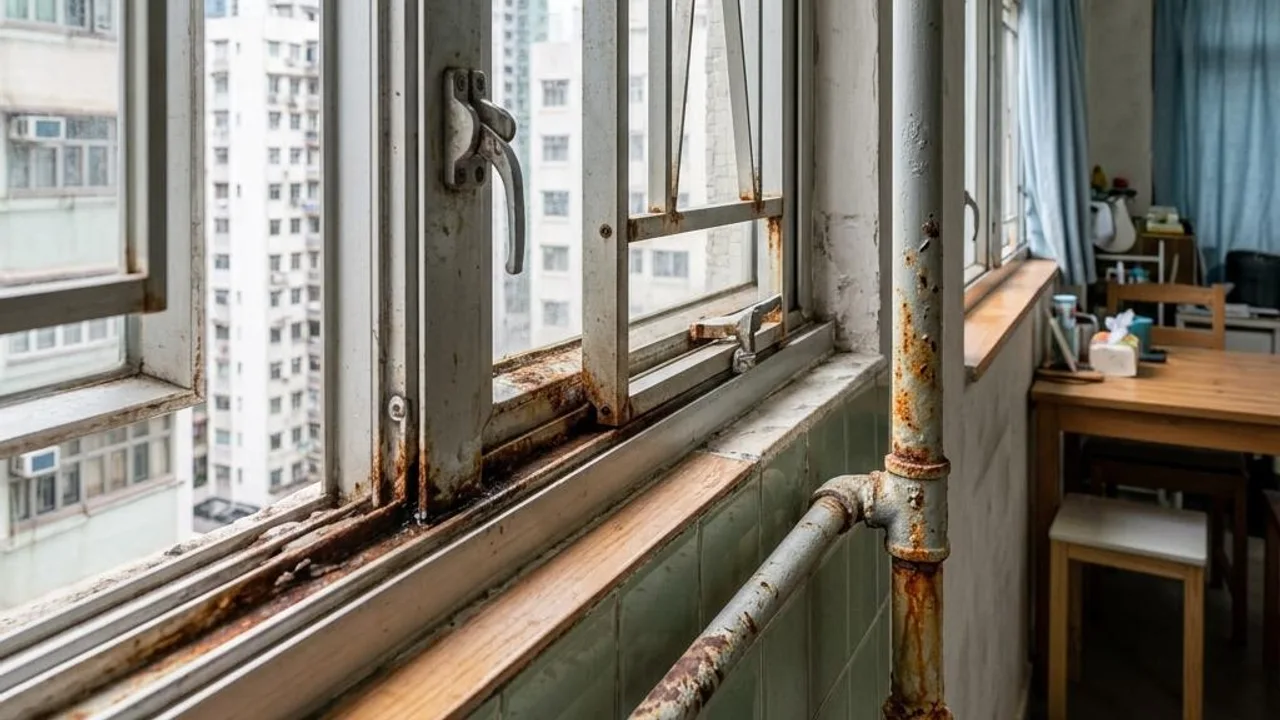
Causes and risks of metal rusting.
Metal rusting (oxidation) is a common natural ageing phenomenon for indoor renovation materials, mainly caused by the exposure of metal surfaces to oxygen and moisture, leading to a chemical transformation that forms iron oxide. In the humid climate of Hong Kong, if metal structures lack adequate anti-rust protection, the corrosion can easily spread over time, thereby damaging the strength and durability of the metal surface.
Besides aesthetic damage, rust can also be a precursor to structural damage. If metal components such as window security grilles, frame connections, or concealed steel structures suffer from severe rust, the metal expands and becomes brittle. In minor cases, this leads to structural deformation, and in severe cases, it may cause components to break or detach, posing a safety hazard in the home.
- High environmental humidity accelerates oxidation.
- Damage to the protective paint layer on metal surfaces.
- Long-term moisture accumulation at connection points.
- Insufficient corrosion resistance of the metal material itself.
Observation indicators for metal rust at home.
During daily inspections, homeowners should pay close attention to sensory details on metal surfaces. The most direct warning sign is a change in colour, for example, the natural metallic tone of steel turning orange, reddish-brown, or dark black. These abnormal colours are usually products of surface oxide accumulation, marking the start of the corrosion process.
Beyond colour change, observing whether the metal surface shows blistering, peeling, roughness, or obvious unevenness is also crucial. If the metal structure is deformed, cracked, or if there is obvious powdery material falling off at contact points, this usually means the rust may have penetrated inside the metal. Simple cleaning is unlikely to solve this, and it is recommended to consult a qualified professional to assess the structural risks.
- Metal components showing reddish-brown rust stains.
- Surface paint peeling or the appearance of rust bubbles.
- Loosening or deformation at connection points.
- Powder falling off at edges or hinges.
Prevention and daily maintenance strategies.
The most effective way to prevent metal rust is to maintain a dry environment and protect surface coatings. Homeowners should regularly check whether the anti-rust coatings in the home are intact; if minor scratches are found, they should be repaired as soon as possible to avoid moisture penetration into the inner metal layers. Ensuring good indoor ventilation and controlling air humidity within an appropriate range can significantly slow down the oxidation reaction.
For areas frequently in contact with water, such as kitchen and bathroom metal hardware, avoid allowing water to remain for long periods. Regularly wipe with a dry cloth and, when necessary, use suitable metal protectants. This creates an insulating protective film, blocking the erosion of moist air at the source and extending the service life of the hardware accessories.
- Keep the indoor environment ventilated and dry.
- Repair damaged anti-rust paint as early as possible.
- Regularly clean and wipe dry metal hardware.
- Use professional metal protective oil or wax.
Treatment pathways for rust issues.
When rust is found, the treatment depends on the severity of the damage. For light surface rust that appears only in small areas, it can usually be refurbished by sanding, cleaning, and re-applying professional anti-rust primer and topcoat. Such simple repairs help prevent the rust from spreading further and ensure the integrity of the material.
When the rust area is large, or if the metal structure has already suffered structural corrosion, handling it blindly by yourself is not recommended. This type of situation requires a professional to assess whether the corrosion has seriously affected the load-bearing capacity or stability. If structural damage is confirmed, it must be replaced or reinforced according to professional engineering advice to ensure the safety of home facilities.
- Small-scale surface rust: clean, sand down, and paint over.
- Large-scale corrosion: assess structural safety.
- Structural damage: replace the entire component.
- Seek advice from registered contractors.
The role and assessment of professional personnel.
During an on-site inspection, professionals will comprehensively cover all metal structures. This includes not only visible window frames, door locks, and railings, but also harder-to-observe locations such as window sill rain diverters and outdoor air conditioner racks. Those with relevant practical experience can accurately judge whether the rusting is normal ageing, or if there were defects during installation or hidden leakage hazards.
If metal rust is discovered, specialists will record it, assess the damage risk, and provide subsequent repair plans. This professional advice can help homeowners clarify the severity and nature of the issue, facilitating requests for follow-up by relevant maintenance units. Through professional scrutiny, homeowners can grasp the property condition more clearly, avoiding more expensive maintenance costs due to ignoring small-scale rust.
- Check window frame seals and hinge corrosion.
- View the condition of outdoor components and air conditioner racks.
- Record rust locations and assess damage risks.
- Suggest suitable repair plans.
FAQs
If light rust is found on aluminium window hinges, does it need immediate replacement?
Light rust does not necessarily mean an immediate replacement is required. Homeowners can first observe whether the rust is only on the surface and whether the hinges open and close smoothly. It is recommended to consult a registered contractor or professional technician for an assessment. Depending on the extent of the corrosion, sometimes cleaning and lubrication are sufficient to solve the problem, but if the metal shows cracks or obvious deformation, it must be replaced. This service is not a structural or safety certification and does not guarantee the condition of concealed areas; please consult qualified personnel for related professional maintenance advice.
Does rusting of bathroom hardware indicate excessively high indoor humidity?
Rust is a natural reaction of metal coming into contact with moisture. Bathrooms have naturally higher relative humidity due to frequent water use. If hardware is heavily rusted, in addition to checking for leakage issues, ensure that the area is kept ventilated after use, wipe surfaces dry regularly, or use anti-rust protective coatings to slow down the oxidation process.
How should homeowners deal with severe rust on outdoor air conditioner racks?
Because outdoor air conditioner racks involve safety and are installed at height, homeowners must never climb out the window to deal with them themselves. If severe rust is found, contact a registered contractor with the relevant high-altitude work licences immediately to perform a structural inspection, assess whether the corrosion affects load-bearing capacity, and decide whether to repair or replace the component based on professional advice.


