
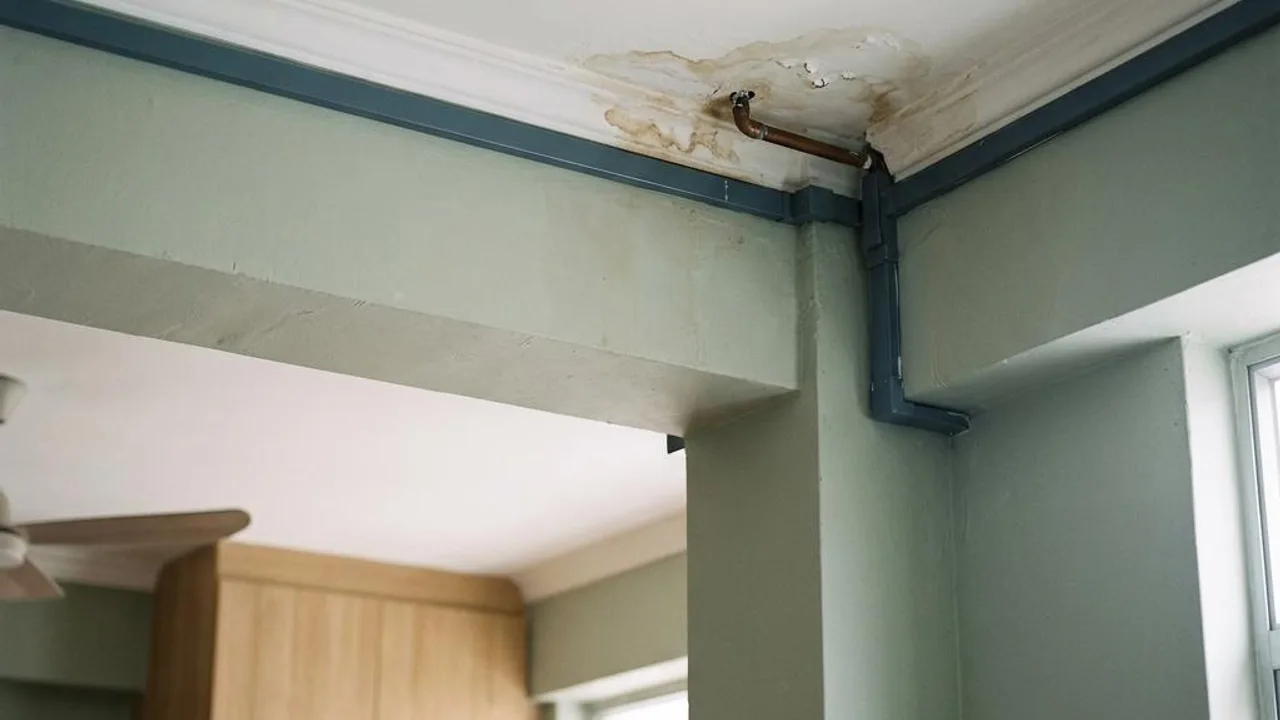
The important role of the ceiling in property inspection
The ceiling is not only an important part of interior decoration but also a component of the building structure. During the property inspection process, the condition of the ceiling can reflect the general situation of the floor above, structural characteristics, and signs of some concealed works; however, general home visual inspections cannot verify the performance of the waterproofing layer, the integrity of the building structure, or the quality of concealed installations based on this alone. If the ceiling has cracks or stains, it may reflect risks of seepage or structural deformation; it is recommended that such findings be further evaluated by registered professionals and should not be viewed as having confirmed specific causes or the state of concealed conditions.
In addition to structural safety, the ceiling also performs the functions of thermal insulation, soundproofing, and hosting lighting equipment. If construction is improper, soundproofing or thermal insulation materials inside the ceiling may be missing, leading to a significant decrease in indoor environmental comfort. Therefore, a comprehensive and professional ceiling inspection is an indispensable part of the property inspection process, and owners should not ignore its importance because of its height.
- Guarantee the structural safety of the floor above
- Monitor potential signs of water seepage
- Evaluate the performance of soundproofing and thermal insulation facilities
- Confirm the stability of light fixture and ventilation equipment installation
Professional ceiling inspection steps
When the inspector conducts an inspection, the first step is visual observation, carefully examining the surface of the ceiling for abnormal cracks, water stains, mold spots, or signs of paint peeling. These visual clues often reveal internal structural problems or seepage hazards. Subsequently, the inspector will assess the flatness of the ceiling, checking for obvious bulges, sagging, or bending deformation, which may be due to insufficient floor load-bearing capacity or failure to meet leveling requirements during construction.
Beyond visual checks, we examine ceiling-mounted equipment, such as air conditioning units, ventilation fans, and various light fixtures. An OPO Inspection inspector must verify whether these devices exhibit loose installations, exposed wiring, or leakage. All exposed electrical connection points must be confirmed secure and compliant with fundamental household electrical safety requirements, preventing vibration or noise caused by poor installation.
- Check for signs of water seepage on surfaces, such as water stains or mould.
- Use tools to measure ceiling flatness and levelness.
- Evaluate the safety of light fixture, fan, and air conditioning equipment installations.
- Observe surface paintwork for signs of peeling or blistering.
Common ceiling materials and inspection focus
Different properties use different ceiling materials, common ones including cement boards, gypsum boards, mineral fibre boards, and calcium silicate boards. Each material has differing durability and characteristics. For instance, gypsum board is lightweight and easy to decorate, but its moisture resistance is relatively weak, making it prone to softening in damp environments; therefore, inspections in high-humidity areas like kitchens or bathrooms require extra caution, particularly regarding the sealing of ceiling edges.
During property inspection, owners should understand the ceiling material for targeted inspection. For example, for ceilings using a keel framework, the focus should be on whether the structural frame is firm and whether there are significant gaps between the decorative panels and the frame. If the ceiling exhibits unusual cracks, these should not be filled arbitrarily without identifying the cause; a professional OPO Inspection inspector should assess whether they are minor finish shrinkage cracks or deep structural cracks.
- Identify the different ceiling materials used in the property.
- Focus on waterproof sealing and mould in high-humidity areas like kitchens and bathrooms.
- Observe whether there are premature cracks at the joints of the gypsum board.
- Evaluate the durability of ceiling decorative materials.
Observation and recording of signs of water seepage
Water seepage is a key focus when inspecting ceilings; owners can observe if the ceiling has darkened, bubbled, or shows water marks, as these signs often indicate that water has accumulated inside the floor slab for a long time. If a persistent feeling of dampness is detected, owners are advised to record the location and take photos immediately to verify if the condition continues to worsen in the future.
When observing signs of water seepage, take note of whether there is cracking in the sealant at the intersection of the ceiling and wall. If the sealing is poor, water seeping from exterior walls or the floor above can easily enter through the joints. If owners observe clear signs of dampness, they should request a professional to use instruments to further detect humidity to confirm whether a structural seepage risk exists.
- Record the locations of water marks and mould and take photos for filing.
- Check if the joint sealant is aged or cracked.
- Pay attention to dampness at the junction of wall corners and the ceiling.
Safety hazards of electrical and equipment installation
If light fixtures and fans on the ceiling are installed unstably, it not only affects operation but also creates a safety hazard. When observing, owners can note if light panels have an unstable shaking sensation and if the junction box covers are installed correctly. Ensuring that wires are not pinched or subjected to prolonged stress is an important step in guaranteeing safe long-term household operation.
Furthermore, if air conditioning drain pipes pass through ceiling channels, improper connections can easily cause backflow and seepage. Owners need to check if the drainage path is smooth when the air conditioner is running and if the ceiling decorative panels exhibit water damage. If installation abnormalities are discovered, a registered electrical worker or professional technician should be commissioned to check the relevant circuits and pipe configurations.
- Check if light fixtures are unstable or shaking.
- Monitor whether air conditioning drain pipes have leakage hazards.
- Verify the sealing level of electrical outlets and the safety of wiring connections.
Inspection reports and professional follow-up recommendations
Professional OPO Inspection reports provide detailed written records and risk analyses for all issues appearing on the ceiling. This report helps owners clearly understand what constitutes construction wear and what constitutes structural concerns. After receiving the report, owners should verify all items to ensure the rectification plan covers every detail.
It is recommended that owners coordinate with their own photographic records during the defect rectification process to track the status after repair. If problems are found to recur, they should be reported to the relevant contractor in a timely manner, and consider engaging professionals for in-depth investigation. Do not attempt to dismantle the ceiling structure yourself to avoid damaging the original sealing effect or circuit configuration.
- The report provides detailed written records and issue analysis.
- It is recommended to coordinate with the owner's own photographic records to track the progress of the rectification.
- Commission experts to inspect recurring problems.
FAQs
If minor cracks are found in the ceiling during property inspection, does this mean the building structure has problems?
Minor cracks might be the natural shrinkage of surface paint or plaster, but they could also be a manifestation of stress on the floor slab. Owners should record the location of the cracks and have a professional OPO Inspection inspector assess their distribution pattern to confirm whether the structural level is involved.
For kitchen and bathroom ceilings, what observations can owners make themselves to prevent water seepage?
Owners can regularly observe whether the ceiling has unusual water marks, mould, or surface blistering, especially if sealant at the edges of the kitchen or bathroom is aged or peeling; detecting this in time can prevent moisture infiltration from affecting the panel structure.
If ceiling light fixture installation is found to be unstable, how should the owner handle it?
Do not attempt to tighten or dismantle it forcefully, to avoid touching electrical circuits or exacerbating the looseness of the installation point. It is recommended to commission a qualified electrical worker to attend the site to check the stability of the hooks and junction boxes, ensuring they comply with safety standards.


