
Importance of special unit outdoor space inspection
The terraces and rooftops of special units are not only the core of property value but also key areas subjected to long-term wind and rain erosion. When taking possession, homeowners should not only focus on indoor decoration; the integrity of the outdoor waterproofing layer, drainage function, and stability of the balcony also affect living quality. If outdoor waterproofing fails, leakage often spreads to indoor walls and ceilings.
Because outdoor spaces involve work at heights and long-term exposure, extra caution is needed during inspection. An effective inspection process can pre-identify hidden moisture accumulation, assisting homeowners in correcting potential hazards before moving in, avoiding the need to spend a large amount of money on large-scale waterproofing repairs later.
- Check the waterproof coating for abnormal bulging or cracking
- Confirm whether the drainage slope effectively prevents water accumulation
- Detect whether railing fixings show signs of corrosion
Balcony doors, windows, and balcony safety inspection
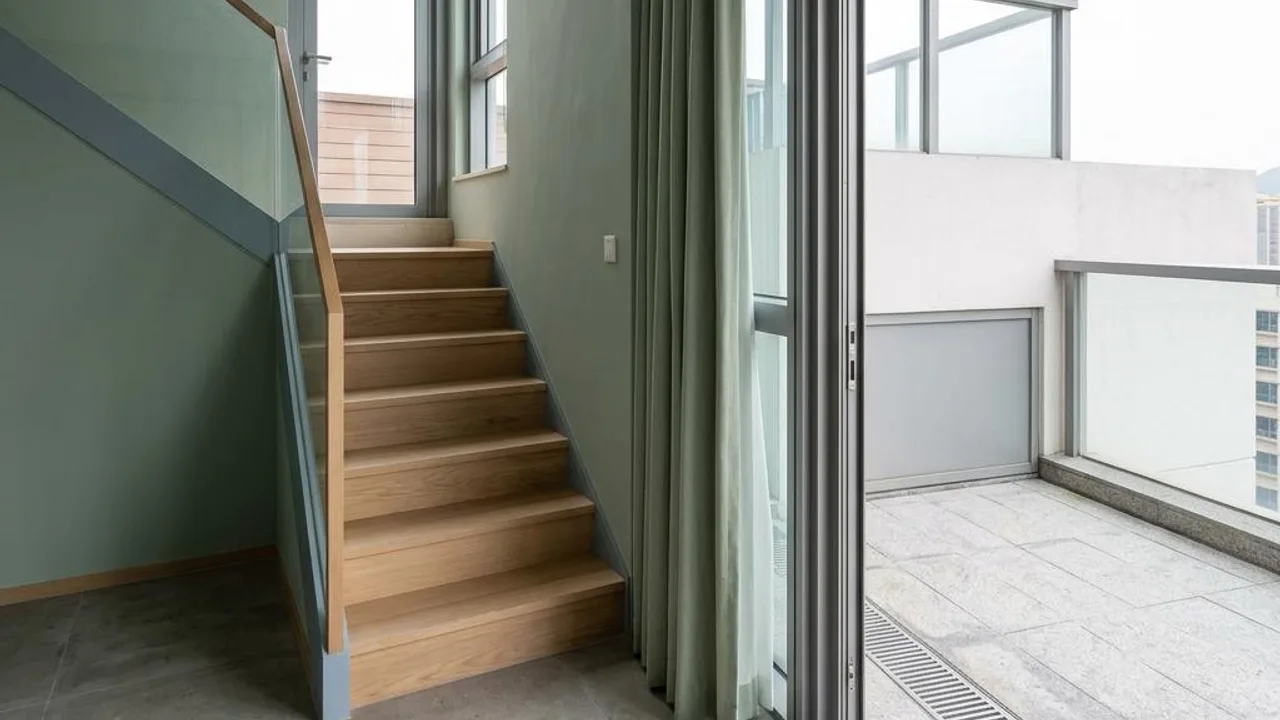
Large special units often feature floor-to-ceiling glass doors; these are both a lighting design feature and the first line of defence against typhoons and rain. During inspection, confirm if opening and closing is smooth, and pay special attention to whether the sealant around the door frame is applied evenly, and if there are obvious cracks or gaps, to prevent strong winds and rain from bringing water into the home.
Railing safety is also a focus; check gently if the balcony is stable and whether there is any swaying sensation. If the connecting parts at the base of the railing show obvious corrosion, it will significantly weaken the structural strength and be extremely dangerous in high-wind environments. Ensure that the fixing status of all hardware and glass railings meets safety requirements.
- Test door lock operation and sealant integrity
- Check if railing connectors are rusted or loose
- Observe the glass frame for any signs of deformation.
Drainage system and ground slope testing
Outdoor drainage performance determines whether the ground experiences long-term water accumulation. Owners can observe if the floor tiles are sloped towards the drain to ensure water flows away smoothly. If conditions permit, a small amount of water-pouring test can be conducted in flat areas to observe whether water collects or forms stagnant spots.
The transition areas between the terrace and the interior (such as thresholds) should also be checked for an appropriate height difference or water-retaining bar design, which can effectively intercept flooding caused by heavy rain. If obvious drainage backflow or slow drainage is observed, the contractor must be required to adjust the gradient or clear the pipes during the defect rectification period.
- Confirm that the floor slope is directed towards the floor drain.
- Check that the door threshold water-retaining design is properly installed.
- Test the drain outlet for any debris blockages.
Rooftop waterproof layer and dwarf wall status assessment
The waterproof performance of the rooftop directly affects the dryness of the units below. Key inspection points include checking if the surface tiles have bulges, cracks, or hollow phenomena; these signs are often indicators of poor waterproof layer quality or long-term water infiltration. Seams at the wall skirting of the rooftop are particularly vulnerable and require careful inspection for tiny gaps.
Due to long-term exposure to sunlight and rain, rooftop parapet walls are prone to minor cracks caused by thermal expansion and contraction. If these cracks extend into the waterproof structure, moisture will infiltrate. During inspection, ensure all joint sealants are intact, without signs of aging or peeling, to prevent moisture from penetrating the internal structure.
- Look for areas where the waterproof layer has abnormally bulged.
- Check the sealing status of the parapet wall joints.
- Pay attention to the sealing integrity around the floor drain.
Outdoor facility supporting safety inspection
Feature units are usually equipped with outdoor sockets and water taps, and the protection of these facilities is crucial. Outdoor sockets must be equipped with splash-proof covers and confirmed to be securely installed, away from direct contact with rainwater. When testing the water tap, check the connection points for minor dripping or leakage to prevent damage to the floor caused by continuous dripping over time.
Cross-reference the sales brochure to confirm that the configuration of outdoor lighting, railing materials, and waterproof equipment complies with specifications. If electrical interfaces are improperly handled, it may cause tripping or short-circuiting during heavy rain, posing a safety hazard to the overall home electrical system.
- Confirm that all outdoor sockets have waterproof covers.
- Test the water tap connection points for any leakage.
- Verify that the installation configuration matches the contract.
Detailed observation of leakage traces
Seepage problems are often revealed through internal walls. Check the ceiling of the terrace or the ceilings and walls indoors that are adjacent to outdoor spaces; if paint peeling, discoloration, or mold is found, this is often a strong signal that the waterproofing of the rooftop or external wall has failed. Even slight discoloration in the early stages could be due to moisture inside the structure.
It is crucial to remain vigilant about these edge and intersection positions. Seepage may not appear as dripping water in the early stages, but with the assistance of infrared thermal imaging, one can more intuitively identify temperature abnormalities on the wall surface to infer the flow path of hidden water marks, which is very helpful for subsequent water leakage handling.
- Pay attention to the ceiling corners indoors that are adjacent to the terrace.
- Check the wall for dampness or discoloration.
- Watch for any peeling paint.
FAQs
If hollow terrace tiles are found, does it necessarily mean the waterproof layer is problematic?
Hollow tiles do not directly equate to a damaged waterproof layer, but hollow tiles are more prone to cracking under long-term pressure or thermal expansion and contraction, thereby increasing the risk of water infiltrating the waterproof layer. It is recommended to ask a qualified professional to assess the affected area to ensure that the waterproofing function in that area remains intact.
How should an owner handle minor cracks found on the rooftop during property inspection?
The owner should record the location of the cracks and take photos as evidence. As the rooftop is long exposed to the outdoors, the developer should be requested to explain the cause of the cracks and confirm that the filling materials used meet the appropriate standards for waterproof and elasticity for outdoor use. Do not cover them with inappropriate materials by yourself.
How can one determine the risk of seepage at the terrace door frame?
Observe whether the sealant at the joint between the door frame and the wall is intact and free of shrinkage gaps, and check the indoor skirting and corners for water stains or signs of mold. If abnormalities are observed, a professional should use instruments to detect the waterproof performance of the door frame to prevent rainwater backflow.


