
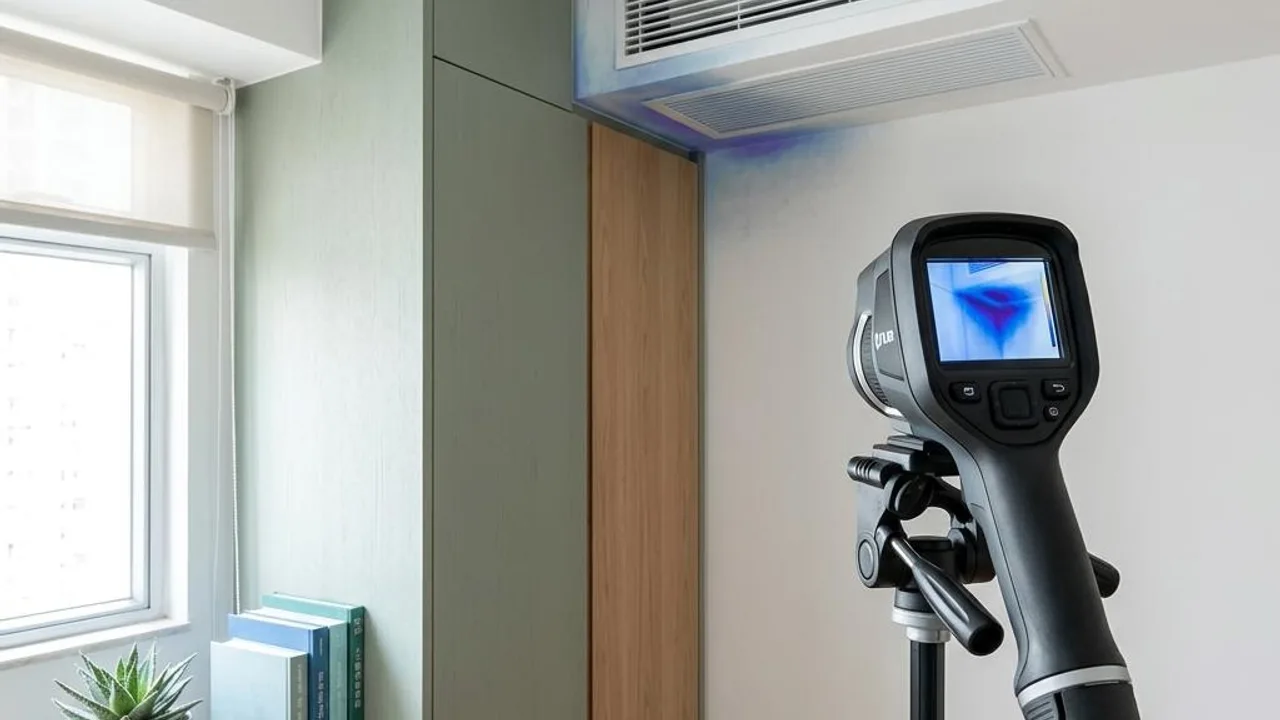
Basic operating principles of infrared inspection.
Infrared inspection technology, also known as thermal imaging inspection, converts subtle temperature differences into visible images by sensing the infrared radiation energy on an object's surface, helping property inspectors identify conditions difficult to detect with the naked eye. This technology relies mainly on the thermal radiation characteristics of objects; when there is moisture, gas flow, or structural differences inside an object, its surface temperature distribution often deviates from normal areas, forming a unique thermal image.
During the property inspection process, this technology serves as a non-destructive auxiliary inspection method capable of rapidly scanning large areas, such as walls, rooftops, and floor structures. It does not require dismantling any building components or causing damage to interior decoration, yet it can preliminarily screen out abnormal areas, providing clear guidance for subsequent detailed inspections, making it an important component of modern professional property inspection services.
- Utilising thermal imaging technology for non-intrusive surface heat distribution inspection.
- Identifying abnormal locations of potential water ingress through temperature differences.
- Rapidly scanning building structural surfaces to narrow down the inspection scope.
- Visualising hidden issues invisible to the naked eye for analysis.
Key technology for identifying hidden water seepage issues.
Due to the long-term impact of a humid climate, water seepage problems in Hong Kong buildings are extremely common and complex. Traditional visual inspection methods often only see surface consequences like bubbling paint or mould on walls but struggle to trace the true source of the moisture or the seepage path. Infrared imaging cameras can accurately capture local low-temperature areas generated by water evaporation or accumulation inside the wall, allowing property inspectors to analyse potential seepage risks more effectively.
This technology is particularly effective in discovering potential leakage inside rooftops, window sills, and connection points. Even when wall coatings are intact and there are no obvious signs of water seepage, infrared scanning may reveal early signs of moisture ingress. By mastering this information early, owners can conduct targeted repairs before the issue worsens and causes greater structural damage.
- Identifying the distribution range of water seepage difficult for the naked eye to detect.
- Conducting thermal inspections on walls, rooftops, and the interior of window sills.
- Assisting in the analysis of possible paths and sources of moisture seepage.
- Performing risk warnings even when decoration surfaces are intact.
Improving the quality and objectivity of the inspection process.
In traditional inspection processes, property inspectors usually need to tap walls point by point or carry out repeated testing to confirm problems, which is time-consuming and often relies on personal experience. The introduction of infrared inspection has significantly improved the efficiency of on-site investigations, especially when carrying out large-scale inspections, as it can significantly reduce screening time. The thermal images captured by the equipment are based on objective data, reducing omissions caused by human negligence.
Through visualised thermal images, owners can understand the seepage conditions within the property more intuitively, without relying solely on text descriptions. This data-supported approach not only enhances the credibility of professional reports but also provides owners with a clearer evidentiary basis when communicating maintenance details with relevant stakeholders, which is conducive to establishing reasonable repair and rectification plans.
- Significantly improving inspection efficiency for large areas.
- Reducing reliance on traditional tapping methods and point-by-point testing.
- Providing objective image data as strong support for reports.
- Assisting owners in clearly understanding and following up on professional findings.
Application limitations and suitability for different building types.
Infrared inspection is of reference value for all types of properties, including new primary market units, secondary market buildings, village houses, and tenement buildings (Tong Lau). In new building inspections, it is often used to check plastering quality, wall hollowing, and hidden pipe locations. For older properties, it helps evaluate the overall wear and tear of external wall structures or drainage pipes, helping owners understand the property's true maintenance needs.
However, it must be understood that this technology is not a cure-all; it is extremely dependent on the environmental conditions at the time of testing, such as temperature difference, humidity, and the materials on the object's surface. With insufficient environmental temperature difference or significant background noise, the accuracy of the thermal image may be limited. Therefore, infrared inspection must be operated by professional personnel with relevant knowledge, combined with other routine inspection procedures for comprehensive judgment, rather than relying solely on imaging results.
- Suitable for new unit plastering inspection and old building exterior wall assessment.
- Coordinating with other testing methods to comprehensively assess property conditions.
- Need to consider the impact of environmental factors on the accuracy of thermal imaging.
- Operated and data interpreted by professional personnel to ensure reliability.
Formulating long-term home maintenance and defence strategies.
Data obtained through infrared inspection can not only solve immediate issues upon taking possession of a home but also provide powerful information for long-term home maintenance planning. Owners can formulate regular maintenance plans based on potential risk areas in the inspection report. This preventive maintenance model helps significantly reduce future repair costs and maintains long-term home dryness and comfort, reducing other hidden dangers caused by long-term moisture.
Good property management lies in early detection and prevention. When an owner clearly knows which locations inside the property have potential water seepage risks, they can avoid those areas when decorating or placing valuable furniture, or strengthen waterproofing treatments in relevant locations in advance. This technology brings owners not only immediate peace of mind but also serves as a key link in safeguarding the value of the property in the long term.
- Assisting in establishing preventive home maintenance and regular upkeep plans.
- Providing data support to reduce long-term repair risks and costs.
- Identifying critical risk points to plan decoration and furniture placement.
- Long-term protection of property status to enhance living and investment value.
FAQs
Can infrared inspection directly determine the source of water seepage?
Infrared inspection mainly reflects areas where moisture accumulates through temperature anomalies; it does not directly display the source of water flow. Property inspectors usually combine inspection images with physical checks to comprehensively judge possible seepage paths and sources.
Why do environmental factors affect the accuracy of infrared inspections?
Infrared thermal imaging relies on the temperature difference distribution on the surface of an object. If the environmental temperature difference is too small, humidity is too high, or the wall is affected by sunlight, it will cause thermal image interference, making it difficult to distinguish water leakage characteristics from the background. Therefore, environmental conditions must be considered during operation.
How should owners handle suspected water leakage infrared images discovered during a property inspection?
If infrared images show abnormally low-temperature areas, owners should engage professionals for follow-up investigations, including checking the condition of pipes, waterproofing, and external drainage channels at the relevant locations, avoiding blind demolition or repairs.


