
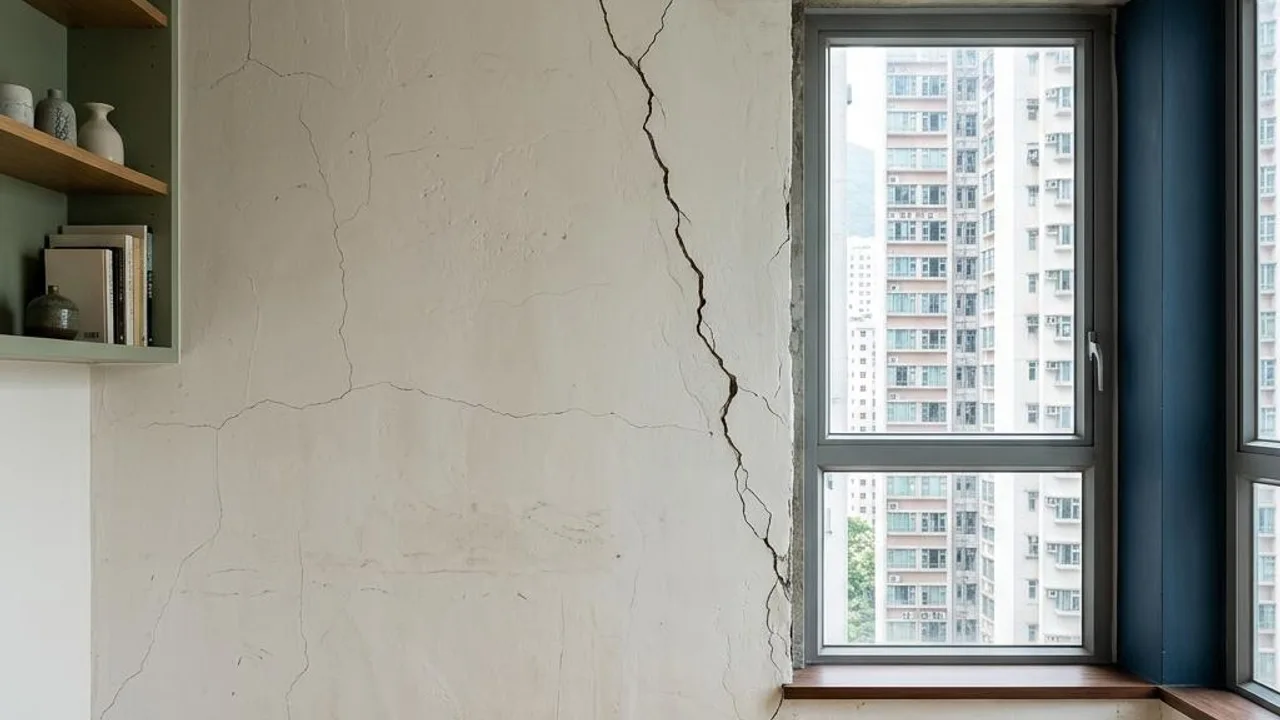
Analysis of the causes of wall cracks
Wall cracks are extremely common during property inspections, and most stem from physical changes in materials or the construction process. During the initial stage after a building's completion, concrete and plastering layers will undergo natural shrinkage as moisture evaporates and dries; this phenomenon often leads to the appearance of fine textures on the wall surface. In addition, slight adjustments in the building structure after bearing loads, as well as changes in temperature and humidity caused by the change of seasons in the indoor environment, will also exacerbate the expansion and contraction of materials, thereby inducing wall cracks.
In addition to environmental factors, construction quality is a cause that cannot be ignored. If the paint and the base plastering layer are poorly bonded, or if the wall was not properly treated during construction, it will also lead to the surface cracking. Generally speaking, surface cracks do not affect structural safety, but if the crack pattern is diagonal, layered, or continues to expand over time, it may imply deep-seated problems; owners should maintain a high degree of alertness to this and should not take it lightly.
- Natural shrinkage produced during the drying process of building materials
- Slight structural adjustments common in the initial stage of property completion
- Quality flaws during the plastering and paint layer construction process
- Material expansion and contraction triggered by changes in ambient temperature and humidity
Key points for crack inspection and assessment
When checking walls, owners should ensure sufficient lighting and perform an all-round visual scan of the wall surface. The focus of the inspection is to observe the direction of the cracks, their distribution density, and length. For hair-thin micro-cracks, these mostly belong to non-structural flaws; if you discover larger cracks accompanied by wall displacement or unknown depth, you should record them in detail and try to use a camera to photograph them to retain evidence of the current state, which is vital for subsequent communication with the developer.
Professional assessment involves judging crack patterns. Owners can use a simple ruler to measure the length and width of the cracks and initially assess their distribution range. If the cracks show a regular geometric distribution, they are usually related to finishing techniques; if the cracks show irregular or penetrating signs, they may involve the building structure. In any case, if you are in doubt about the nature of the cracks, you should invite a professional to carry out testing to ensure the safety of the living environment.
- All-round visual inspection, recording the location, length, and width of cracks
- Use a ruler to assess the depth and form of the cracks
- Assess the trend of crack distribution to initially judge whether they belong to the surface layer or the structural layer
- Use photography to record the current situation to preserve evidence before repairs
Wall crack repair strategies
For minor plastering cracks of a surface nature, common repair solutions include stripping the damaged area, re-plastering, and touching up the paint. To ensure a long-lasting repair effect, adding fibreglass mesh during construction can effectively strengthen the wall's tensile strength and reduce secondary cracking caused by environmental factors. This type of repair process is relatively straightforward, and the key is that the base must be thoroughly cleaned to ensure new and old materials can bond effectively.
If cracks are confirmed to involve the structural level, do not perform only surface painting. Structural cracks require more complex repair schemes, which may involve partial grouting or reinforcement works for the wall. When owners discover suspected structural problems, they must reflect this to the developer through formal channels and require an assessment and repair by a qualified contractor, avoiding simple patchwork measures that cannot cure the underlying danger yourself.
- Minor cracks: Strip damaged areas, re-plaster, and touch up paint
- Preventative measures: Add fibreglass mesh during plastering construction to strengthen the wall
- Deep treatment: If it involves structural problems, a registered contractor must be arranged to follow up
- Follow-up procedure: Contact the developer within the warranty period to request repairs in writing
Common misconceptions during property inspections
Many owners think that all wall cracks are serious quality problems, but this is not actually the case. Many cracks only belong to finishing flaws during the renovation period and will not pose a threat to the safety of the house. Misidentifying all surface micro-cracks as structural hidden dangers not only increases mental burden but may also lead to deviations in communication. Owners should analyze rationally and distinguish between finishing flaws and structural cracks so as to adopt an appropriate attitude.
Another misconception is over-reliance on self-repair, or even casually attempting DIY for larger structural cracks. This may not only fail to fix the problem but instead cause the damage to the wall to expand due to improper construction. Owners should record the problems, hand them over to professionals for follow-up, and ensure that all repair processes meet relevant building standards; this is the correct way to protect the long-term value of the property.
- Not all cracks constitute a structural threat
- Avoid performing structural remedial work yourself
- Distinguish between the surface finishing layer and the wall structure layer
- Use written records as the basis for developer repair follow-up
Requirements and communication during the warranty period
The building warranty period is the best time for owners to strive for house repairs. When wall cracks are discovered during a property inspection, the list should be submitted to the developer as soon as possible, and all relevant repairs should be requested to be completed within the warranty period. During the communication process, it is recommended to photograph and record the location and condition of the cracks as supporting evidence for requiring the contractor to carry out professional treatment, ensuring that the repair scheme is targeted rather than just surface beautification.
When owners connect with contractors, they need to clearly require the other party to assess the cause of the cracks. If a crack appears again shortly after repair, it means the problem may involve the base structure or other potential factors; at this time, you should request a re-inspection again and record the number of repairs and results. Maintaining good communication records and a perfect inspection list is the key to protecting your own rights; owners do not need to be overly panicked, but they must remain vigilant.
- Organize a specific list of property inspection problems
- Submit the location and form of the cracks in writing
- Require the contractor to provide a targeted repair scheme
- Save records and communication documents of all repair procedures
FAQs
When a hair-thin crack appears on a wall during a property inspection, does it mean there is a problem with the structure of the house?
Not necessarily. Hair-thin micro-cracks are usually finishing flaws caused by the shrinkage of plastering materials, changes in environmental humidity, or the natural drying process of building materials; such cracks generally do not pose a threat to the structural strength of the house.
If a wall crack continues to expand, how should an owner deal with it?
If a crack shows obvious changes in width, extends, or is accompanied by wall displacement, the owner should record the location and current state of the crack in detail, photograph and save the evidence, and immediately contact the developer or hire a professional structural engineer to conduct a test, letting professionals judge whether it belongs to a structural hidden danger.
After repairing wall cracks within the warranty period, will they crack again in the future?
If the cracks are caused by stress or environmental factors, there is indeed a risk of re-cracking if the root cause is not solved. Through reinforcement measures such as adding fibreglass mesh to the plastering layer, the tensile capacity of the wall can be increased, reducing the probability of cracks reappearing, but one still needs to observe regularly after repairs.


