
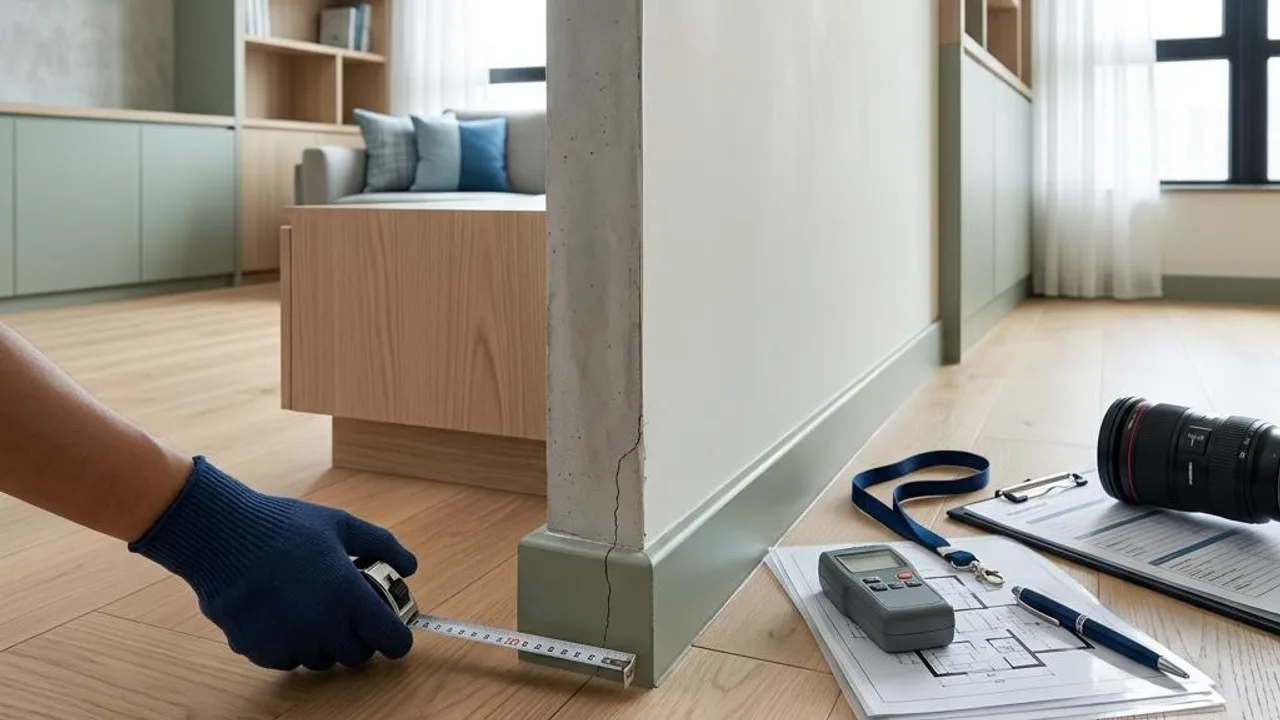
Self-inspection: Balancing cost-effectiveness and risks
The main advantage of self-inspection lies in direct cost control. For homeowners with a background in construction or decoration engineering, inspecting personally can save on professional property inspection fees and allow them to grasp the condition of every detail of the unit immediately. While this process can save expenses, it requires homeowners to invest a significant amount of time in observation and recording, and necessitates basic knowledge of building structures to accurately judge the nature of defects.
However, the biggest concern with self-inspection is the lack of technical capability. Homeowners often find it difficult to identify hidden structural hazards, uneven distribution of electrical loads, or early signs of water seepage with the naked eye. In addition, individuals are easily influenced by psychological expectations during inspection, leading to inconsistent standards. Without the aid of professional measuring equipment, they are highly likely to overlook potential safety risks and struggle to ensure that the overall quality of the unit meets expectations.
- Save on professional property inspection service expenses
- Homeowners can personally grasp the details of the unit
- Requires a significant investment of time and energy
- Difficult to identify hidden structural and potential electrical hazards
Professional inspector: In-depth technical review
The core value of a professional inspector lies in their objectivity and technical depth. Using professional equipment such as hollow-tile hammers, moisture meters, and infrared detectors, inspectors can quantify problems invisible to the naked eye and precisely locate construction quality defects. They are familiar with building codes and can conduct standardized tests for tile hollowness, wall flatness, and waterproof sealing performance, ensuring that the unit's quality is maintained at a reasonable level.
In addition to surface inspections, inspectors can provide professional reports containing technical details. This report can effectively reduce the discrepancy in perception and communication costs between both parties when dealing with developer warranty claims. Through a detailed list of defects, homeowners can ensure that repair suggestions are based on professional technical evidence, avoid secondary omissions in repair work, and ensure that the unit's renovation and system operations meet standards.
- Use professional instruments for precision testing
- Provide objective reports with technical data
- Assist in optimizing warranty communication efficiency
- Effectively cover hidden structural and electrical safety reviews
Focuses of property inspection and engineering standards
A professional property inspection process is not merely checking paint or decorations but covers a comprehensive examination of building structure quality, electrical systems, and plumbing installations. The inspection process will carry out detailed tests on electrical load distribution, installation compliance of socket points, and the sealing of drainage systems. These items are crucial for future living safety and can effectively reduce the probability of sudden failures after move-in.
For homeowners, it is critical to ensure that the property inspection process meets relevant engineering standards. Professional inspection not only requires measuring the flatness of floors and walls but also pays attention to construction details of various equipment, such as whether electrical wiring connections are secure and if drainage slopes are sufficient. Through standardized acceptance procedures, homeowners can discover construction defects early and require the developer to carry out necessary rectifications, thereby safeguarding long-term living comfort.
- Systematically cover structural quality and decoration craftsmanship
- Precisely measure the flatness of the unit's floors and walls
- Perform verification of plumbing and electrical safety performance
Cost investment and long-term risk assessment
Property inspection fees are usually determined based on unit area, building age, and the complexity of the interior layout. When considering inspection costs, one should view it as an investment in asset protection rather than a mere expense. Compared to the value after the property transaction, the proportion of the inspection fee is very low, but it can effectively prevent high repair costs caused by serious defects after moving in.
Compared to repair costs borne later due to missed hidden defects, hiring a professional inspector has a significant cost-performance advantage. A professional inspection report can serve as strong evidence for homeowners to pursue warranty claims, ensuring that all problems are effectively resolved within the warranty period. This proactive investment approach not only prevents future disputes but also ensures that the property achieves the expected engineering standards upon handover.
- Fee structure is transparent and calculated based on area and complexity
- Investing in property inspection can effectively prevent expensive future repairs
- Professional reports are important negotiation assets for the warranty period
Handover procedures and precautions
Regardless of whether deciding to self-inspect or hire professionals, homeowners must have a clear grasp of the handover procedures and legal effect. Before signing any handover confirmation documents, it is essential to ensure that a detailed inspection process has been completed. If obvious safety hazards are discovered during testing, be sure to record them first and notify the developer in writing; do not rush to sign documents to protect your own rights regarding subsequent repair liabilities.
For homeowners conducting basic self-inspections, it is recommended to refer to a home safety manual to ensure testing methods are safe. If structural concerns or complex electrical wiring problems are encountered, please consult licensed engineering professionals; do not carry out any risky demolition or testing. Entrusting professional projects to qualified individuals ensures maximum protection regarding structural compliance and living safety.
- Implement a complete inspection process before handover
- Issues involving structural safety must be handled by qualified individuals
- Ensure that the defect record is detailed and complete before signing
FAQs
When performing self-inspection, which structural defects are recommended for professional assessment?
When homeowners discover unexplained cracks in walls, abnormal sagging in floor slabs, or suspected signs of seepage such as long-term residual moisture around plumbing points, it is recommended to commission professionals to perform seepage tests and structural surveys to determine if structural safety issues are involved.
After hiring a property inspector, does this mean one can ignore the warranty period after moving in?
Even with a professional property inspection report, homeowners still need to make good use of the warranty period provided by the developer. An inspector provides an assessment of the current state at the time of handover, while some hidden works may experience wear over time. The inspection record is for reference only and does not mean the house is completely free of hidden defects; homeowners should keep the inspection report as a tracing basis for the warranty period.
How to judge if the results of a self-inspection are sufficiently comprehensive?
If a self-inspection is limited to surface finish checks, it is usually difficult to cover hidden works. If you cannot identify whether wire gauges meet specifications, if waterproofing layer construction is complete, or cannot judge if equipment installation is safe, it means the inspection scope is insufficient. The above inspections cannot confirm structural, electrical, or gas safety, nor can they guarantee the thickness of the waterproofing layer or the remaining lifespan of equipment. If professional judgment is involved, you should consult a registered engineer or relevant qualified personnel. Do not carry out electrical testing, dismantle electrical appliances, adjust water pressure valves, or climb onto roofs and exterior wall windows yourself.


