
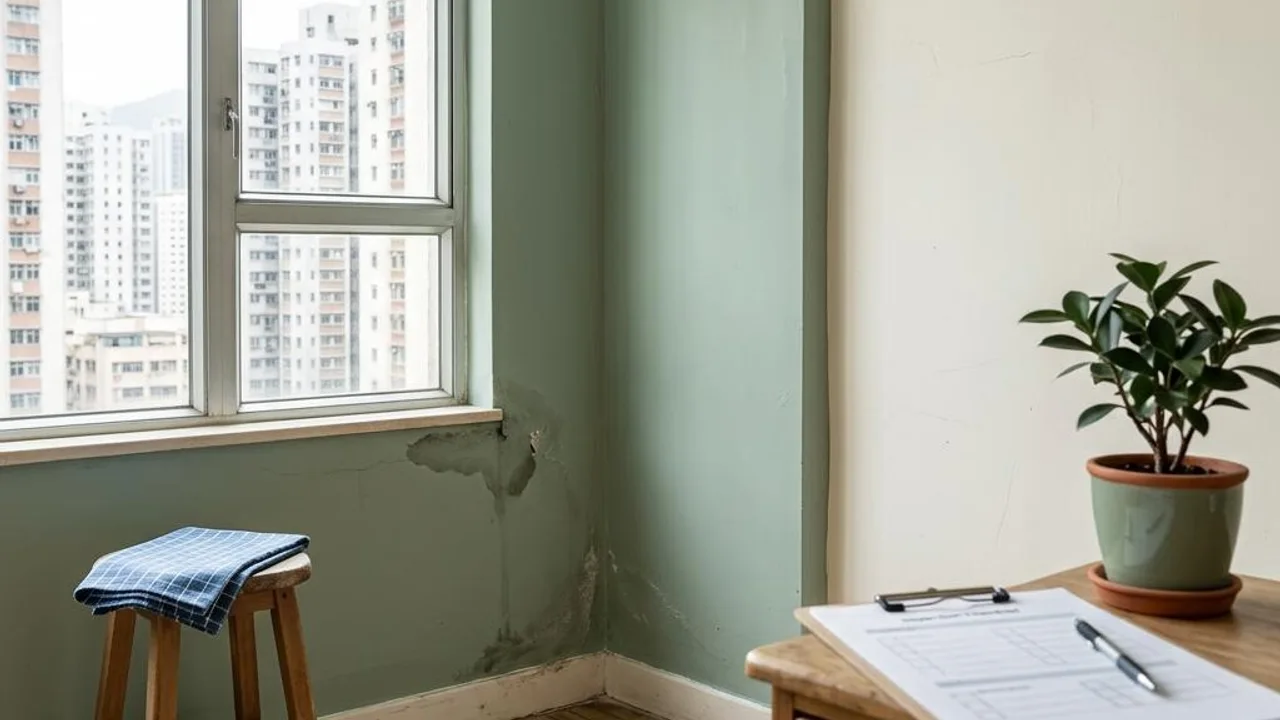
Property inspection as a key to protecting rights
The property handover stage is the golden time for owners to discover and request the developer to rectify unit defects. Many owners are too excited when facing their new home to notice details; however, once the developer's free defect rectification period is missed, the cost of repairs for structural or seepage problems discovered later can be extremely high. Therefore, careful inspection is the most important line of defense for protecting one's property.
Standard inspection procedures must be carried out systematically. Owners should treat the unit as a contract deliverable and carefully verify that every configuration complies with the developer's contract and equipment manual. During this process, owners need to adopt a calm, objective attitude and focus on finding potential problems that might lead to difficult maintenance in the future.
- Strictly verify the model and quantity of equipment
- Grasp the developer's defect rectification period
- Retain evidence to facilitate communication
- Record the condition of the unit in detail
Core Inspection: Four common latent hazards
After entering the unit, you should conduct an in-depth inspection of the four core areas. First are the walls and ceilings, to observe if there are any water stains from seepage, cracks, or uneven plastering. These surface problems often reflect the quality of construction details. Second is to use tapping tools to check floor and wall tiles to listen for hollow sounds, preventing danger from tiles detaching later.
Third is to check the door and window system, including the smoothness of window operation and whether sealing strips are aged or misaligned. If the sealing performance is poor, rain can easily leak in during typhoons, damaging floors and renovations. Finally, you must turn on every tap one by one to test if the water pressure and supply/drainage functions are smooth, and take note of any strange smells or leakage in the drainage pipes.
- Inspect walls and ceilings for water seepage or plastering issues
- Tapping inspection for hollow floor and wall tiles
- Inspection of aluminium window hardware components and sealing strips
- Water tap pressure and drainage testing
Defect rectification checklist and practical records
After taking over the property, owners must make good use of the equipment manual and defect rectification list provided by the developer. After checking the home appliances and door configurations included with the flat, if any flaws are found, it is recommended to use conspicuous stickers to mark the problem areas and take photos for records. Photos are indispensable evidence when dealing with defect rectification applications and can effectively prevent denials later.
When filling out the defect rectification list, the language should be concise and direct, describing the specific location and damage condition, such as 'the 3rd floor tile in the kitchen is hollow'. Because the defect rectification period is often limited, owners must seize the time to submit the report; missing the deadline may lead to the developer refusing to handle it, resulting in extra economic loss for the owner.
- Detailed comparison against the equipment list
- Use conspicuous markers to identify problems
- Take photos of problems as evidence
- Write specific descriptions for defect rectification content
The necessity of seeking professional property inspection services
The property inspection process involves much professional construction knowledge, and hidden problems are often difficult to notice with just the owner's naked eye. For example, seepage hidden above the false ceiling or deep hollows within walls requires professional equipment and experience to discover. If these problems are ignored, you will face a more complex handling process after moving in.
The professional property inspection team is equipped with infrared detectors, leveling devices, and professional test tools to precisely assess latent building defects in units. The team can also write professional reports on behalf of the owner, assisting the owner in reasonable negotiations with the developer from a third-party perspective. Entrusting the vetting task to professionals can effectively reduce subsequent handling troubles and let owners focus on preparing renovation plans.
- Use instruments to identify problems invisible to the naked eye
- Provide professional reports that meet engineering specifications
- Assist owners in communicating with developers
- Provide long-term maintenance and care suggestions
Communication strategies before and after property inspection
Inspection is not just a process of checking for problems, but also a stage for building a communication bridge with the developer. Owners should record all discovered defects in writing and ensure all requests have corresponding photo records to avoid the uncertainties brought by verbal promises.
If major defects are discovered, owners should consult qualified professionals to judge their nature. During the period the developer arranges defect rectification, owners can use the recorded photos to compare the quality after repair to ensure the final delivered state meets expectations.
- Ensure all problems have written and image records
- Consult qualified personnel to assist with professional judgment
- Compare the quality before and after defect rectification
- Keep communication channels open
FAQs
What should an owner do if the developer fails to complete the repairs within the defect rectification period?
Owners should continue to follow up on the progress in writing and keep all communication records and problem photos, seeking help from relevant professionals to assess the situation if necessary, rather than easily accepting sub-standard repair results.
If a homeowner discovers cracks in the wall during the property inspection, does this mean there is a problem with the building structure?
The causes of wall cracks are complex; they may be merely flaws in the plastering layer or may involve internal structure. Owners should record the location by photos and consult qualified personnel for assessment; do not judge structural safety by the naked eye alone.
Can the infrared instruments used for professional property inspection guarantee to find all seepage locations?
Infrared detectors are tools to assist in diagnosing seepage, but their effectiveness is limited by indoor-outdoor temperature differences and environmental conditions. Inspectors usually make comprehensive judgments by combining observation, moisture testing, and engineering experience; it is not a matter of a single tool being definitive.


