
Inspection focus and construction audit for new buildings
When purchasing a primary property, the main task of a property inspection is to confirm whether the unit delivered by the developer meets the quality commitments and statutory standards set out in the building contract. Inspections of new buildings usually include full-house seepage tests, wall surface flatness, floor tile hollow testing, and real-time operation tests of all facilities and equipment. The inspector will focus on assessing whether there are omissions in construction workmanship to ensure that owners do not have to bear unnecessary renovation disputes after moving in.
Property inspection services are only based on general observations within the visual range and cannot verify structural, electrical, or gas safety, compliance, hidden pipe conditions, or waterproofing thickness, nor can they assess remaining useful life or repair effectiveness. Infrared thermography only reflects surface temperature distribution and is not conclusive evidence of moisture or the cause of leaks, nor can it see through internal structures; tools cannot guarantee that all hidden defects will be found. The Mandatory Window Inspection Scheme is an independent statutory procedure that must be carried out by a qualified person registered with the Buildings Department and is not part of the scope of general property inspection services. Professional issues should be referred to relevant qualified professionals and absolute safety guarantees should not be made.
Do not perform electrical testing, dismantle fixed installations, adjust water pressure valves, climb on roofs, or lean out of external windows yourself. Inspection content should emphasize observation limitations and provide objective follow-up suggestions rather than providing unfounded guarantees or promotional information.
- Structural inspection: Verifying that the condition of beams and columns is consistent with design standards.
- Material quality: Testing whether finish materials and floor tile installation meet quality requirements.
- Workmanship implementation: Checking the professional configuration of waterproofing, fireproofing, sound insulation, and other core facilities.
- Facility operation: Comprehensive testing of the stability of electrical circuits and water supply and drainage systems.
Inspection priorities and aging screening for old buildings
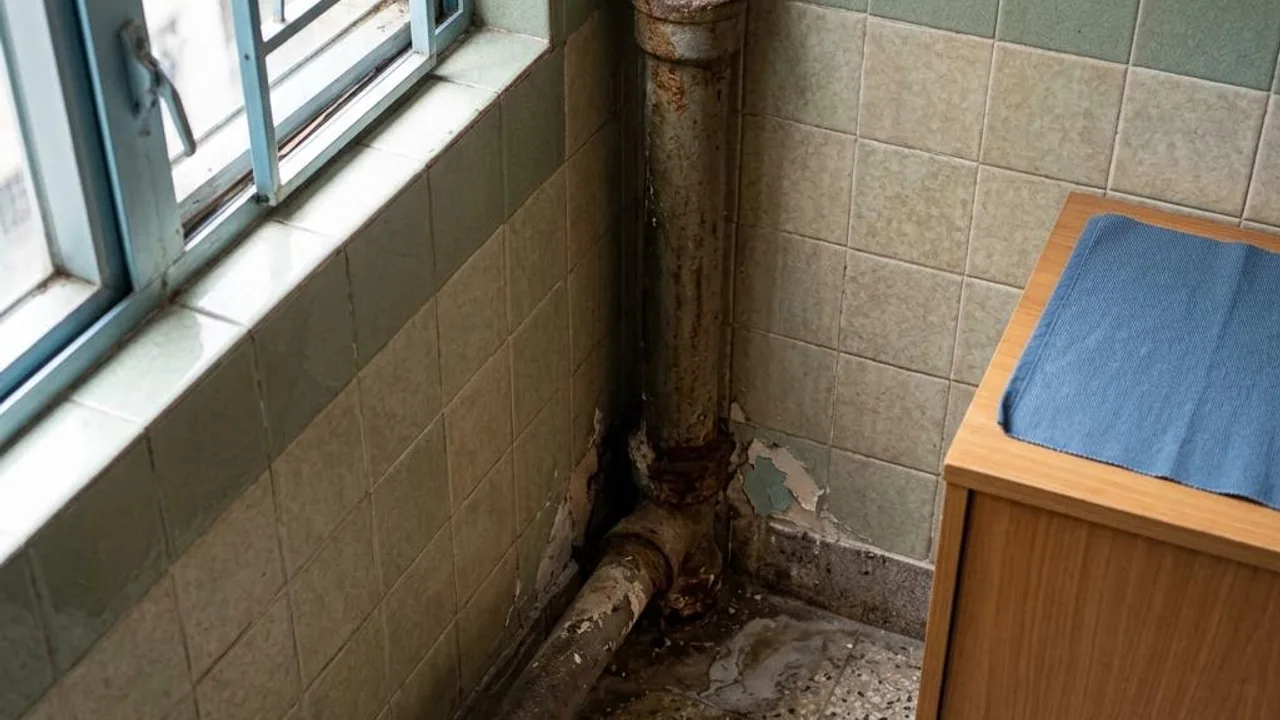
Unlike new buildings, the core of old building inspection lies in assessing the structural health of the building and the service life of facilities and equipment. As building age increases, wall spalling, reinforcement corrosion, and water seepage are common hidden dangers. Inspectors will use professional equipment to check for cracks, hollows, or abnormal settlements in the structure and assess whether these signs represent potential structural vulnerabilities.
Electrical systems in old buildings often do not meet modern high-load demands. Many old units still use aged wiring, which may trigger overheating risks under modern appliance loads. Therefore, property inspectors will specifically check whether the electrical configuration needs updating and assess the condition of pipe corrosion and waterproofing failure, providing owners with practical maintenance suggestions to ensure the property meets current living safety standards.
- Aging sign screening: Detecting wall cracks, reinforcement corrosion, and concrete spalling.
- Old wiring system assessment: Assessing wire load capacity and socket safety status.
- Waterproofing test: Identifying high-risk seepage locations such as window sills and bathrooms.
- Compliance check: Ensuring existing structural adjustments comply with current Buildings Department guidelines.
Modern inspection methods and technology applications
There are also significant differences in the technical means used when inspecting new and old buildings. New property inspections rely more on precise modern measurement equipment, such as electronic levelers and infrared thermography, which can quickly identify construction deviations and uneven heat distribution that are difficult to detect with the naked eye. These advanced instruments provide developers with objective rectification data to ensure that repair effects are precisely targeted.
During the assessment process, in addition to relying on instruments, inspectors will also combine extensive on-site experience to judge whether materials have deterioration risks based on the building's historical background. This multi-dimensional testing method can effectively filter out misjudgments that might be produced by purely instrumental measurement, providing owners with functional assessment reports that have higher reference value.
- Electronic measurement: Using precise instruments to measure renovation flatness and spatial vertical errors.
- Thermographic detection: Identifying water seepage paths and hidden cold and heat distribution differences in walls.
- Experience assessment: Assessing the deterioration risk of structural materials based on the building's age and history.
- Functional testing: Comprehensive load testing of existing water supply, drainage, and electrical switches.
Core functions of a professional property inspection team
A professional property inspection team must possess profound construction background knowledge to quickly locate hidden dangers in complex building environments, assisting owners in eliminating renovation or structural risks. This is not just a one-time check, but an important means for owners to protect asset value; through objective analysis, owners can have more confidence when deciding on renovation or repair plans.
For a team with professional qualifications, its core functions also include professional coordination with all parties. The detailed report provided by the property inspector can serve as a cornerstone for communication between owners and developers or renovation engineering companies, ensuring that repair suggestions are cost-effective and comply with technical specifications, reducing ineffective communication costs.
- Professional knowledge: Possess inspection qualifications and experience consistent with Hong Kong building standards.
- Precise reports: Provide objective, detailed data support to facilitate communication with all parties.
- Repair consultation: Propose cost-effective improvement plans based on inspection results.
- Protecting interests: Assist owners in identifying major hidden hazards to avoid purchase risks.
Professional standards and details of property inspection reports
A comprehensive professional property inspection report should be highly organized and technically accurate. To achieve maximum efficiency, the report focuses on describing key issues and specific repair recommendations, ensuring owners can grasp critical information in the shortest time and accurately arrange subsequent repair works according to the report's instructions.
In addition, the turnaround time and transparency of the property inspection report are equally critical. We suggest that owners record or photograph the inspection themselves on-site and cross-reference these with the report once sent. This dual-safeguard mechanism ensures that owners have a clear understanding of technical issues within the unit, facilitating communication regarding repair progress with engineering personnel.
- Efficiency first: The report focuses on key technical descriptions and repair recommendations.
- Turnaround time: Reports are sent to clients on the next working day after the inspection.
- Self-documentation: It is recommended that clients take their own photos on-site during the property inspection for easy comparison with the report content.
- Professional attitude: Provide clear written guidance for easier liaison with engineering companies.
FAQs
Can a property inspector use instruments to confirm the source of wall water leakage?
Professional inspectors use instruments such as infrared thermal imaging to identify abnormal hot and cold distributions on walls, thereby identifying leakage paths. However, this only serves as risk identification and is not an absolute diagnosis. If signs are detected, qualified engineering professionals should be commissioned to conduct in-depth dismantling and inspection to clarify the source.
During new building handover, do minor cracks on the wall fall within the scope that the developer must repair?
The property inspector will assess the location and extent of the cracks; if the cracks involve structural safety or clearly do not meet construction quality requirements, they will be recorded. It is recommended that owners document the relevant data and require the developer to perform repairs during the warranty period; specific repair standards must follow the quality clauses in the sales and purchase agreement.
What tests can owners perform themselves at the property inspection site?
Owners can observe the drainage speed of taps, the smoothness of opening and closing doors, whether the sealant at the edges of window sill glass has fallen off, and whether light switches are operating normally. If significant issues are found, they should be documented and marked promptly, avoiding any dismantling or complex electrical testing.


