
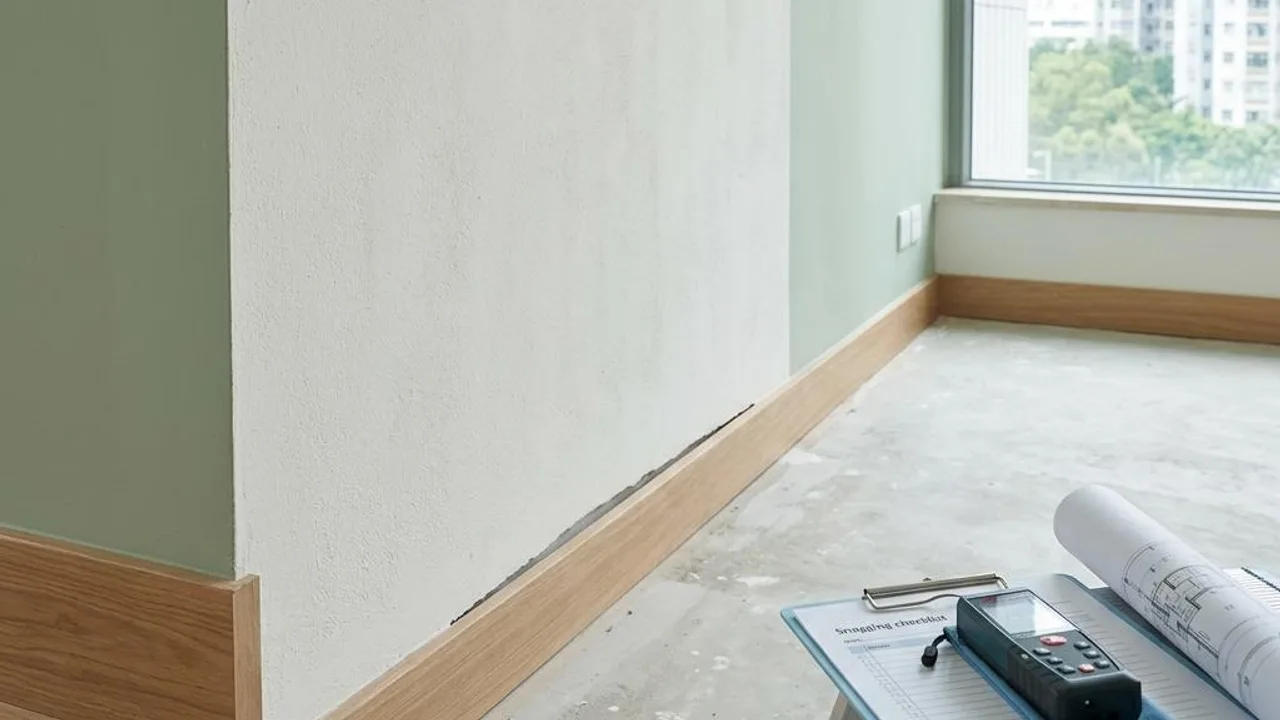
Key Moments of Handover Inspection
The handover represents the owner officially taking over the property, and this is also the start of the developer's free defect rectification period. If defects are overlooked during the inspection stage due to negligence, once the period expires, future repair costs will have to be borne by the homeowner, which is a significant financial loss for maintaining a new home.
Standard property inspection procedures include not only appearance checks but also comprehensive testing of water pipes, electrical circuits, and windows. Mastering the correct precautions allows homeowners to effectively ferret out hidden dangers and implement rectification works within the 'golden time' stipulated by the developer.
- Confirm the free defect rectification guarantee within the handover period.
- Prepare tools to record all property defects.
- Prioritize waterproofing and structural safety checks.
Core Considerations: Leakage Detection and Hollow Tile Inspection
The primary task of a property inspection is a carpet-style search; it must never be done superficially. Focus on ceilings, wall joints, air-conditioner locations, and window frame edges, looking for signs of water stains or discoloration. These positions are common leakage points, and even slight water stains should be recorded cautiously.
Furthermore, use an inspection rod or a coin to gently tap all floor tiles and wall tiles in the unit. If the tapping sound varies or produces a clear hollow sound, the hollow phenomenon exists. Hollow problems need to be marked in a timely manner to prevent tile peeling due to climate changes in the future, which could trigger safety accidents.
- Carefully check for water stains in wall corners, window frames, and ceilings.
- Tap floor and wall tiles to detect hollow problems.
- Test water pressure and the smoothness of drainage pipes.
- Check the condition of door and window hinges and anti-leak rubber seals.
Defect List Techniques: Accurate Recording and Timely Reporting
Developers usually provide a defect rectification list for homeowners to fill out; the key is that the description must be specific and clear. For example, specify 'two scratches on the lower right wall of the living room' instead of writing a general 'wall damage'. This precise description can speed up the processing progress of the developer's maintenance department.
It is recommended to mark defects immediately using coloured adhesive labels and capture both close-up and wide-angle photos via smartphone to facilitate comparison and follow-up. You must strictly adhere to the submission deadlines set by the developer, as late submissions are typically not accepted; property owners need to be extra vigilant.
- Use conspicuous labels to mark defect locations.
- Take close-up and wide-angle photos as evidence.
- Use precise language to describe detailed issues everywhere.
- Submit the defect rectification list within the prescribed dates.
Importance of Professional Property Inspection
The property inspection process involves extensive building and mechanical/electrical technical knowledge. It is extremely difficult for an owner to identify micro-leaks hidden within walls or external wall water seepage using only the naked eye or simple tools. If you miss this window of opportunity, future repair costs will be extremely expensive.
Professional property inspectors possess relevant instruments to identify hidden building defects and can compile lists to professional specifications. If owners discover structural or water seepage concerns, they should seek assessment from personnel with professional backgrounds to avoid risks associated with handling the matter personally.
- Utilise infrared scanning to detect concealed water seepage within walls.
- Use professional equipment to analyse potential building issues.
- Commission the compilation of defect rectification advice with an engineering background.
- Assist owners in clarifying key areas for defect rectification.
Follow-up and Safeguards After Inspection
After completing the initial property inspection and submitting the defect rectification list, owners should retain all communication records and image evidence. Once the developer notifies you that the rectification works are finished, it is recommended to reserve time for a reinspection, focusing on checking whether previously marked defect locations have been repaired and whether secondary damage was caused during the repair process.
If you have doubts about the quality of the developer's repairs, consider seeking professional advice again. Through careful follow-up procedures, owners can ensure their new home meets standard living environment requirements, allowing them to proceed to the decoration or move-in stages with peace of mind.
- Carry out a detailed reinspection of previously marked defect areas.
- Confirm that no secondary damage was caused during the repair process.
- Retain all written records and image evidence.
- Seek professional personnel for re-examination when in doubt.
FAQs
What should an owner do if they discover slight water stains on the wall during a property inspection?
The owner should immediately mark the location with a conspicuous label, take photos for record, and describe the location and shape of the water stain in detail on the defect rectification list. It is recommended to contact a professional property inspector to help confirm the source of the leakage and avoid attempting repairs personally before the cause is identified.
Is it mandatory to request the developer to rectify hollow floor tiles?
If hollow sounding floor tiles are left unaddressed, thermal expansion and contraction may lead to lifting or peeling in the future. Owners should mark all hollow areas and include them in the defect rectification list, requesting the developer to arrange for replacements or regrouting to ensure long-term residential safety.
What should be done if omissions or damages are found during reinspection after defect rectification?
During reinspection, you must compare the findings against the initial defect rectification record. If it is discovered that repairs were not properly executed or secondary damage has occurred, you should immediately take photos as a record, notify the developer in writing, retain all communication records, and if necessary, seek the advice of a professional property inspector again.


