
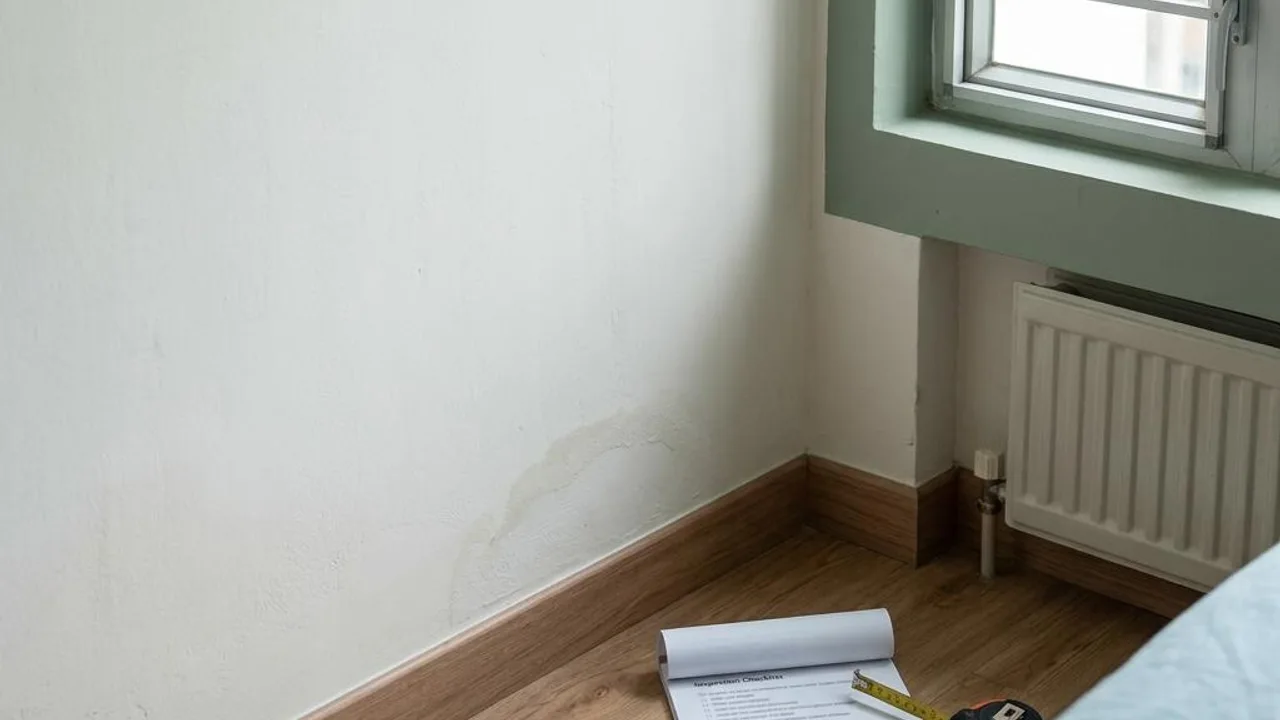
Preparation work before property inspection
Handover is the most critical moment in the home-buying process. Property inspection is not only a procedure for checking unit details but also a necessary means to ensure the property meets residential standards. Homeowners should reserve sufficient time before handover, prepare inspection checklists and recording tools, and ensure sufficient lighting in the unit to observe subtle defects.
A professional property inspection process should remain objective; homeowners should mainly observe obvious construction traces or damage. If problems such as electrical installation modifications, structural cracks, or severe water leakage are discovered, it is recommended to seek assessment from registered professionals; do not carry out unauthorized repairs or tests that involve danger.
- Preparation tool list: powerful torch, chalk, paper and pen, and recording camera
- Check whether the unit's water and electricity supply are stable and operating normally
- Confirm whether all door locks and window structures are complete and undamaged
- Reserve enough time with sufficient light to observe the flatness of wall surfaces and floor tiles
Residential structure and wall/floor inspection
Structural inspection is core to ensuring safety. Homeowners can keep an eye on whether walls, floors, and ceilings have obvious abnormalities. Careful observation can reveal whether walls have unusual hollows, cracks, or signs of moisture; these may be early manifestations of structural hidden dangers, and their distribution and direction require special attention.
If water stains or paint peeling appear on the ceiling, it typically suggests a leakage risk from the floor above or the water supply system. Simultaneously, check if the edge seals of door frames and window frames are secure; if gaps are found to be too large or opening/closing is not smooth, this may affect future water-seepage prevention performance and living safety.
- Check walls for hollow tiles (professional tapping required to confirm).
- Monitor whether there are damp water stains on the ceiling.
- Test all indoor doors and window frames for tight fitting and smooth operation.
- Check if floor tiles are level and free of obvious chipped corners.
Electrical system and safety testing
Home electrical safety is of paramount importance. Owners can check sockets and switches for scorching, deformation, or other marks, ensure that socket locations are reasonably configured, and that they can handle basic appliance operation. High-power appliances such as air conditioners or electric heaters must use independent sockets to avoid the risk of overload caused by sharing extension leads.
If electrical installations are found to have unusual smells, flickering, or are failing to function, they should be recorded and reported immediately. Note: All alterations or repairs to fixed electrical appliances (such as electric water heaters or ceiling lights) must be carried out by a Registered Electrical Contractor, and they must be requested to issue a Work Completion Certificate (WR1) to comply with electricity regulations.
- Check the appearance of all switches and sockets to ensure they are intact and undamaged.
- Test the operation and stability of light fixture switches.
- Ensure that high-power appliances are equipped with independent power sockets.
- Confirm whether electrical installations have abnormal overheating or unusual smells.
Water supply system and drainage operation
The health of the plumbing system is directly related to the durability of the unit. During inspection, all taps should be turned on to see if water flow is smooth and water pressure is stable, and to ensure there are no signs of leakage at connections. Simultaneously, test the flushing performance of the toilet to confirm whether the flushing process is smooth and no foul odours are leaking.
Drainage system inspection should be targeted at the kitchen, bathroom, and balcony, observing whether there is severe water accumulation or blockage in drainage speed. Smooth drainage is the key to preventing the growth of bacteria and mould in the indoor environment. If slow drainage is discovered, it should be recorded in the report for the contractor to follow up and improve.
- Test the water output condition and water pressure performance of all taps.
- Check whether there is leakage at taps and connection points.
- Test the flushing function and drainage smoothness of the toilet.
- Ensure that the drainage outlets in all areas are functioning well without water accumulation.
Renovation and quality details
Good decoration craftsmanship reflects the quality of property handover. Owners should carefully check whether wall paint has been applied evenly and if there is any serious colour difference or rough texture. Doors and windows must open and close smoothly and the surface should be free of obvious scratches; these types of details often reflect the degree of care and the acceptance standards of the construction unit.
Quality inspection of kitchen cabinets, countertops, and bathroom sanitary ware is also essential. Check whether cupboard doors open and close levelly and if drawer sliders are smooth. The silicone sealing at the edges of sanitary ware should be smooth; this is not only an aesthetic requirement but also helps prevent water seepage and prolongs the service life of decoration materials.
- Check whether the wall paint application is even and level.
- Confirm that the opening of kitchen cabinet doors and the operation of drawer sliders are smooth.
- Observe the construction details of the waterproof sealant at the edges of kitchen and bathroom sanitary ware.
- Examine carefully whether there are scratches or obvious defects on the decorative finish layers.
FAQs
How should cracks in walls discovered during property inspection be handled?
Owners should mark the position and length of the cracks and take photos for records. If cracks show regular fine lines, they are usually due to paint drying and shrinking. If the cracks are deeper or show a tendency to spread, the management office or contractor should arrange for a registered professional to assess their nature; do not apply paint to cover them yourself.
How can one determine if home electrical installations meet safety standards?
Electrical installation safety checks should rely on visual observation of whether socket faceplates are deformed or scorched, as well as testing switch operations. Modifications or repairs involving the interior of the electrical system must be handled by qualified Registered Electrical Contractors, and one should also check for the Work Completion Certificate (WR1) for the relevant items upon acceptance.
Does slow drainage in the kitchen and bathroom mean there is a serious problem?
Slow drainage may be caused by construction waste left over from the construction process or it could be a problem with the design of the drain pipes. Owners can record the drainage performance and location, hand it over to the engineering team to check for blockages in the pipes, and require the construction party to clear them to ensure smooth drainage.


