
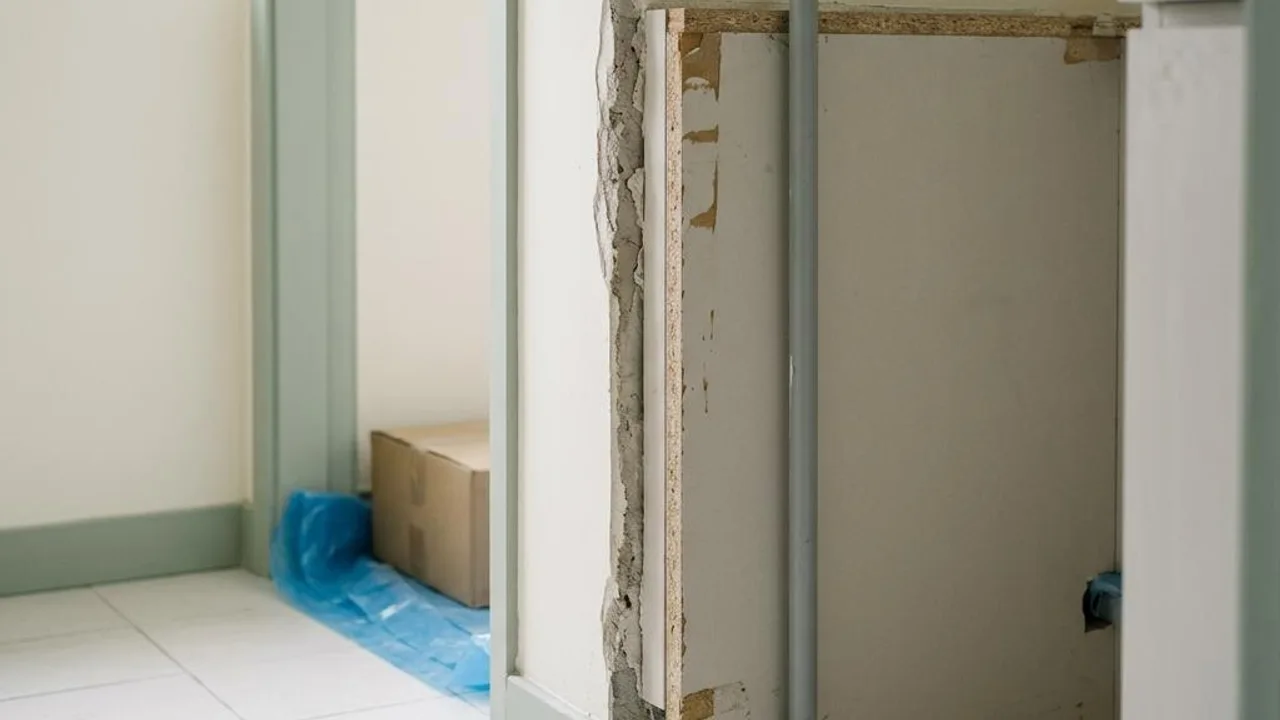
Causes and observations of plaster cracks in new homes
Plaster cracks appearing in newly completed units are often related to moisture failing to evaporate completely during construction or insufficient stress release. In high-density rush-work situations, paint or tiles are applied before the underlying moisture has dried, causing the wall surface to easily develop irregular micro-cracks later when temperature and humidity change.
For the joints between door frames and walls, differences in the expansion coefficients of heterogeneous materials can also lead to cracks. Owners should distinguish whether these are defects in the surface decorative layer or structural damage. Generally speaking, micro-cracks involving only the surface coating fall within the scope of defect rectification and are not signs of structural insecurity.
- Observe whether the wall has long or net-like micro-cracks
- Pay attention to whether there is paint peeling at door frame joints
- Record crack locations and request defect rectification from the developer
Narrow spaces and hardware installation deviations
Because small units have compact spaces, kitchen cabinets and bathroom hardware are often installed at narrow angles. There may be alignment errors during installation, leading to loose screws, uneven silicone sealant application, or hardware bearing lateral shear forces. With long-term use of opening and closing, problems may manifest as loose hinges; it is recommended to observe and repair as needed.
Understanding construction limitations helps owners face handover defects rationally. Hardware wear caused by installation deviations is a detail issue that does not affect building structure but directly impacts the living experience. Owners should pay special attention to the smoothness of opening and closing doors and windows during inspection.
- Check if cabinet doors open and close evenly and if there is any abnormal noise
- Check if there are gaps in the edges of the silicone sealant
- Check if there are any signs of installation misalignment for metal components.
Self-screening: Tile hollows and level checks
Owners can use a coin or metal rod to tap the tiles lightly. If it produces a dull, hollow sound, it may indicate a hollow spot. While a hollow spot does not necessarily mean the tile is about to fall off, it does reflect that the tiling workmanship is not perfect and should be included in the defect rectification list.
For floor levels and drainage, simple tests can be conducted on the balcony or in the bathroom. Observe whether the water flows rapidly toward the drain; water accumulation indicates insufficient slope gradient. These simple self-inspection techniques can help owners collect preliminary data before professional staff arrive.
- Tapping method for detecting hollow spots in floor or wall tiles.
- Use a simple splash test to observe the water drainage situation of the floor gradient.
- Check for water accumulation around the floor drain.
Rectification strategies and time cost measurement
When dealing with defects in a new home, it is necessary to balance the time cost of defect rectification with long-term benefits. If minor defects are not addressed in time and worsen after moving in (such as hidden pipe issues), large-scale repairs are often required, which will lead to additional expenses such as wall demolition and relocation.
Adopting the correct strategy at the beginning of property handover is crucial. If the number of defects is high or the nature is complex, hiring a professional to document them and submitting specific rectification requests to the developer is often more efficient than handling it yourself, and it can effectively reduce future property maintenance expenses.
- Comprehensive assessment of the urgency of repairing various types of defects.
- Avoid being penny-wise and pound-foolish by ignoring hidden water and electrical issues.
- Submit a record of structural or functional damage to the developer.
Seeking professional inspection support
Professional inspection equipment helps evaluate issues that cannot be directly seen by the naked eye, especially regarding moisture content inside walls and electrical connections. By collecting accurate data through professional tools, owners can follow up on maintenance progress with the developer in a more organized manner.
Reserving sufficient time to arrange the property inspection is a key step. Owners are advised to keep the inspection results on record and ensure the report details are sufficient to correspond to the developer's defect rectification rules, thereby protecting their rights and interests during the property's maintenance period.
- Use professional inspection equipment to evaluate wall, water, and electrical conditions.
- Obtain a detailed property inspection record to facilitate follow-ups with the developer.
- Please reserve sufficient time to arrange an on-site property inspection.
FAQs
Do micro-cracks on the walls of a new building indicate a structural danger?
Generally speaking, micro-cracks on walls commonly found in new buildings are mostly related to plastering construction, moisture evaporation, or the expansion and contraction of dissimilar materials. If they are only surface coating or plastering cracks, they usually do not involve building structural safety and can be listed as defect rectification items for the developer to handle.
How should owners handle tile hollow spots found during a tapping test?
Owners can mark the locations where hollow spots are found and submit them to the developer after recording them. Although a hollow spot does not mean it will fall off immediately, it reflects the tiling quality, and owners have the right to request the developer to perform appropriate remedial work according to the terms of the contract.
When performing a self-inspection and discovering slow drainage, how should one contact them for follow-up?
If water accumulation is found around the drainage hole, it means the slope gradient may be insufficient. Owners should record the testing process in detail and take photos as evidence, submit a formal defect rectification application to the developer's property management office in a timely manner, and hire professionals to assist in recording specific data if necessary.


