
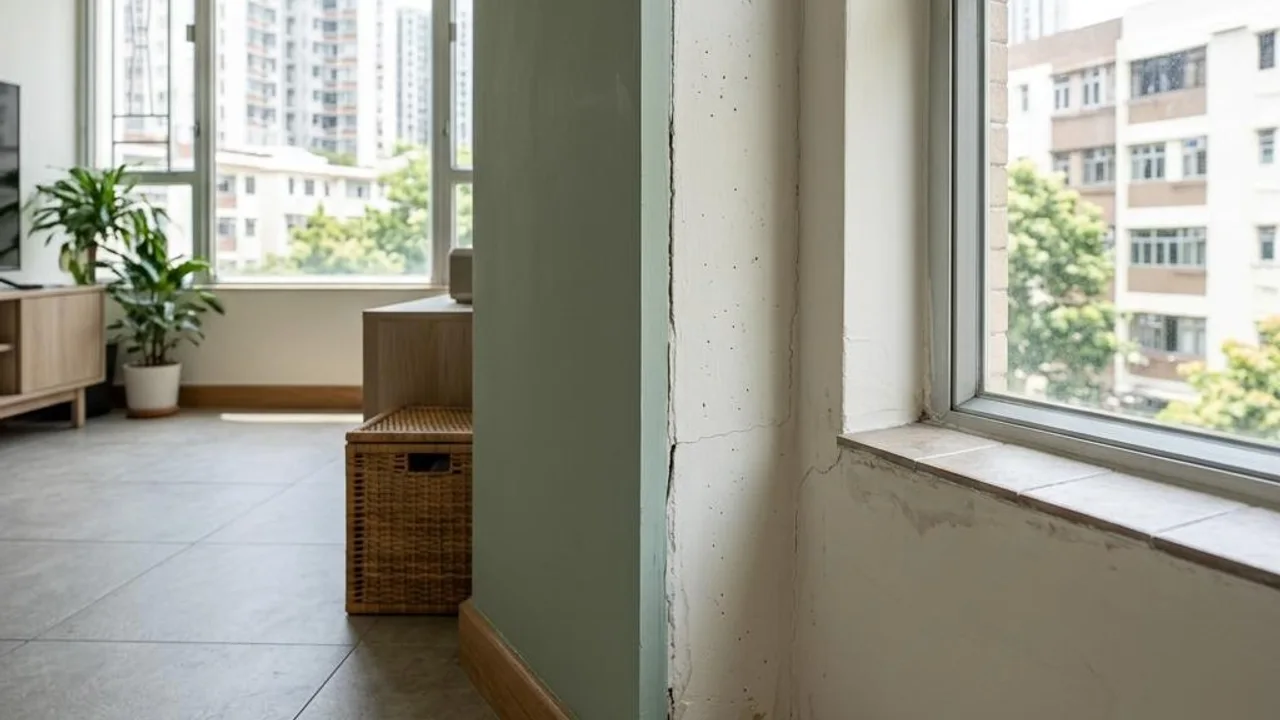
Residential Property Inspection Core: Safety and Craftsmanship
The focus of residential property inspection is on living safety and workmanship. For new buildings, the focus includes wall flatness, smooth opening/sealing of doors and windows, and checking for hollow tiles, cracks, or damage to finishes. These details directly affect comfort and subsequent renovation maintenance.
For second-hand residences, the focus is on observing current status and assessing ageing, particularly water/electrical systems and Mandatory Window Inspection Scheme (MWIS) compliance. Check for surface leakage traces on pipes, note circuit configurations and typical appliance loads, and verify if window components meet MWIS safety standards. Such observations do not guarantee structural integrity, concealed internal pipes, or waterproofing layers. Statutory procedures like MWIS should be carried out by a Registered Inspector in accordance with Buildings Department regulations. If structural, electrical, or gas safety issues are found, consult relevant professionals. Do not dismantle electrical devices or perform repairs yourself.
- Checking for wall hollowness and flatness
- Confirming door/window opening smoothness and sealing
- Assessing ageing of concealed pipes and wiring
- For applicable properties, the Mandatory Window Inspection Scheme is an independent statutory procedure that must be performed by a qualified person registered with the Buildings Department. This service is not included in general daily property inspections and is not part of this website's default service scope. Owners should consult qualified professionals directly for related matters.
Commercial Property Inspection Focus: Operational Efficiency
Inspection needs for commercial properties involve complex fire safety and power capacity assessment. In addition to confirming structural integrity, the electrical system's load level must be reviewed to ensure it is sufficient to support various office or commercial equipment, avoiding operational disruption due to power insufficiency.
Furthermore, ventilation and indoor environmental quality in commercial spaces are vital. During OPO Inspection, evaluate whether air-conditioning and ventilation systems are operating normally, ensure air circulation meets standards, and confirm all escape routes comply with fire regulations to safeguard the office environment's safety and efficiency.
- Assessing commercial power load capacity
- Confirming fire facility and alarm system compliance
- Checking air-conditioning and central ventilation system performance
- Verifying that escape routes are unobstructed
Industrial Property Assessment: Load-bearing and Stability
Industrial property inspections focus on building structural load-bearing capacity and mechanical power stability. Property inspection requires detailed assessment of floor load limits to accommodate various industrial equipment, and checks on industrial-grade fire safety and voltage stability under long-term operation.
Fire and drainage facilities inside factories and warehouses are also critical. Due to high industrial activity density, these facilities must ensure they do not suffer systemic failure during continuous operation, protecting personnel safety and meeting industrial safety regulation requirements.
- Assessing industrial building structural load-bearing capacity
- Testing industrial power supply stability
- Verifying integrity and operability of fire equipment
- Checking mechanical safety environment and exhaust ventilation
Agricultural Property Inspection: Resources and Facilities
Agricultural property inspection scope covers building structures as well as land resources and irrigation systems. An effective water supply system, pipe condition, and drainage performance of agricultural land are key factors in determining the property's productive functionality.
For ancillary facilities like greenhouses or warehouses, focus on structural stability to ensure they can withstand adverse weather. Electrical facilities in agricultural environments require special consideration for moisture-proofing and durability to prevent electrical shorts or facility damage due to humidity.
- Checking irrigation facilities and water source systems
- Assessing drainage performance of agricultural land soil
- Verifying structural stability of ancillary warehouses
- Ensuring electrical facilities possess moisture-proofing functions
Professional Property Inspection Process and Hazard Identification
Different property types have vast differences in building characteristics and usage requirements; hiring professionals for targeted inspection is vital. Professional property inspectors possess knowledge of various building structures and can identify hazards ordinary owners may struggle to find, protecting asset safety.
Through systematic inspection schemes, professional teams can identify building structure, system safety, and environmental suitability issues. If owners find wall leakage or power tripping, they should record the time and symptoms in detail, and commission professionals for an in-depth on-site investigation.
- Developing tailored inspection schemes
- Providing comprehensive and objective inspection results
- Assisting in identifying various potential structural hazards
- Providing targeted maintenance advice
Guide to Property Maintenance and Monitoring
Owners should establish regular property maintenance habits daily, rather than just focusing on safety at handover. For wall hollowness, observe through tapping tests and record the range of changes. If encountering water stains or damp issues, it is recommended to first remove surrounding furniture to observe the leakage pattern so it can be explained to experts.
Regarding electrical facilities, never dismantle switches or sockets yourself; observe for burning smells or abnormal noises. If appliances trip frequently, have a licensed electrician test it; this is often a sign of ageing wires or overload and should be prioritised to ensure electricity safety.
- Establishing a habit of recording regular observations of leakage
- Noting abnormal sounds or odours from electrical equipment
- Observing signs of ageing in finish materials
- Seeking qualified technical personnel for on-site investigation
FAQs
If slight hollow walls are found in a residence, how should an owner observe them?
The owner may attempt to tap the wall; if a noticeably hollow sound is heard, it indicates potential drummy tiles or plaster. The location and area of the occurrence should be recorded, and any expansion of surrounding cracks should be observed before consulting OPO Inspection to assess whether it affects structural or finish safety.
During a commercial property inspection, how can the adequacy of the electrical load be confirmed?
The owner should check the load limit of the existing electrical distribution board and take an inventory of the total power required by business equipment. If total power demand approaches the limit, it is recommended to have a registered electrical worker conduct a load test and professional assessment to avoid risks of tripping or overheating during operations.
During industrial property inspections, why is it necessary to specifically assess moisture-proofing performance?
Industrial environments are typically more humid or have complex ventilation conditions; if facilities lack effective moisture-proofing, electrical installations and metal structures are prone to corrosion or short circuits. The owner can observe for rust or water droplets around the electrical switchboard and request a professional to assess the environmental seal and ventilation efficiency.


