
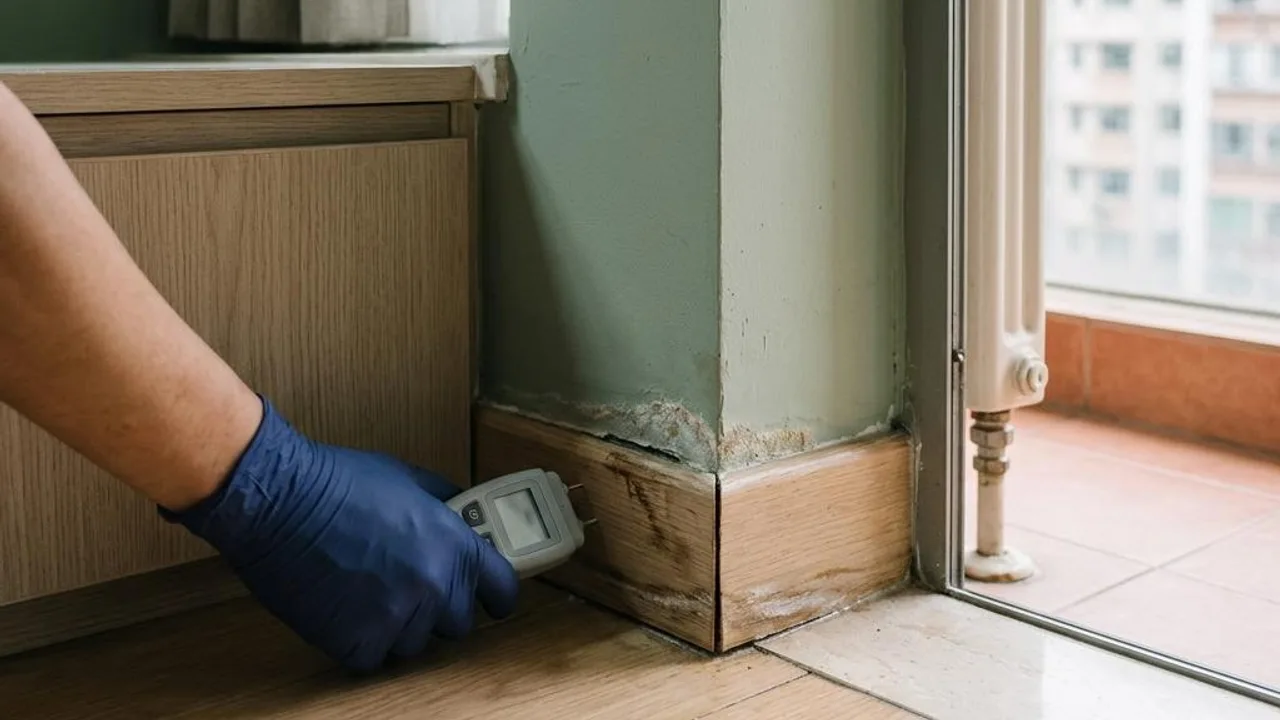
Misconceptions about receiving a new property: A smooth surface does not mean zero defects
Many owners, when receiving the handover notice, are often excited and wrongly assume that white walls and flat floors mean perfect construction quality. In reality, the surface finishes of a new property can easily conceal craftsmanship defects. If an owner lacks professional knowledge and blindly signs off after a mere visual inspection, they may only discover corner seepage or tile spalling after moving in, which not only affects quality of life but may also lead to heavy maintenance expenses.
In the Hong Kong property market, inconsistent new-build quality is not uncommon. Although developers have a statutory obligation for defect rectification, owners must accurately identify defects within the specified timeframe. Lacking a professional inspection foundation and confirming handover rashly often leads to immense difficulties when requesting repairs later. A property inspection is not just about nitpicking details, but establishing a defensive line for your asset's security.
- Surface cleanliness cannot be taken as proof of structural integrity
- Discovering hidden problems after moving in will increase maintenance costs
- Defining defect rectification responsibilities after handover requires a professional report for support
- Preventing water seepage and wall cracks after moving into the new home
The developer's hidden black spots: Structural waterproofing and detailed works
During a property inspection, the things developers find hardest to explain are often not surface scratches, but construction quality hidden in the dark. For example, if the waterproof rubber seals on balcony window frames are improperly installed, micro-seepage can easily occur during the rainy season. These problems are difficult to detect with the naked eye initially and require professional observation skills or appropriate testing methods to identify.
Another common blind spot is the connection point between the air conditioner drain pipe and the external wall. Because the space is narrow, it is difficult for owners to inspect on their own; if the area is not sealed tightly, it will lead to dampness and mould on interior walls over time. Additionally, if the floor gradient in kitchens and bathrooms is poorly designed, it will directly affect drainage performance; such problems often require precise observation to judge whether there is a risk of water accumulation.
- Installation quality of the waterproof seals on window frame edges
- Sealing integrity of the connection point for air conditioner drain pipes
- Whether the drainage gradient of kitchen and bathroom floors meets regulations
- Potential signs of water seepage in hidden engineering areas
Application of professional instruments: The truth behind detecting hollowness and water seepage
When conducting a blanket inspection, hollowness and water seepage are two major challenges. Many owners think that simply tapping tiles is enough, but professionals use a hollow-tapping hammer to tap them one by one, judging the hollowness based on changes in sound frequency. Excessive hollowness can not only cause tiles to fall off due to temperature changes but also carries a risk of bursting in the long run.
In terms of water seepage detection, an infrared thermal imaging camera is an important auxiliary tool. Walls that appear dry to the naked eye may show abnormal temperature differences under the instrument, reflecting internal moisture or signs of pipe connections. This scientific evidence is key data for communicating defect rectification with developers and can effectively avoid stalemates due to disagreements in subjective opinions.
- Using a hollow-tapping hammer to detect tile hollowness rates
- Utilising infrared thermal imaging cameras to see through hidden water stains
- Using instrument data to substantiate the moisture situation inside walls
- Avoiding long-term hidden hazards caused by negligence in visual judgment
Comparison of inspection methods: Efficiency analysis between self-service and professional teams
When facing a new property inspection, owners often hesitate between DIY and hiring a team. The advantage of DIY property inspection is its flexibility and lower cost, suitable for units with smaller areas or simple conditions, but its limitation is its inability to deal with deep-seated water seepage and hidden structural defects due to a lack of professional tools.
By comparison, professional teams are equipped with high-precision instruments and possess rich experience in defect rectification, providing owners with comprehensive inspections. A detailed inspection report not only accurately marks the location of problems but also provides owners with professional grounds to help solve the pushback developers might present, serving as a long-term economic investment to protect the living environment.
- DIY property inspection is suitable for preliminary observation, but cannot guarantee structural, electrical, gas safety, or compliance. It also cannot detect pipes within walls, the thickness of waterproofing layers, remaining lifespan, or repair effectiveness. Thermal imaging cameras only show surface temperature differences and are not absolute evidence of the root cause of moisture leakage or hidden structures. Statutory window inspections must be performed by a person qualified and registered with the Buildings Department; this is an independent procedure and not a standard service of this site. For any hidden defects or professional issues, it is recommended to refer to relevant professionals for follow-up. Do not attempt to test electricity, dismantle equipment, adjust pressure valves, or enter rooftops or high areas outside windows by yourself for safety reasons.
- Professional teams possess high-precision instruments such as infrared imaging
- A professional report is an important legal basis for protecting the owner's interests
- Precise inspection can effectively avoid repeated repairs after moving in
Practical operation suggestions for professional inspection
When an owner discovers potential problems, they should photograph and record the observed abnormal points in detail as soon as possible. If water seepage or structural defects are suspected, it is recommended to contact professional property inspectors with relevant experience to conduct an on-site assessment and request an objective site report to facilitate the submission of a written repair request to the developer.
Owners should remain objective during the inspection process. For hidden pipelines or electrical problems that cannot be handled, do not attempt to dismantle or modify them by yourself to avoid affecting maintenance liabilities or causing accidents. Ensuring that a qualified professional conducts the inspection according to standard procedures is the safest way to maintain the unit's quality.
- Completely record the details of all observed defects
- Seek personnel with a professional background to conduct an on-site assessment
- Negotiate defect rectification with the developer through a written report
- To safeguard maintenance rights and personal safety, do not dismantle electrical appliances, alter water pressure valves, climb onto roofs, or lean out of windows to inspect. Hidden works (such as concealed pipes, thickness of waterproofing layers) are beyond the scope of general inspections, and no inspection tool can guarantee the discovery of all hidden defects or confirm that structural, electrical, or gas systems are fully compliant. Thermal imaging technology only reflects surface temperature distribution and is not absolute evidence of the cause of water leakage. Statutory window inspection is a specific procedure that must be performed by a person qualified and registered with the Buildings Department and is not a general inspection service. If a professional domain is involved, consult a registered engineer or relevant practitioner and do not make safety guarantees.
FAQs
If slight water stains are found on the wall during property inspection, how should I handle it?
Owners should immediately take photos to record the location, scope, and pattern of the water stains and avoid handling them personally. It is recommended to immediately request the developer to conduct an on-site inspection and engage a professional to use tools such as an infrared thermal imaging camera to detect the cause of the stains, confirming whether it stems from pipe leaks or failure of the waterproofing layer, to ensure the repair plan is accurate.
Is it necessary to request the developer to replace tiles immediately if hollowness is found?
The severity of tile hollowness needs to be referred to relevant engineering standards and the ratio of the hollow area. If the hollow area is too large or located in a critical position on the wall, it may cause tiles to fall off or burst later due to thermal expansion and contraction. At this point, the owner should request the developer to assess and arrange appropriate defect rectification works to eliminate safety hazards.
Why do property inspectors still recommend using infrared instruments for walls that look dry to the naked eye?
A dry surface does not mean there is no moisture inside the wall. There may be hidden pipe damage or failure of the waterproofing layer within the building structure; these problems only show up as minor temperature or humidity differences initially. An infrared thermal imaging camera can see through these abnormal areas, assisting the owner in discovering them in time and requesting rectification before the problem worsens.


