New property kitchen smoke backdraft: Analyzing the wind pressure difference issues in high-rise residential buildings
Many new owners of high-rise residential properties in Hong Kong often encounter backdraft issues when first using their range hoods after taking possession of their units. Specifically, when the range hood is in operation, it fails to effectively exhaust cooking fumes and instead allows cold air, unpleasant odours, or even cooking fumes from neighbours to backflow into the home through the exhaust duct, causing a rapid deterioration in kitchen air quality.
The core cause of this phenomenon is often related to the air pressure balance of the building's exhaust system. High-rise buildings are significantly affected by wind pressure on the external walls; when strong outdoor winds blow directly towards the exhaust outlet, the resulting powerful wind pressure can exceed the exhaust pressure of the range hood itself. If the design or installation does not meet standards, air will backflow along the duct into the interior, which will affect indoor air quality and the respiratory health of residents in the long term.
- High wind pressure generated by strong winds hitting the exterior wall of the building
- Range hood exhaust performance is unable to withstand external air pressure
- Defects in the air pressure balance design of exhaust pipe systems in high-density buildings
- Significant pressure difference between indoors and outdoors
Deepening into exhaust systems: The key roles of non-return valves and duct installation
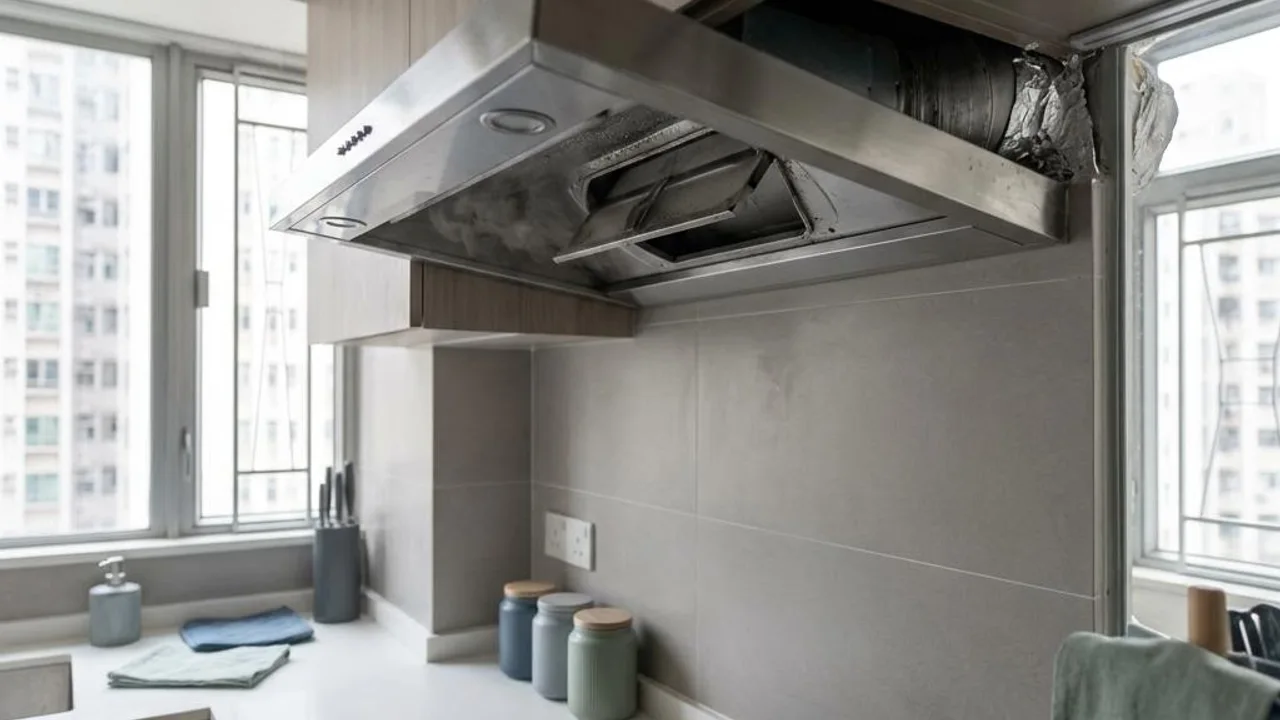
To resolve the backdraft issue, one must systematically inspect the exhaust hardware within the kitchen. The most critical component is the non-return valve (backdraft damper). Its function is to ensure one-way airflow, meaning it opens for exhaust when the range hood is running and closes tightly when it is switched off to prevent backflow. However, the non-return valves provided in some new developments are of poor quality or lack sufficient airtightness upon installation, leading to gaps when closed.
In addition to the non-return valve, the pipe structure is also a key area for inspection. If the exhaust duct is too long, has overly sharp bends, or if the connection points are loose or damaged, the system's ability to resist wind pressure will be significantly reduced. During a property inspection, the seals of the duct connections should be carefully examined to ensure there are no air leaks; otherwise, when external wind speeds increase, cooking fumes will easily flood back into the home.
- Non-return valve assembly fails to close completely or does not meet quality standards
- Exhaust duct connections are not installed tightly
- Excessive bends inside the piping increase wind resistance
- Damage or loosening of ducts caused during the construction period
The boundary between DIY owner inspection and professional engineering
Facing the inconvenience of backdrafts, owners should carefully distinguish between tasks they can handle themselves and areas where professional assistance is required. Generally, daily cleaning of grease filters and checking exposed exhaust ducts for obvious signs of loosening are simple maintenance tasks that owners can participate in. If obvious installation defects are found or if issues involving connections to the building's common flue need to be addressed, it is recommended to leave the area undisturbed and submit a request for defect rectification to the developer.
Do not attempt DIY projects involving the dismantling of the main range hood unit, altering the configuration of common exhaust vents, or any work involving high-altitude operations and electrical equipment modifications. Such projects not only involve high-risk maneuvers, but improper handling may also violate the Deed of Mutual Covenant and even affect the operation of the building's overall fire safety system, posing long-term hazards to both the home and public safety.
- Regularly clean the exhaust system grease filters to ensure they are unobstructed
- Visually inspect accessible indoor exhaust duct connection points
- Do not attempt to modify flues involved in common exhaust systems
- Do not attempt DIY connections or alterations to electrical equipment
- High-altitude exterior wall exhaust hoods should be handled by qualified personnel
Comparison of anti-wind solutions: How to choose the most suitable non-return valve
There are various anti-backdraft hardware accessories on the market, and their performance varies significantly depending on different environments and requirements. During a property inspection assessment, owners can evaluate whether existing equipment is sufficient based on the floor level and ventilation environment of their unit, or whether it is necessary to consider replacing it with a higher-grade windproof non-return valve.
A high-quality non-return valve should maintain a high level of airtightness in strong wind conditions. For instance, gravity-type and smart electric-type check valves are designed to be more wind-resistant than the standard plastic valve flaps provided at handover. Choosing suitable equipment can physically block the path of backdrafts, and when combined with professional installation techniques, this is one of the most effective ways to solve the problem.
- Original plastic non-return valve: Suitable for low floors, limited windproof capability
- Gravity-type non-return valve: Uses gravity and magnetic force to improve closure
- Electric smart non-return valve: Linked via an electric motor, providing strong wind resistance
- Be sure to confirm the pipe diameter before purchasing to ensure compatibility
- Ensure the valve flap moves flexibly without abnormal noise during installation
Seeking support from a professional OPO Inspection team
If backdraft issues persist after simple checks, or if it involves complex defects from a new development, blind communication is often unable to resolve the core of the problem. Lacking support from professional technical data, owners are often in a passive position when negotiating defect rectification with developers. At this stage, you should consider seeking a professional team to conduct an inspection to obtain a specific data assessment report.
Professional inspectors can use instruments to help assess the load status of the exhaust system during operation and use their professional perspective to judge whether the pipe installation complies with ventilation standards. Through clear demands for defect rectification and written reports, owners can more effectively request follow-up from the management office or the developer to resolve potential exhaust hazards.
- Use an anemometer to measure actual exhaust performance
- Assist in communicating clear defect rectification demands to the developer
- Ensure compliance with the safety specifications of the building's exhaust system
FAQs
Why do range hoods in new buildings experience backflow of odors?
This is usually because the wind pressure on the exterior wall is too high, the range hood's non-return valve fails to effectively block external airflow, or the exhaust duct connection is not tight enough, causing air pressure imbalance that allows outdoor air and cooking fumes to backflow.
Are there risks if owners replace the non-return valve themselves?
If replacing the non-return valve involves altering the original exhaust duct configuration or dismantling complex components, it may affect ventilation efficiency or violate the building's maintenance Deed of Mutual Covenant. It is recommended to have qualified personnel perform the installation to ensure airtightness and safety.
How can one determine if a backdraft problem is serious during a property inspection?
Owners can observe whether there is a noticeable odor entering when the unit is stopped, and check for gaps in the exhaust duct connection. If the situation persists, professional personnel should be invited to use instruments to test the exhaust wind speed and pipe airtightness, and record the conditions to submit a defect rectification request to the developer.