Self-Inspection Upon Handover: Emergency Wisdom Using Everyday Items
Taking possession of a new property is a significant milestone. If you are a first-time owner and wish to get a sneak peek before booking a professional property inspector, you do not necessarily need expensive equipment. Using daily items you have on hand, such as ping-pong balls, coins, and mobile phones, is sufficient to perform a first round of basic screening for your new home. While this method cannot fully replace a professional inspection, it allows you to have a basic understanding of the unit's condition.
During the initial handover period, developers usually provide a defect rectification reporting period. Using items for self-inspection can assist you in discovering obvious defects early and recording them on the defect rectification list, so you are not left in a completely passive position when signing the satisfaction note. This is not just to save money, but to efficiently secure reasonable rights for defect rectification from the developer within a limited time.
- Make good use of daily items for basic screening to uncover defects early.
- Within the limited defect rectification reporting period, record obvious problems first for follow-up.
Physical detection principles of coins and ping-pong balls.
The key to using everyday items for self-inspection lies in understanding the physical principles behind them. For example, because a ping-pong ball is light and has little resistance, it is a simple tool for checking floor gradient and drainage function. Place a ping-pong ball in the bathroom shower tray or balcony floor; if the floor design meets the gradient requirements, the ball should roll towards the floor drain. If it remains stationary or moves in the opposite direction, it indicates a risk of water ponding on the floor.
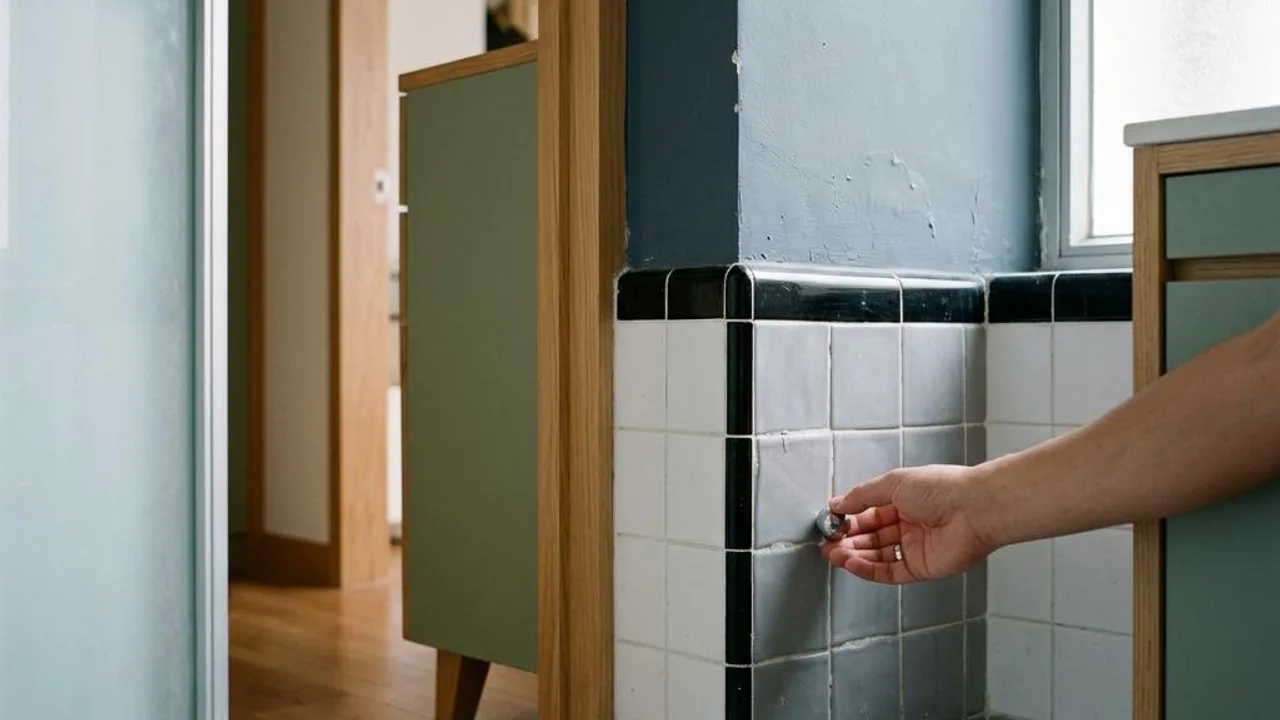
Another common test is to use a coin to tap floor tiles. When the cement under the tile is full, the tapping sound should be solid and crisp; if there is hollowness, the sound will be a hollow, low-frequency dull thud. These simple methods can help owners quickly assess floor flatness and tile adhesion quality, making them very practical preliminary screening techniques at the handover site.
- Ping-pong ball: Tests floor drainage gradient to discover if there is any obvious reverse slope.
- Five-dollar coin: Taps floor and wall tiles to quickly screen for hollowness.
- Mobile phone torch: Use side lighting at a 45-degree angle to inspect the flatness of the plaster.
List of safe self-inspection scopes and contraindications.
Self-inspection items that owners can safely operate include: using the original mobile phone charger to test whether sockets are live, and gently shaking the faceplate at the same time to check if the back box is loose; when testing pipes for leaks, you can press a dry tissue firmly against the pipe trap connection point to see if there is any minute dripping. These operations fall within the scope of safety and can effectively screen for basic water and electrical problems.
However, DIY testing must comply with strict safety taboos. It is strictly forbidden to insert any metal wires into sockets to test the circuit, as this causes a fatal short-circuit risk. Do not attempt to force open the distribution board without professional testing, and never risk climbing outside a window to perform push-pull tests if you find loose window hinges. All work involving high-altitude or concealed electrical safety must be carried out by a professional OPO Inspection team.
- Use a compliant electrical plug to test the continuity of sockets.
- Use a dry tissue to test if there is minute water leakage at the pipe connection points.
- Strictly forbidden to insert metal wires into sockets to test, to avoid the risk of electric shock.
- Checks for high-altitude windows or electrical facilities must be reserved for professionals.
Comparison between everyday item testing and professional inspection.
Although the everyday item detection method has advantages in convenience, its physical precision is limited, and it is difficult to quantify complex building defects. Professional inspection teams are equipped with industrial equipment such as infrared thermal imaging cameras, microwave moisture testers, and digital levels, which can deeply screen for concealed water seepage inside concrete, moisture content in walls, and the tripping time of circuit leakage protection, all of which are layers that everyday item testing cannot reach.
For new properties, developer craftsmanship standards are strict, and even minute errors may affect the long-term quality of the property. If an owner judges solely by the naked eye and simple tools, once a concealed structural problem is missed and the defect rectification period is passed, having to pay tens of thousands of dollars for self-financed repairs later will be a greater burden. Therefore, everyday items are only suitable for preliminary rapid screening; formal property inspection should be handed over to a professional team.
- Everyday item detection: Extremely low cost, suitable for rapid screening of surface problems.
- Professional inspection: Uses precision instruments, covering concealed water, electricity, and structural safety.
- Recommendation: After discovering suspected points through self-inspection, book a professional property inspection team within seven days for a reinspection.
The importance and process of professional property inspection.
The services provided by a professional inspection team cover a full-house detailed investigation of water, electricity, tiling, carpentry, and structural hidden hazards. Inspectors will use multiple industrial instruments to evaluate pipe leakage inside walls, the connection status of wires inside walls, and the support structure under floors that cannot be directly observed; these in-depth inspections are crucial for protecting the owner's property asset value.
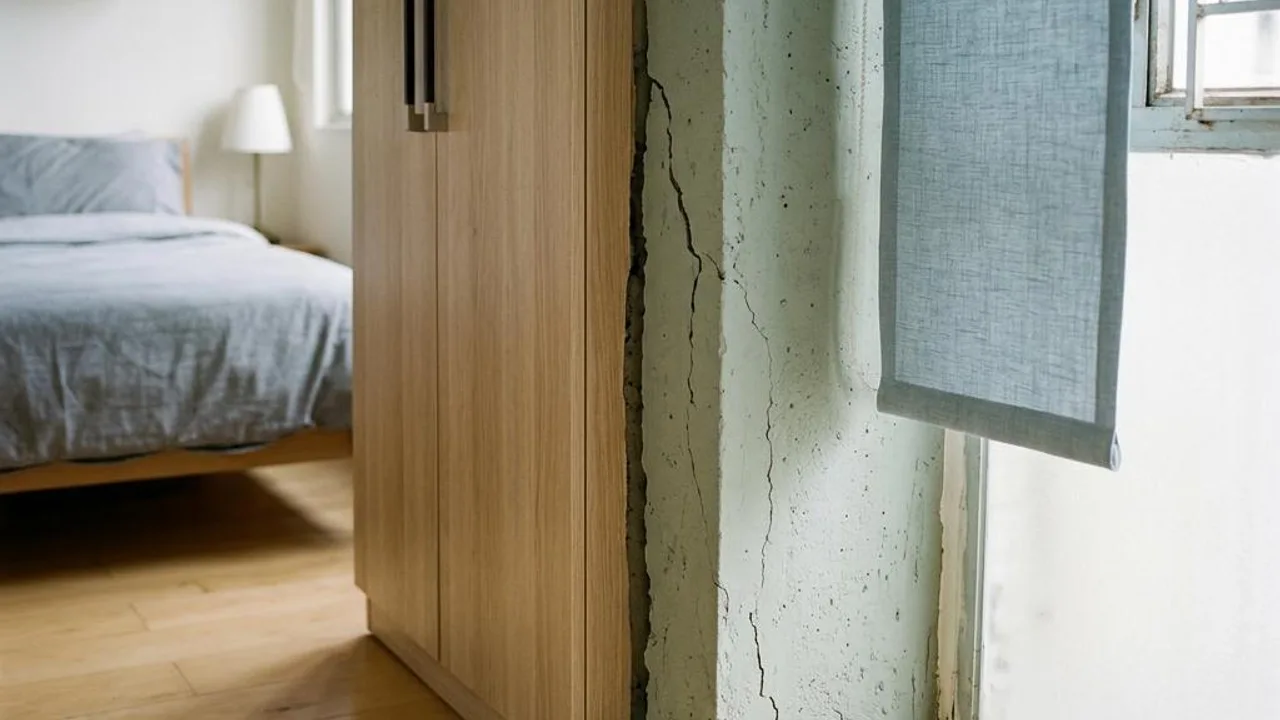
When an owner discovers suspected points during a preliminary self-inspection, such as cracking in wall plaster, obstruction in window opening/closing, or blocked drain pipes, please be sure to record the specific location and the observed phenomenon. Subsequently, you should contact a professional to conduct a detailed reinspection, clearly informing the other party of the specific condition observed, so that the inspector can more targetedly check whether there are potential construction omissions or concealed problems in that area.
- Provides a full-house detailed investigation of water, electricity, tiling, carpentry, and structural hidden hazards.
- Professional property inspection teams are experienced and can handle challenges of different building types.
FAQs
Will using a coin to self-check for wall tile hollowness damage the finish?
As long as you tap lightly with appropriate force, the coin usually does not cause damage. If the tapping sound reveals a hollow echo, this indicates that the tile is separated from the underlying adhesive layer; in this case, record the location and let a professional property inspector follow up to assess the scope of the impact.
If the ping-pong ball remains in the drain, does it mean the floor gradient is definitely not up to standard?
The ping-pong ball test is a preliminary screening method, influenced by floor friction, dust, or other environmental factors. If the ball remains stationary, the owner should record the phenomenon and ask a professional inspection team to conduct a reinspection with precision leveling instruments to determine if the floor drainage gradient meets the design standards.
How can one effectively report plumbing problems discovered during self-inspection to the inspector?
Please record the specific location and the leakage situation; for example, if you discovered minute water stains after using a tissue on the kitchen trap pipe location. It is recommended to take photos and annotate the location, leaving it to professionals during the formal inspection to determine whether the source of the leak involves poor connections or missing sealant.