
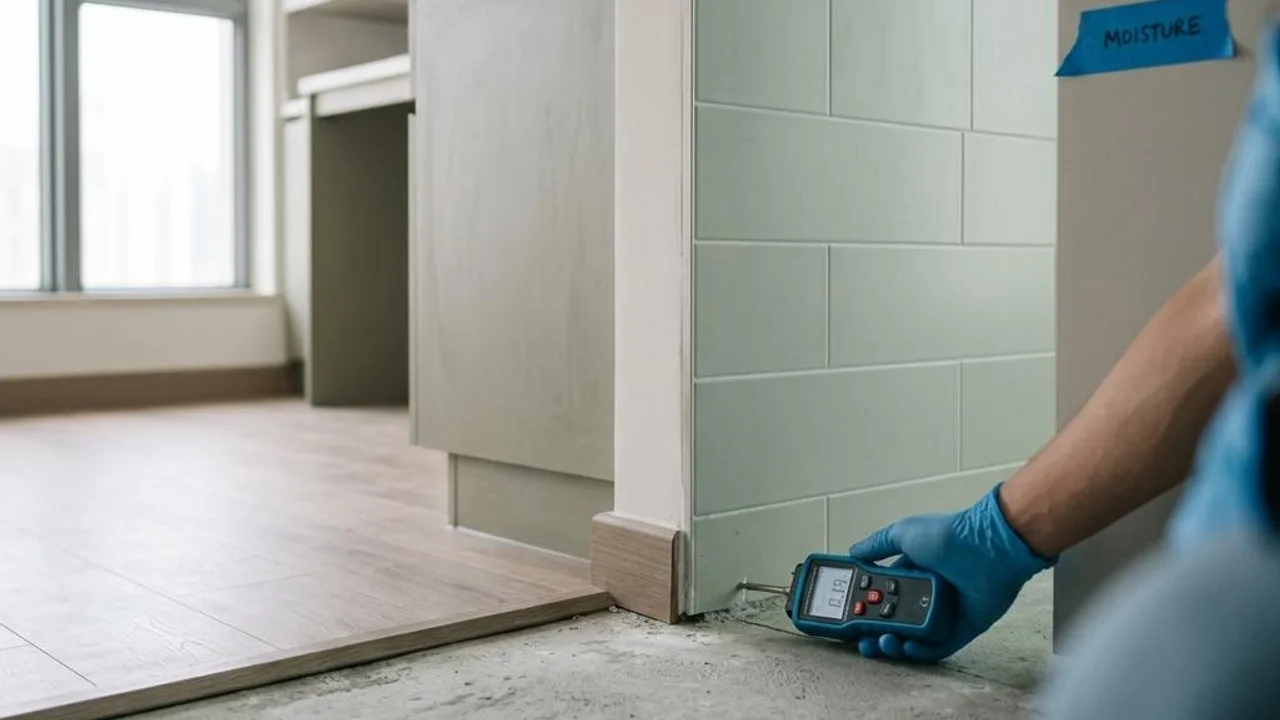
The importance of property inspection
New property inspection is not just a formal handover; it is the owner's last chance to safeguard their personal asset rights. Through a professional property inspection process, owners can verify whether the building structure, facility configuration, and decoration craftsmanship within the unit meet the commitment standards in the sales and purchase agreement, and immediately identify quality hazards that require developer follow-up repairs.
The property inspection process allows owners to grasp the true condition of the property. Many seemingly smooth walls or aesthetically pleasing equipment may hide potential leakage, poor drainage, or electrical/mechanical issues under professional tool inspection. Completing the inspection before signing handover documents is the most effective line of defense for maintaining property value and safeguarding future living experiences.
- Ensuring property quality meets contractual terms
- Early identification of leakage or structural defects
- Verifying that facilities and equipment are operating normally
- Avoiding additional repair costs incurred after taking possession
Preparation and precautions before property inspection
Before conducting the property inspection, owners must first review the sales and purchase agreement to clarify the developer's specific commitments regarding property quality, decoration materials, and equipment installation. Familiarity with a basic property inspection checklist helps ensure key links are not missed during the inspection, ensuring every detail is traceable and providing the developer with clear repair requirements.
On the day of inspection, owners should prepare complete tools and a recording plan. Keep objective records and organize identified issues into categories to facilitate efficient communication with the units responsible for follow-up, ensuring all quality issues are handled correctly.
- Read the property sales and purchase agreement and decoration standards in advance
- Prepare tools such as flashlights, spirit levels, and tape measures
- You may take photos during the inspection for later filing
- Confirm the date and time arrangements for the property inspection
Key points for appearance and structural acceptance
Appearance inspection is the first step of a property inspection, mainly targeting the surface conditions of walls, ceilings, and floors. Owners should observe whether the wall paint finish is uniform and if there are obvious cracks, peeling, or a musty odor; the latter may be a sign of environmental dampness, requiring a reminder to the developer for further inspection. Checking for hollow plaster on walls requires professional tools to confirm whether the finish is firmly connected to the structure.
Floor flatness directly affects subsequent furniture placement. During inspection, it is necessary to confirm whether flooring or tiles are firmly attached to the ground and if there are signs of warping or looseness. The focus for ceiling inspection is on whether there are obvious water stains or cracks; if traces of water seepage are found on the ceiling, they must be recorded immediately and the developer required to perform repairs to avoid affecting future decoration plans.
- Wall cracks and paint uniformity
- Whether the wall has hollow plaster or looseness
- Signs of water seepage on the ceiling
- Floor flatness and laying craftsmanship
- Sealing of balcony and window edges
Electrical system and socket safety
Electrical inspection must be rigorous. Owners should check whether all sockets are installed securely and whether there is obvious charring or strange odors at wire connection points. According to home electrical safety guidelines, do not attempt to dismantle any distribution boards or fixed electrical appliances during the handover inspection. For high-power appliances, it should be confirmed that their socket design complies with relevant electrical installation specifications.
Inspection personnel usually test circuit continuity; owners should pay attention to any flickering lights or poor socket contact. If electrical devices are found to be significantly deformed or operating abnormally, qualified personnel should be requested to perform an inspection and assessment; do not attempt to touch internal wiring yourself.
- Functionality and secure installation of sockets
- Presence of charring or strange odors in electrical components
- Checking socket configuration for high-power equipment
- Note if there is deformation of circuit installations
- Never touch exposed wires yourself
Water supply, drainage, and bathroom inspection
When inspecting water supply and drainage systems, it is necessary to ensure that the flow rate of each tap is stable and there is no leakage or dripping. Drainage inspection is not just about observing the water discharge speed, but also checking that floor drains and connection points are tight. In the bathroom, the toilet flushing function must be normal, and one must observe whether the surrounding sealant is applied uniformly to prevent water seepage after long-term use.
If drainage pipe blockages are found, they should be reported to the developer in a timely manner. Please note that any deep testing regarding water supply systems must obtain permission in advance. We suggest that owners bring a camera on the day of the property inspection to record all water-level issues found, so as to provide clear evidence when communicating with the developer.
- Whether taps leak and their flow performance
- Drainage system smoothness and discharge speed
- Toilet flushing function and seal at connection points
- Whether bathroom facilities have damage or scratches
Door and window functionality and hardware inspection
Doors and windows are the first barrier for residential safety. When inspecting door panels, the focus should be on testing whether their opening and closing are smooth, whether there is any friction noise, and confirming that the locks are installed securely. Gaps at the edges of the door frame should be kept symmetrical and sealed to prevent cold air leakage or noise intrusion. At the same time, the flexibility of hardware accessories such as door hinges should be checked to ensure they do not deform over long-term use.
Window inspection requires paying attention to whether their opening and closing structure is smooth. Apart from checking for scratches on the appearance, the focus is on whether the window frame sealing strips are intact and can effectively prevent rain and water. Inspection personnel will observe whether the force required for opening and closing the windows is uniform and ensure that the locking mechanism functions normally to prevent shaking or water seepage during windy weather.
- Smoothness of door opening/closing and noise
- Functionality of door locks and hardware accessories
- Door frame sealing degree and symmetry
- Window locking and opening/closing structure
- Condition of window frame sealing strips and waterproof sealant
FAQs
How should I handle it if I find minor cracks on the wall during property inspection?
Owners should first use a camera to photograph the location and size of the cracks for the record and mark them on the property inspection checklist. Then, notify the developer to arrange for professionals to inspect them to determine whether the cracks are just superficial paint shrinkage or involve the internal wall structure, and request that appropriate repairs be completed before moving in.
What observations can owners make themselves when inspecting the drainage system?
Owners can observe whether tap flow is stable, whether there is debris blocking the drains, whether the discharge speed is abnormally slow, and whether there are traces of stagnant water around the toilet after flushing. If suspected leakage is found, be sure to record the specific location and request the developer to assign qualified personnel to perform an inspection and confirm repair responsibility.
If electrical sockets are found to be operating abnormally, should I repair them myself?
You should absolutely not handle or attempt to dismantle electrical sockets yourself. If you find that a socket does not work, is installed loosely, or emits a strange odor, stop using it immediately, document the issue in detail in the handover report, and request the developer to arrange for a qualified electrician to perform professional inspection and replacement to ensure home electrical safety.


