
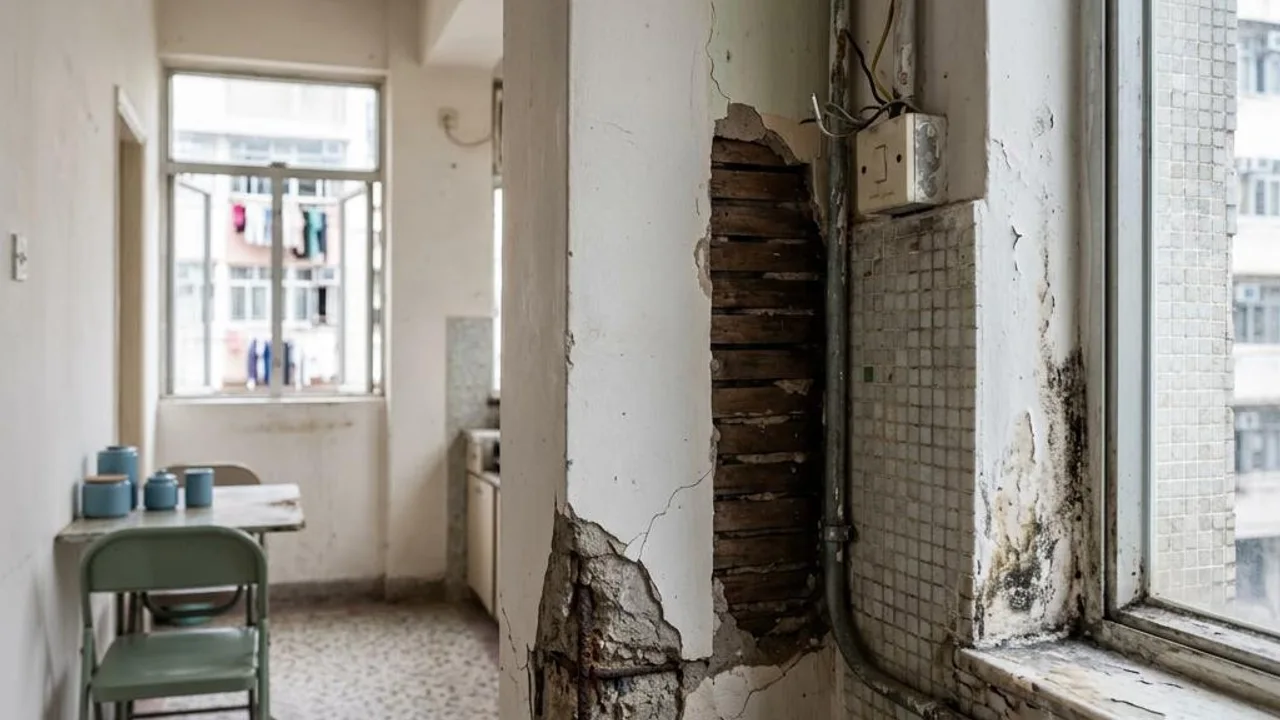
Unique inspection challenges for old buildings without property management
Many historic Tong Lau or single-block old buildings in Hong Kong have high efficiency and a unique cultural atmosphere, but because they lack unified maintenance by professional property management companies, the difficulty of inspection far exceeds that of modern residential estates. The common facilities of such buildings often rely on the operation of the Owners' Corporation, and some are even in a state of disrepair, requiring inspectors to consider potential risks in both private ownership areas and the building's public facilities.
In an environment without property management, if owners fail to grasp the health of the structure and public pipes before taking possession, massive seepage or external wall maintenance orders post-move-in will not only lead to huge financial expenditure but may also result in a predicament where legal liability boundaries are blurred. Professional pre-inspection is a key step to avoiding these hidden hazards.
- Lack of regular maintenance records for public facilities
- Difficult to clarify maintenance responsibilities between private units and public areas
- Lack of comprehensive fire and water/electricity maintenance funds within the building
- Potential hazards affected by neighbors modifying units
Safety risks of public drainage and sewage pipes
While the drainage system inside a unit may appear normal, the sewage pipes connecting to the building's main stack often become invisible killers due to aging. Many buildings over 40 years old still use cast iron pipes, which are susceptible to corrosion from waste and gases over time, making pipe walls prone to rusting or even cracking. If a blockage occurs, it may cause sewage to backflow into the home.
Illegal modification is also a common headache for old buildings. If a unit has privately connected branch pipes to the main drain, it will significantly increase the load on public pipes. The inspection team usually uses pipe endoscopes to go deep into key joints to check drainage flow rates and internal pipe structure, evaluating potential seepage risks from the source to ensure the drainage system meets safety requirements.
- Check the degree of corrosion of the main cast iron sewage pipe
- Use an endoscope to detect the sealing of branch pipe connections
- Confirm whether the drainage system is overloaded due to illegal modifications
- Assess the effectiveness of floor drainage
External wall concrete spalling and structural risks
External wall maintenance is the main expenditure for old building repairs. Long-term exposure to sun and rain, combined with steel bar corrosion, easily leads to external concrete spalling. This involves not only Mandatory Building Inspection Orders issued by the Buildings Department and maintenance obligations but may also cause serious accidents involving falling objects. Buyers need to pay attention to the overall condition of the building's external walls to avoid assuming large public repair contributions after purchase.
In addition, common illegal structures on the external walls of old buildings, such as air-conditioner racks, drying racks, and metal canopies, also pose safety risks. If these metal brackets are severely rusted, it can trigger seepage, leading to wall peeling inside, and even threaten public safety. Inspectors will check the stability of these external attachments and remind owners to evaluate the possibility of removal or repair.
- Observe whether there is exposed steel or concrete cracks on the external wall
- Assess whether the waterproofing layer at the window sill has aged and failed
- Check the corrosion level of metal air-conditioner racks and drying racks
- Record potential issues requiring repair to comply with Mandatory Building Inspection Orders
Chronic seepage and clarification of maintenance responsibilities
Seepage issues are common in old buildings, especially in kitchens, bathrooms, and ceilings. Due to the aging building structure, the waterproofing layer often fails, and water easily accumulates over time and erodes the concrete structure. When rust stains or spalling appear on the ceiling, it indicates that the seepage has existed for some time. If this type of chronic seepage is not handled, it will continue to damage the unit's renovation and structure.
The source of seepage often spans unit boundaries, originating from the floor above, neighbors, or even the external wall. Without support from property management, coordination between owners and neighbors is extremely difficult. A professional team will use seepage detection equipment to preliminarily locate the water path, helping the buyer understand the extent of the seepage so that they can clarify responsibilities with the seller before the transaction.
- Use infrared detection for wall moisture levels
- Test the waterproof function of bathroom and kitchen floors
- Observe whether there are signs of water stains or concrete spalling on the ceiling
- Investigate the link between water marks and surrounding pipes or external walls
Professional property inspection and long-term planning
Tong Lau and single-block old buildings hide many structural and piping risks that the naked eye cannot detect. Relying solely on casual inspection or inexperienced judgment is very likely to overlook potential large-scale maintenance expenses. For such properties, a professional property inspection can provide buyers with objective data, helping prospective buyers make informed decisions before signing contracts.
In addition to commissioning professional inspections, owners should also review the building's Owners' Corporation meeting minutes to understand if there are any major maintenance plans in the near future. By mastering this objective information, buyers can more accurately budget for long-term living costs and consult qualified professionals for targeted repair work to address existing hazards.
- This guide is intended to provide observation records regarding common facilities in Tong Lau and single-block old buildings, and does not constitute certification of structure, electricity, gas safety, regulatory compliance, the condition of hidden pipes, the thickness of waterproofing layers, remaining useful life, or maintenance results. Infrared thermography only shows the distribution of surface temperature differences and does not represent the cause of moisture or leakage, nor can it see through hidden structures. This service does not include the Mandatory Window Inspection Scheme, which must be executed by persons qualified and registered with the Buildings Department. Relevant professional matters should be consulted with qualified professionals. Please do not disassemble electrical installations, adjust water pressure valves, or access rooftops and the outside of windows by yourself. All inspection records are for reference only and no safety guarantees are assumed.
- Use professional equipment to perform endoscopy and seepage testing
- Assist buyers in assessing potential maintenance risks
- Ensure that the home purchase plan meets long-term living expectations
FAQs
If public pipes in the building are found to be severely corroded, how can the owner deal with it?
Owners should record the affected parts and submit maintenance requests through the Incorporated Owners. If the public area involves public safety, owners can consult professionals to understand relevant maintenance legislation and raise attention in the Incorporated Owners' meeting to avoid subsequent private unit seepage and compensation liability after pipe rupture.
If old water stains are found on the ceiling during property inspection, does this mean it is still leaking?
Old water stains do not necessarily mean that water is still seeping, but they reflect that there was a waterproofing failure in the past. Owners can request to hire professionals to use moisture meters or infrared instruments to detect whether there is an active damp condition, and check whether the position of the water stains is related to the pipe routing of the floor above to determine whether repairs are needed.
How should owners clarify maintenance obligations when facing the potential risk of concrete spalling on the external walls of old buildings?
Owners can check the Buildings Department's records of Mandatory Building Inspection Orders and understand whether the external wall belongs to common parts or private ownership. Generally speaking, external walls belong to the building's public facilities, and maintenance responsibilities should be shared by all owners in proportion to their ownership share. Owners should check with the Incorporated Owners to see if there is a reserve fund available.


