
Strategies for property inspection: New vs. secondary market homes
In Hong Kong, where property prices are exorbitant, a property inspection is not merely a formality but the final line of defence for protecting an owner's rights. However, many owners mistakenly believe that the inspection priorities for all properties are the same. In reality, the condition of new and secondary market properties is entirely different, so an OPO Inspection surveyor's assessment focus must be adjusted accordingly. The core of a new property inspection lies in the developer's construction quality, namely whether various facilities meet contractual specifications and engineering standards.
In comparison, the focus of a secondary market property inspection lies in structural wear and tear caused by age and the potential legal risks of unauthorised building works. Secondary market property owners need to pay special attention to the building's long-term maintenance history and whether previous owners altered the structure or drainage systems without applying for permission. Clearly distinguishing between these two inspection modes helps owners use property inspection services more effectively and plan their renovation budgets.
- New properties focus on handover quality and engineering standards
- Secondary market properties focus on structural wear and detection of unauthorised works
- Inspection tools and focus areas vary for different property types
- Property inspection is a crucial defence against future maintenance costs
Seven key inspection priorities for new properties
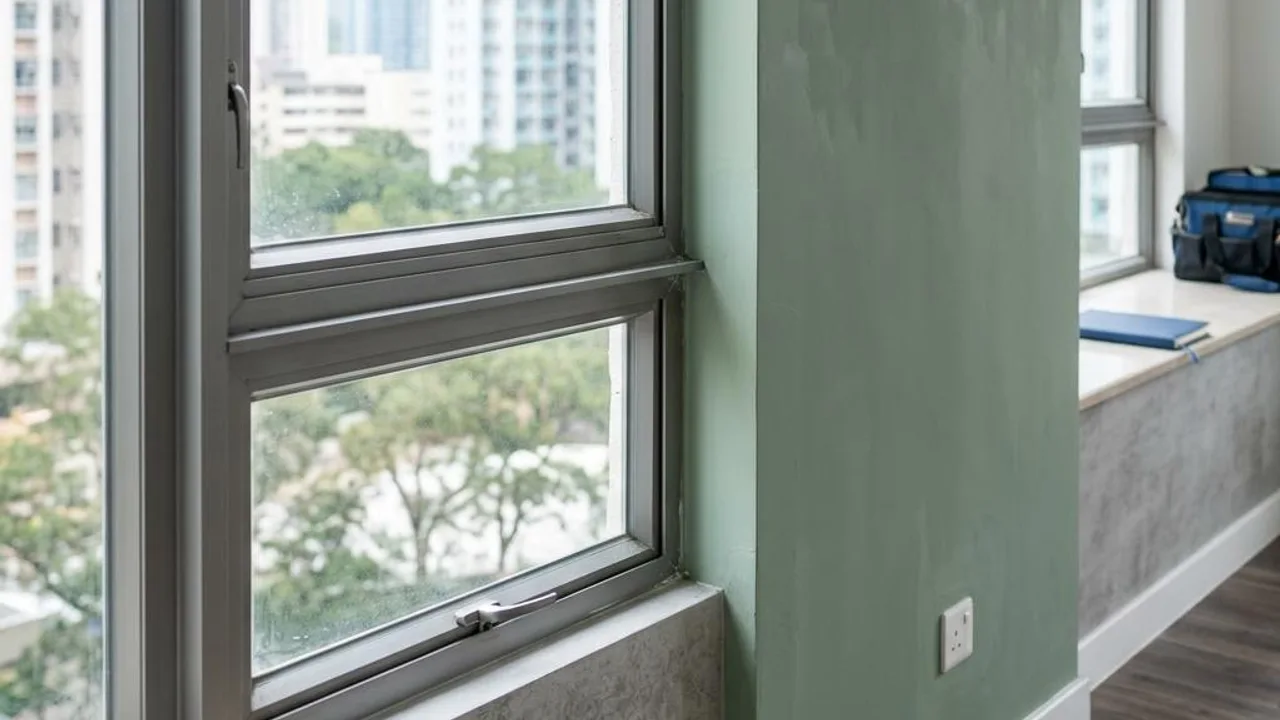
During new property handover, window waterproofing is paramount. Many units at handover feature loose window frame seals or blocked drainage holes, leading to leakage risks. Beyond this, the flatness of walls and floor tiles should be a key assessment area, with tile hollowness being a common handover detail. Owners should use tools during the property inspection to avoid problems with loose floor tiles later.
At the same time, the electrical system must not be taken lightly, including checking whether socket phases are correct and whether the residual current device is functioning properly. Whether the drainage system flow is smooth, kitchen cabinets are securely installed, and air conditioner drainage does not backflow are all basic requirements for new property handover. If these issues are not resolved by the developer during the defect rectification period, the owner will have to bear additional repair costs later.
- Check window frame sealing and waterproofing functionality
- Assess wall flatness and floor tile hollowness
- Verify socket phases and residual current device operation
- Test water drainage speed and air conditioner drainage performance
Critical inspection details for secondary market properties
When buying secondary market properties, owners face more complex hidden issues. Structural cracks are the number one hidden danger in secondary market homes; specifically, those located on load-bearing walls or beams require an assessment of their width and depth. Additionally, rusting of hidden pipes is particularly common in walk-up tenements or older residential estates; owners should observe the ceiling and walls during the property inspection for mysterious water stains, as these may be signs of leakage from the floor above or corrosion of their own pipes.
Finally, checking secondary market properties for unauthorised building works is crucial, such as removing load-bearing walls, altering toilet locations, or converting balconies. These changes not only carry legal liabilities but, if handled improperly, may affect the overall structural safety of the building. During the site visit, the OPO Inspection surveyor will attempt to observe these signs of non-compliance to warn owners to be prudent about maintenance and legal liability before completing the transaction.
- Strictly inspect cracks in large spans or structural locations
- Use auxiliary instruments to check for water stains inside hidden walls
- Assess the state of old electrical circuits and metal pipes
- Determine whether there are any unauthorised building works within the unit
Observation of environmental safety and legal liability notices
When conducting an inspection, the OPO Inspection surveyor can only provide professional opinions on visible environmental conditions. Owners must understand that visual inspection is not a diagnostic tool and cannot confirm bacteria or mould levels in indoor air. Regarding the smell of mould or discomfort, these only serve as reminders; mould should be removed and environmental ventilation improved. If detailed tests requiring structural damage are involved, these must be carried out by qualified personnel upon application and should not be attempted independently.
Furthermore, household electrical safety must comply with standards set by the Hong Kong Electrical and Mechanical Services Department. If serious ageing of wiring or antiquated fuses in the consumer unit are found in older buildings, please be sure to hire a registered electrical contractor for an inspection and ensure a WR1 Completion Certificate is issued after the electrical work is completed. This is an important legal document for secondary market property owners to protect the future safety of their living environment upon taking possession of the unit; do not overlook it.
- Visual property inspection cannot replace safety tests of a legal nature
- Fixed electrical works must be handled by licensed electrical contractors
- Mould removal is the primary remedial action, not a medical diagnosis
- Retain inspection results and relevant professional completion certificates
Initial observation and management of domestic water leakage hazards
Water leakage problems are the nightmare of many owners of older buildings. Before taking over a unit, owners should focus on checking window sills, toilets, and kitchen walls to observe if there are obvious water stains, peeling paint, or mould. If abnormal bubbling or signs of seepage are found in the paint film of the wall, one should communicate with the upstairs neighbour or the management office; do not force blocking work before confirming the source.
If a suspected leak is encountered, the owner may take photos to record it for consultation with professionals. For complex hidden seepage, one may seek out professionals with relevant detection experience to provide investigation directions rather than relying solely on surface plastering. Early detection and confirmation of the source helps clarify the attribution of maintenance liability and avoids neighborhood disputes or aggravated structural wear caused by leakage issues later.
- Pay attention to bubbling and signs of mould on the wall paint film
- Check the waterproofing status of window sills and wet area peripheries
- Maintain communication channels with the floor above and the management office
- Consult professionals to evaluate seepage detection methods
FAQs
How should an owner handle window frame leakage if found during new property defect rectification?
The owner should immediately record the relevant defect, take photos as evidence, and notify the developer for defect rectification. Do not dismantle the window frame or conduct illegal filling independently; instead, require the developer to inspect the waterproofing components and drainage holes for blockages according to contract specifications.
If wall cracks are found during a secondary market property inspection, does it mean there is a structural risk?
Cracks do not equate to structural danger, but if they appear on a load-bearing wall or beam, one must be cautious. Owners should consult professionals to conduct further investigations, evaluating the crack width and extent of propagation, to determine whether it is surface shrinkage or structural damage.
What inspections should be done after purchasing a secondary market property if old wiring is discovered?
A registered electrical contractor should be hired to conduct a comprehensive electrical installation check. The contractor can assess the degree of wiring ageing and the safety of the fuse box, and confirm whether a WR1 certificate needs to be issued upon completion of the works to ensure the circuit meets current safety standards.


