
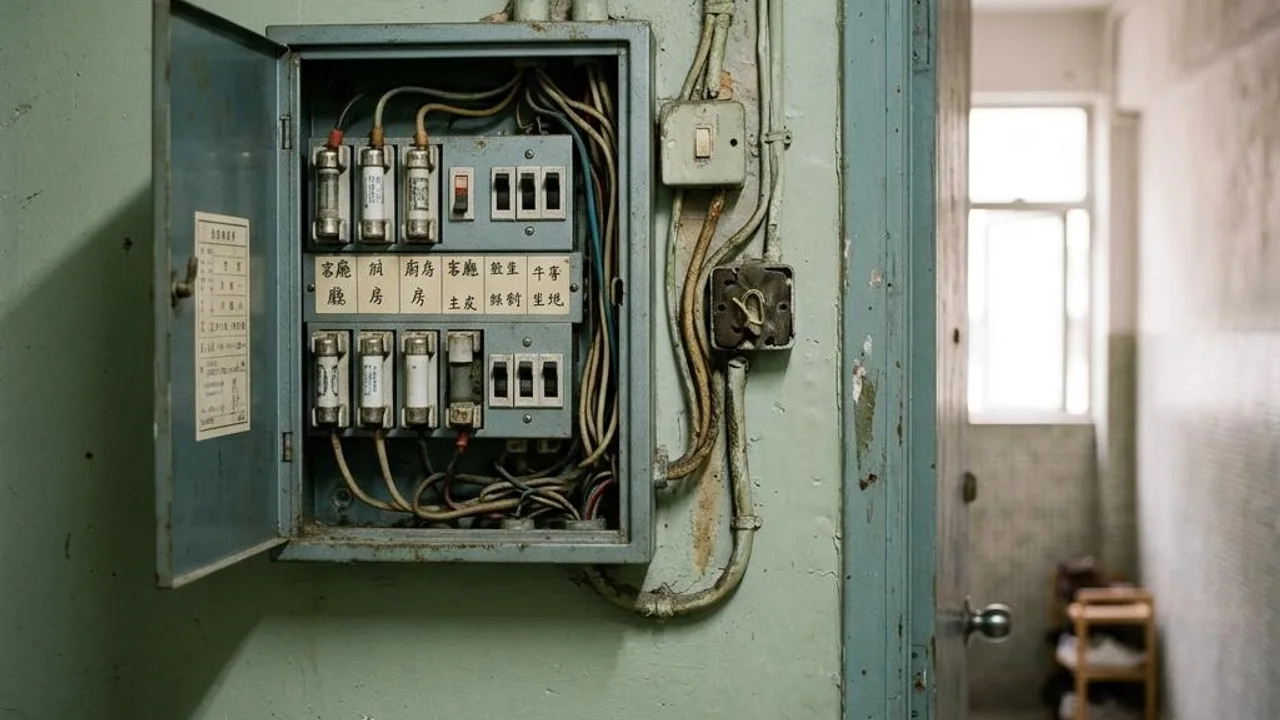
Potential risks of old electrical systems.
As electrical circuits in old buildings have been in use for many years, insulation materials may develop cracks or even pulverise due to aging, oxidation, or prolonged high temperatures. Once insulation fails, contact between wires and metal structures can lead to serious electricity leakage and electric shock accidents.
The power load capacity in early building designs is relatively low and difficult to cope with today's diverse high-power appliances. Long-term overload operation causes internal overheating and melting of wires, increasing the risk of fire. We recommend owners conduct a comprehensive assessment of power capacity.
- Aging and embrittlement of wire insulation.
- Wire heating caused by excessive circuit load.
- Older electrical boxes lack Residual Current Devices (RCDs).
- Lack of modern electrical protection mechanisms.
Preliminary observation: checking the status of the electrical box.
When inspecting the electrical box, note if it still uses ancient ceramic fuse holders or Bakelite switches. These designs can no longer provide sufficient safety protection; it is usually recommended to appoint a registered electrical contractor to upgrade the electrical box system.
Check if the electrical box is equipped with a Residual Current Device (RCD/ELCB). Modern circuit standards must include this device to ensure the power can be cut off in time during a leakage event, preventing accidents.
- Check for manual replacement-type fuses.
- Confirm whether the RCD is operating normally.
- Observe if internal wiring in the electrical box is messy.
- Check for scorch marks or strange odours.
Warning signs from wall sockets and switches.
Socket panels that are deformed or blackened are usually caused by local high temperatures resulting from poor contact or current overload. In such cases, the socket must be replaced immediately, and internal wiring must be checked for burnt damage.
When testing a socket, if an appliance feels loose and weak when inserted, it means the internal metal spring contact has lost its resilience. This easily causes electrical arcing; we suggest replacing it directly with a high-quality new socket panel.
- Observe if there are scorch marks on the socket panel.
- Test if the socket connection is firm.
- Check if switch operation is responsive.
- Note if the panel has aged and yellowed.
Observation of wire specifications and abnormal operation.
If you observe that exposed wiring uses outdated braided fabric covering, or if the wire insulation shows signs of becoming dry, hard, or cracked, it means the circuit has entered an extremely dangerous stage and must be arranged for a professional to carry out a comprehensive replacement.
If lights flicker frequently during power usage, or if a circuit trips as soon as high-power appliances (like air conditioners or electric heaters) are turned on, it usually indicates that the unit's circuit design capacity is insufficient or that the relevant circuit has developed a fault.
- Check for old braided fabric-covered wires.
- Look out for any damage or hardening of the wire outer sheathing.
- Do the lights flicker when appliances are turned on?
- Check if there is a frequent tripping problem.
Professional electrical investigation when purchasing a property.
When purchasing a second-hand property, owners should request electrical engineering records from the vendor. If the unit has not had a circuit update for over 20 years, the cost of rewiring must be reserved in the renovation budget to ensure it meets modern home safety requirements.
Before formal renovation begins, owners can perform simple checks on whether sockets are energised, but they must realise that visual inspection cannot replace professional insulation resistance testing and earth impedance measurement, which must be handled by a licensed electrician.
- Enquire about the date of the last full-house rewiring.
- Check if high-power appliances have dedicated circuits.
- Reserve a budget for electrical rewiring renovation.
- Hire a licensed electrician for professional testing.
The importance of professional electrical testing.
Professional electrical inspection involves more than just visual checks; it includes using precision instruments to test the condition of wiring inside concealed conduits. Concealed conduits within walls may have water ingress or damage, and only instrument testing can uncover these potential hazards.
Ensure that all fixed electrical installations (such as electric water heaters) are handled by a Registered Electrical Contractor, and require them to issue a Work Completion Certificate (WR1); this is crucial for legal protection and ensuring work quality and safety.
- Assessment of concealed conduit damage within walls
- Professional insulation resistance testing
- Earth continuity testing
- Obtaining a professional Work Completion Certificate
FAQs
If the consumer unit (fuse box) in the home still uses old-style ceramic fuses, is it mandatory to replace them immediately?
Old-style ceramic fuses can no longer provide sufficient safety protection. It is recommended to consult a Registered Electrical Contractor to arrange for an upgrade to a modern consumer unit system equipped with Residual Current Devices (RCDs) to enhance electrical safety.
If a second-hand property has not had its wiring replaced in over 20 years, how should the owner arrange for an inspection?
The owner should employ a licensed electrician to perform professional insulation resistance testing and earth impedance measurement. If the inspection reveals aged wiring or insufficient power supply load, a comprehensive rewiring project should be considered.
If an owner observes scorching on sockets or experiences tripped circuit breakers, what actions can they take?
You should immediately stop using the socket or related circuit and avoid attempting repairs yourself. Please contact a Registered Electrical Contractor to carry out an inspection to assess whether the hazards are caused by poor contact, overloading, or aged internal wiring.


