
Professional process and purpose of new property inspection.
Property inspection is a crucial check before the formal handover after completing the purchase agreement. Its main purpose is to confirm that the actual finished quality of the property matches the sales promises while ensuring the living space complies with building safety regulations and daily usage standards. Through a professional inspection process, owners can discover construction defects early, reducing the maintenance burden that needs to be dealt with after moving in.
The entire property inspection process involves many technical details, covering the unit's structure, electricity, water supply, and various renovation facilities. Professional inspectors use rigorous assessment standards to identify various hidden or obvious defects. If problems are found, owners should record them in detail and request the developer to complete repairs before the formal handover; this not only safeguards personal asset value but is also the right of every owner.
- Confirm that the unit's condition matches the description in the sales and purchase agreement.
- Inspection items cover structure, electricity, plumbing, and renovation levels.
- Request the developer to rectify defects early to safeguard your own interests.
- Inspection results should serve as an important basis for handover before moving in.
Core inspection items for new property inspection.
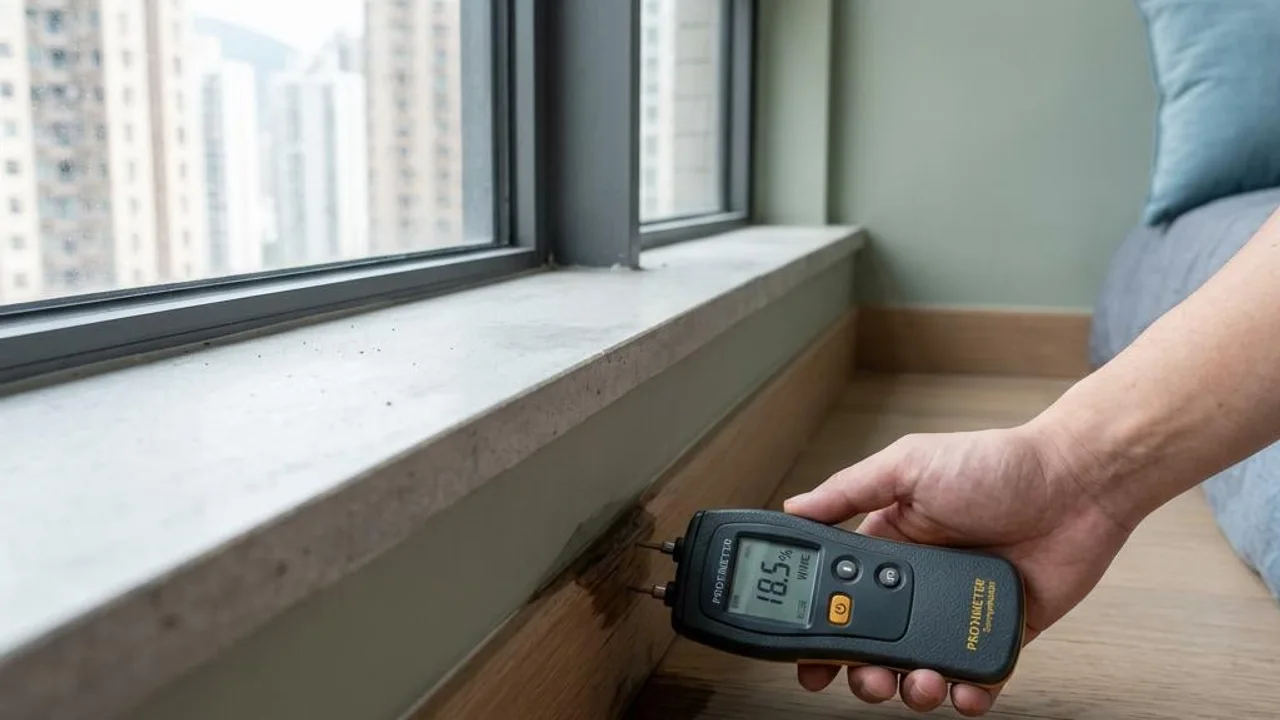
The primary focus of property inspection is structural safety and wall quality. Professionals will carefully inspect windows, walls, floor tiles, and ceilings to observe if there are obvious cracks, loose plaster, or spalling. In addition, water leakage tests are a crucial part, checking whether the waterproofing layers in window sills, kitchens, and bathrooms are intact; these hidden issues will directly affect long-term residential safety and maintenance costs if not properly handled.
Regarding electricity, checking the operational status of all lights, switches, and sockets is a basic requirement. Besides confirming that the power supply is smooth, one must also pay attention to whether the distribution board configuration meets standards. For fixed electrical appliances not directly supplied through sockets, such as ceiling lights or electric water heaters, one must ensure the connection complies with regulations. Remember, electrical safety at home cannot be ignored; high-power appliances must not share power strips to avoid overload.
- Check walls for cracks, deformation, or spalling.
- Test window sills and bathroom waterproofing layers for signs of water leakage.
- Confirm that all sets of lights and power sockets in the unit are operating normally.
- Check that kitchen and bathroom taps and drainage outlets are operating smoothly.
- Confirm that the distribution board configuration is consistent with safety standards.
Indoor environmental health and equipment maintenance.
Maintaining good indoor air quality after taking possession helps with residential health. Owners should be aware of whether there are any strange odours or mouldy smells indoors. If visible mould is found, priority should be given to cleaning measures and improving indoor ventilation; keeping humidity below 70% can significantly reduce mould growth. Please note that residential properties are not subject to IAQ management guidelines for commercial venues; general odours or slight discomfort cannot be used as a standard for environmental pollution.
If your renovation involves installing or adding electrical devices, you must hire a registered electrical contractor. Be sure to obtain a completion certificate after finishing. For daily use of appliances, users should regularly check for signs of damage to wires, and do not touch appliance switches in damp environments to safeguard your own and your family's home safety.
- Maintain indoor humidity at no more than 70% to inhibit mould.
- Regularly clean ventilation facilities and keep the air circulating.
- Modifying electrical installations must be done by a registered electrical contractor.
- Properly keep the electrical work completion certificate.
- Avoid touching electrical devices in a damp state.
Inspection responsibilities to safeguard owner rights.
Comprehensive property inspection work is not only for repairing surface defects but is also about safeguarding the long-term rights of the buyer. If major structural defects or renovation issues are found during the inspection stage, the buyer has the right to request the developer to fulfil their responsibility by carrying out repairs before formal handover. This can effectively avoid disputes caused by maintenance problems after moving in and ensure that the property reaches a habitable standard immediately.
Owners should actively grasp the true condition of the property during the handover stage and record all details discovered. Reflecting problems through official communication channels can improve the developer's efficiency in handling repair requests, ensuring that the property condition meets standards upon moving in.
- Request the developer to rectify defects early to avoid handover disputes.
- Safeguard initial residential quality and asset security.
- Let owners grasp the true condition of the property at handover.
Practical process recommendations for property acceptance.
Property inspection is not just a single act, but an assessment work in phases. On the day of inspection, the owner should be well prepared with an inspection checklist, inspecting one by one from doors and windows, floors, to ceilings. If a situation requiring further technical analysis is discovered, such as suspected leakage or electrical tripping, it should be recorded on the spot and a professional inspector should be asked to provide an opinion.
It is suggested that owners retain all record copies after the inspection ends, including photos and content of conversations. This information is important proof for confirming repair progress and can help owners verify during multiple acceptance checks whether the developer has truly corrected the original problems.
- Prepare a detailed property inspection checklist.
- Record the specific location and condition of all discovered flaws.
- Retain repair requests and handover credentials.
- Confirm whether the effect after repairs meets the standard.
FAQs
What should be done if cracks are found on the walls during property inspection?
Owners should first record the length, width, and distribution location of the cracks and take photos for archival. If structural cracks are suspected, the developer should be requested to provide test results, and a professional should be commissioned for on-site inspection; avoid judging the nature of the cracks by yourself.
What should be done if the distribution board trips during testing?
Please notify the developer's representative immediately; do not disassemble the distribution board or force the switch back on yourself. Distribution board tripping is usually related to electrical leakage or abnormal circuit load and must be handled by having the developer arrange for a registered electrical contractor to perform professional troubleshooting and repairs.
Does finding signs of water stains on the window sill mean there is a leak?
Signs of water stains could be caused by construction residue, condensation, or failure of window sill waterproofing; it cannot be diagnosed as a leak based on visual inspection alone. It is suggested to request the developer to conduct relevant tests during the inspection and observe the situation after rain. If there are doubts, professional personnel should be requested to perform further testing using instruments.


